Yang Guifei’s Chicken with Longevity Noodles
Discover the indulgent flavors of Tang Dynasty-inspired chicken paired with hand-pulled longevity noodles from Xi'an's culinary heritage.
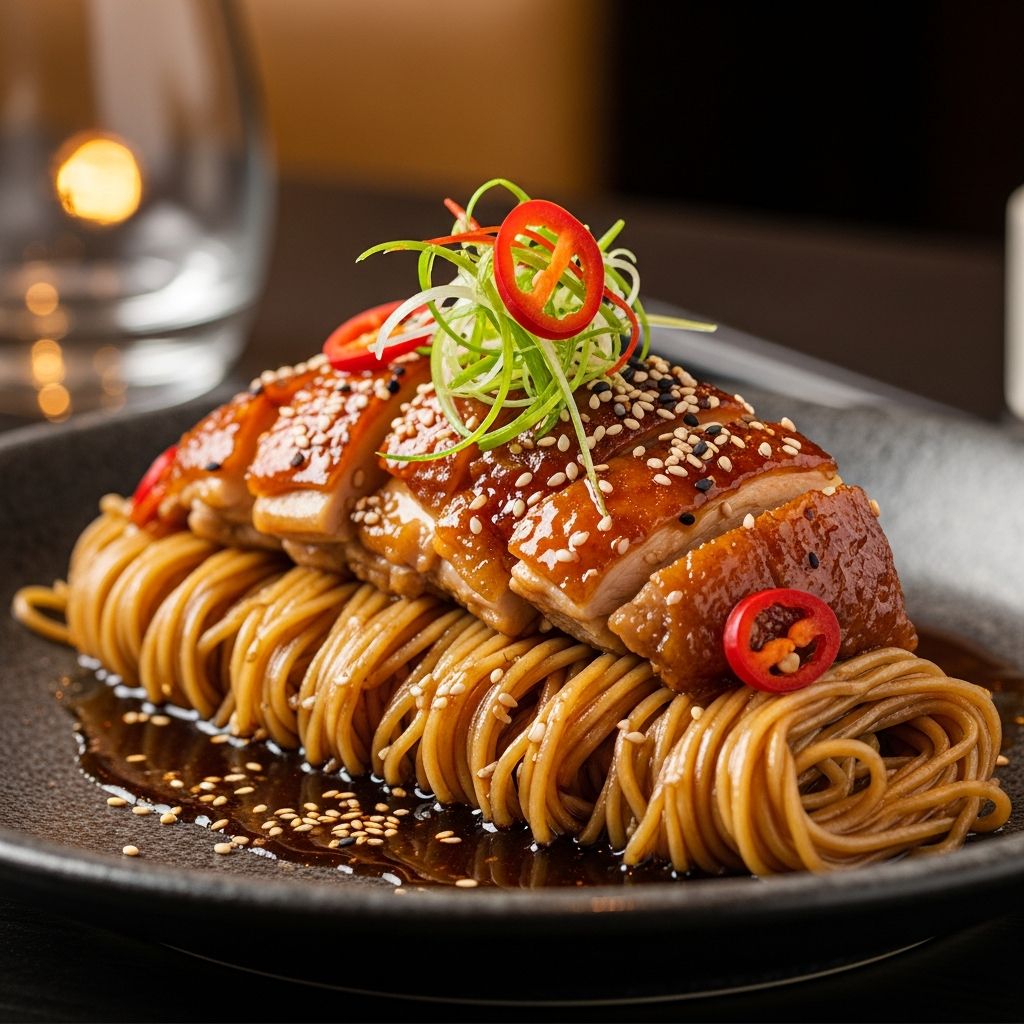
Immerse yourself in the opulent tastes of ancient China through this captivating dish pairing: tender chicken stir-fried with bold spices and vegetables, complemented by chewy, hand-pulled noodles symbolizing eternal life. Originating from Xi’an’s vibrant food scene, this combination draws from imperial legends and contemporary noodle mastery, offering a feast that’s as visually stunning as it is flavorful.
The Legendary Origins of Yang Guifei’s Chicken
In the heart of the Tang Dynasty, one of China’s most prosperous eras, lived Yang Guifei, a concubine whose beauty and love for indulgence shaped culinary history. Known for her voluptuous figure and influence over Emperor Xuanzong, she elevated food to an art form in the ancient capital of Chang’an—today’s Xi’an. Dishes prepared for her were rich, balanced with sweet, sour, spicy, and savory notes, reflecting the hedonistic court life.
Yang Guifei’s Chicken, or Guifei Ji, captures this essence. It’s not just a recipe but a tribute to her legacy, featuring boneless chicken thighs transformed through quick stir-frying with aromatic spices like star anise, Sichuan peppercorns, and Pixian bean sauce. This dish stands alone yet shines when paired with longevity noodles, evoking the dynasty’s fusion of music, dance, and gastronomy.
Understanding Longevity Noodles: A Symbol of Prosperity
Longevity noodles, or chang shou mian, are more than pasta—they represent long life and good fortune in Chinese culture. In Xi’an cuisine, they’re hand-pulled from wheat flour dough into impossibly long strands, a skill passed down through generations. At places like Xi’an Famous Foods in New York, father-son duo Jason and David Wang demonstrate this art, stretching dough into noodles meters long without breaking.
These noodles are boiled fresh and tossed minimally to preserve their springy texture, making them the ideal base for hearty toppings like the spicy-sweet chicken. Their preparation emphasizes patience and technique, mirroring the meticulous care in imperial kitchens.
Essential Ingredients for Authentic Preparation
To recreate this duo at home, gather fresh, high-quality components. Here’s a breakdown:
- Chicken Dish: 10 ounces boneless chicken thighs (chopped into 2-inch cubes), Shaoxing wine, cornstarch, white pepper, vegetable oil, dried red chile (Tianjin preferred), star anise, Sichuan peppercorns, Pixian bean sauce, green onion, ginger, longhorn or bell peppers, potatoes, soy sauce, sugar, garlic, onion.
- Noodles: High-gluten wheat flour, water, salt. Optional kansui (alkaline water) for authentic chew.
Pixian bean sauce, a fermented chili-bean paste from Sichuan, is crucial for umami depth. Source it from Asian markets or online specialty stores. Shaoxing wine adds subtle fermented sweetness, while Sichuan peppercorns deliver the signature numbing tingle (ma la sensation).
Step-by-Step Guide to Cooking Yang Guifei’s Chicken
Prep time: 15 minutes. Cook time: 25 minutes. Serves 2-4.
- Marinate the Chicken: Chop thighs into cubes, pat dry. Mix with ¼ tsp Shaoxing wine, ¼ tsp cornstarch, and ¼ tsp white pepper. Let sit 10 minutes for tenderness.
- Fry Aromatics: Heat 2 tbsp oil in a wok over high heat. Add soaked dried chile, star anise, and Sichuan peppercorns; fry 30 seconds until fragrant. Discard solids, retaining infused oil.
- Build the Base: Medium heat: Stir in Pixian bean sauce, green onion segments, sliced ginger. Ramp to high, add chicken, peppers, remaining 1 tbsp wine. Stir-fry 2 minutes.
- Simmer: Add soy sauce and 1 cup water; cook 10 minutes. Introduce potato chunks for 5 minutes, then sugar, remaining pepper, garlic, and onion. Final stir 2 minutes. Sauce should cling glossy to chicken.
The result: Vibrant red hues from chiles, tender meat absorbing sweet-spicy gravy, with potatoes soaking up every drop.
Mastering Hand-Pulled Longevity Noodles
Prep: 30 minutes rest + 20 minutes pulling. Cook: 5 minutes. Makes 4 servings.
- Dough Making: Mix 2 cups wheat flour, ¾ cup water, pinch salt into a firm dough. Knead 10 minutes until smooth. Rest covered 30 minutes.
- Shaping: Divide into 4 logs. Oil generously. Use pulling technique: Swing, slap, stretch arms apart repeatedly, folding ends to double strands. Aim for 1-2 meter lengths without snapping.
- Cook: Boil in salted water 3-5 minutes until al dente. Drain, toss lightly with oil to prevent sticking.
Beginners can use a pasta machine for approximation, but hand-pulling builds skill and authenticity. Pair hot noodles with chicken ladled atop, mixing tableside for even flavor distribution.
| Component | Difficulty | Time | Key Tip |
|---|---|---|---|
| Chicken | Easy | 40 min | High-heat wok for wok hei (breath of wok) |
| Noodles | Advanced | 50 min | Practice pulling on oiled surface |
| Pairing | Easy | 5 min | Serve family-style for sharing |
Flavor Profile and Cultural Pairings
The chicken bursts with ma la heat—numbing from peppercorns, fiery from chiles—balanced by sugar’s caramel notes and soy’s savoriness. Potatoes and peppers add earthiness and crunch. Noodles provide neutral, chewy canvas, slurped long for luck.
In Xi’an, such dishes accompany festivals like Lunar New Year. Modern twists at Xi’an Famous Foods include spicier variants, but traditional prep honors Tang roots. Serve with cucumber salad or steamed buns for a full meal.
Health Benefits and Nutritional Insights
This dish offers balanced macros: Protein from chicken (25g per serving), carbs from noodles and potatoes (50g), minimal fats via stir-fry method. Spices like ginger aid digestion; peppers provide vitamin C. Fermented elements promote gut health. Portion control keeps it moderate at 600 calories per serving.
- Pro Tip: Use skinless chicken for leaner option.
- Vegan Swap: Tofu cubes marinated similarly.
Common Mistakes and Pro Tips
Avoid overcooking chicken—it toughens. Don’t skip infusing oil; it’s flavor foundation. For noodles, under-knead dough breaks during pulling. Fresh chiles beat dried for vibrancy.
Scale up for parties: Chicken reheats well; noodles best fresh. Store leftovers separately up to 2 days.
Xi’an Famous Foods: Bringing Heritage to the World
Jason Wang’s family empire started in Beijing’s hutongs, evolving into New York’s Xi’an Famous Foods. Their cookbook details these recipes, blending street authenticity with accessibility. Videos showcase pulling demos, inspiring home cooks globally.
Frequently Asked Questions (FAQs)
What makes this chicken ‘concubine’s’?
Named for Yang Guifei, whose indulgent tastes inspired its sweet-spicy profile during the Tang Dynasty.
Can I substitute ingredients?
Yes—bell peppers for longhorn, potato starch if no Pixian sauce, but authenticity dips.
How long do noodles symbolize?
Uncut strands represent endless life, served at birthdays and celebrations.
Is hand-pulling necessary?
For tradition, yes; machine-cut works for beginners.
Spice level adjustable?
Reduce chiles/peppercorns for mild; add chili oil for heat.
Variations and Modern Twists
Try seafood version with shrimp or veggie-loaded for Lent. Fusion: Add sesame noodles twist. In Xi’an stalls, it’s spicier with cumin lamb accents.
This meal bridges 1,300 years—from palace banquets to your table—celebrating flavor, history, and technique.
References
- Hand-Pulled Longevity Noodles From Xi’an Famous Foods — Munchies (VICE). 2016 (Accessed 2026). https://www.youtube.com/watch?v=pDTUAVc6mac
- Concubine’s Chicken (贵妃鸡) recipe — Eat Your Books / Jason Wang. N/A. https://www.eatyourbooks.com/library/recipes/2386086/concubines-chicken-
- Concubine’s Chicken — ckbk / Xi’an Famous Foods. N/A. https://app.ckbk.com/recipe/xian47526c04s001ss001r006/concubines-chicken
- Concubine’s Chicken Recipe — VICE / Jason Wang. 2021-06-04. https://www.vice.com/en/article/concubines-chicken-recipe/
Similar Articles


Read full bio of Sneha Tete