Classic Vinegar-Marinated Cucumber and Onion Salad
A refreshing, tangy summer side dish that's ready in minutes
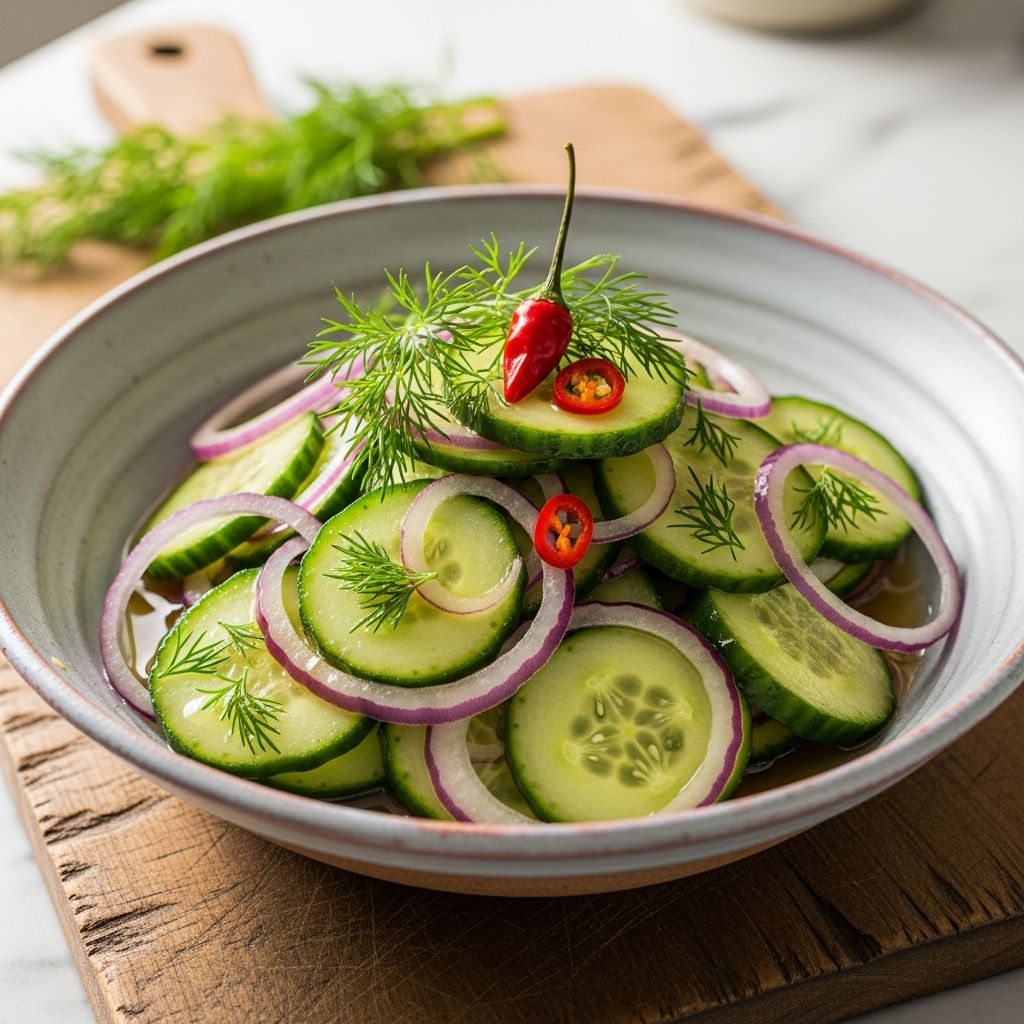
When the weather warms up and summer gatherings approach, few dishes prove as refreshing and versatile as a well-crafted cucumber and onion salad. This timeless preparation combines the natural crispness of fresh cucumbers with the sharp bite of vinegar, creating a palate-cleansing accompaniment that complements grilled meats, barbecue fare, and hearty summer spreads. The beauty of this classic salad lies in its simplicity—requiring only a handful of pantry staples and minimal preparation time, yet delivering complex, satisfying flavors that have made it a cherished family recipe for generations.
Understanding the Essential Components
Every successful cucumber and onion salad begins with selecting the right base ingredients. The foundation of this dish rests on two primary vegetables that work in harmony to create both textural contrast and flavor balance.
Selecting Quality Cucumbers
The choice of cucumber dramatically influences the final outcome of your salad. English cucumbers, also known as seedless or hothouse cucumbers, represent an excellent choice for this preparation due to their thinner skin and fewer seeds compared to standard slicing varieties. These cucumbers deliver a crisp bite without requiring peeling, though some recipes suggest peeling for aesthetic preferences. The thin, delicate nature of English cucumbers allows vinegar to penetrate effectively during the marinating process, ensuring every bite carries the acidic tang that defines this dish.
If English cucumbers prove unavailable, standard slicing cucumbers work adequately, though they may contain more seeds and require peeling. Pickling cucumbers offer another viable alternative, providing a naturally firmer texture that resists becoming mushy even after extended marination. Regardless of variety, selecting firm specimens without soft spots ensures optimal crunchiness in the finished salad.
The Role of Onions
Onion selection warrants equally thoughtful consideration as cucumber choice. Sweet onion varieties such as Vidalia onions provide a milder, more approachable flavor profile that doesn’t overwhelm the delicate cucumber. Yellow onions offer a balanced approach, delivering moderate pungency without excessive sharpness. White onions, when sliced thin, contribute a crisp texture and moderate onion flavor that complements without dominating.
The thickness at which you slice onions significantly impacts how much of their natural pungency persists in the finished salad. Extremely thin slicing—ideally achieved using a mandoline slicer—allows vinegar to penetrate the onion layers more thoroughly, mellowing their natural intensity while still maintaining the desirable onion flavor.
The Vinegar Foundation and Flavor Development
The vinegar component serves as the salad’s defining characteristic, transforming simple vegetables into a vibrant, palate-awakening side dish. Various vinegar options work within this framework, each imparting subtle variations to the final flavor profile.
Vinegar Varieties and Their Characteristics
White vinegar represents the most traditional choice, offering a clean, sharp acidity that doesn’t add color or compete with the natural vegetable flavors. Apple cider vinegar provides a slightly fruity undertone and added complexity, particularly when using raw, unfiltered varieties that contain beneficial compounds. White balsamic vinegar delivers a slightly sweeter, more sophisticated profile compared to standard white vinegar. Some recipes experiment with combinations—using half apple cider vinegar and half white vinegar—to create more nuanced flavor dimensions.
The vinegar-to-water ratio determines the intensity of the finished salad. Some traditional preparations call for a 1:1 ratio of vinegar to water, creating a powerfully tart result suitable for serving alongside rich, fatty meats. Others prefer a 1:2 ratio, offering a more balanced approach that doesn’t overwhelm diners. For those preferring less aggressive tartness, increasing the water proportion creates a gentler profile while maintaining adequate tang.
Sweetener Balance and Seasoning Precision
The addition of sugar or other sweeteners serves a crucial function beyond simple taste enhancement. A small amount of sugar—typically between one-half and two teaspoons per batch—counterbalances the vinegar’s sharpness, creating a harmonious sweet-tart profile. Some modern interpretations omit sugar entirely, relying on the natural sweetness of onions and vegetables for balance.
Salt plays an essential role in both flavor development and texture preservation. The salt draws moisture from the vegetables during marination, creating an osmotic effect that intensifies flavors while contributing to the characteristic crisp-tender texture. Typically, between one-half teaspoon and one teaspoon of salt per batch provides adequate seasoning without oversalting.
Preparation Methods and Timing Considerations
The way vegetables are prepared and the duration they marinate fundamentally influences the textural and flavor outcomes of the finished salad.
Slicing Techniques for Optimal Texture
Proper slicing creates uniformity that allows even marination and contributes to the pleasant mouthfeel of each bite. For cucumbers, slicing between one-eighth and one-quarter inch thickness maintains crispness while allowing adequate surface area for vinegar absorption. Onions should be sliced into thin rings, with some recipes suggesting cutting half-moon shapes for easier serving.
While a sharp knife suffices for this task, many cooks prefer using a mandoline slicer, which achieves consistent, paper-thin slices with minimal effort. This tool proves particularly valuable for onions, where uniform thickness ensures even flavor distribution and texture consistency throughout the salad.
Marination Timing and Its Effects
The duration vegetables spend marinating determines the intensity of flavors and the extent to which the vinegar penetrates the vegetable structure. Quick marination—thirty minutes to one hour—produces a fresher, crisper salad where vegetables maintain more individual character. This approach works particularly well when serving the salad immediately after preparation.
Extended marination of six to eight hours or overnight transforms the salad more dramatically. During this extended period, the vegetables soften slightly, becoming more tender while absorbing greater quantities of the vinegar mixture. The onions, particularly, become milder and more integrated into the overall flavor profile. This extended approach intensifies all flavors, creating a more cohesive, deeply flavored preparation that many consider superior for flavor development.
Ingredient Combinations and Flavor Enhancements
While the basic trio of cucumbers, onions, and vinegar creates a satisfying salad, numerous additions and variations expand the possibilities and complexity of this versatile dish.
Aromatic Additions and Herbs
Fresh dill represents the most traditional herb addition, its bright, slightly anise-like flavor complementing both cucumbers and the acidic vinegar base. Celery seed offers an alternative, providing subtle herbal notes with a slightly licorice quality. Smashed garlic cloves contribute pungent aromatics that develop and mellow during marination, adding savory depth.
Some recipes incorporate bell pepper—particularly green bell pepper—for additional textural variety and color contrast. Black pepper, added during the initial mixing, contributes subtle heat that balances the sweetness and acidity.
Creamy Variations and Dairy Incorporations
Departing from the pure vinegar-based approach, some traditional preparations incorporate cream or sour cream, creating a tangier, richer version. These dairy-based versions typically use smaller vinegar quantities and substitute all or part of the water with cream or a cream-like product. This variation broadens the salad’s appeal to those seeking a more indulgent, less acidic result.
Serving Suggestions and Complementary Pairings
This salad’s versatility extends across numerous meal contexts, each benefiting from its refreshing, palate-cleansing properties.
Traditional Barbecue and Grilled Meat Pairings
The acidic, crisp nature of this salad provides the ideal counterpoint to rich, fatty grilled meats—particularly beef ribs, brisket, and pulled pork. The vinegar’s sharp character cuts through meat’s richness, refreshing the palate between bites and facilitating digestion of heavier fare. Similarly, grilled chicken benefits from this accompaniment, the acidity providing welcome brightness that prevents heavier proteins from becoming cloying.
Cold Meal Applications and Sandwich Accompaniments
Spooned onto pulled pork or brisket sandwiches, this salad provides textural contrast and acidic brightness. It serves equally well alongside cold cuts and sandwich components, adding crunch and cutting through rich mayonnaise-based spreads. For picnics and outdoor gatherings, its ability to remain fresh and appealing throughout warm days makes it superior to many creamy salad options that can separate or wilt in heat.
Storage and Make-Ahead Preparation
One significant advantage of this salad involves its make-ahead friendliness. Preparation hours or even days in advance allows flavors to develop while the salad waits in the refrigerator. The salad stores well for three to five days when kept in an airtight container, with flavors actually deepening during storage as vegetables continue absorbing the vinegar mixture.
The vegetables remain firm and crisp for the duration of storage, unlike many mayonnaise-based salads that deteriorate as time passes. This stability makes the dish particularly valuable for meal preparation, entertaining, and situations where advance preparation proves advantageous.
Frequently Asked Questions
Can I make this salad ahead of time?
Yes, this salad actually improves with advance preparation. The vegetables absorb flavors more thoroughly during extended marination, and the salad stores refrigerated for three to five days without significant quality loss.
What’s the difference between this salad and quick pickles?
While structurally similar, traditional cucumber salads contain higher water content and often include dairy components, creating a fresher, less shelf-stable preparation than true pickles, which rely on higher vinegar concentrations for preservation.
Can I use other vegetables alongside cucumbers and onions?
Yes, bell peppers, radishes, and even celery complement this salad well. Green bell pepper is a traditional addition that adds color and crunch without overpowering the core flavors.
How thin should I slice the vegetables?
Aim for consistent, thin slicing—approximately one-eighth to one-quarter inch for cucumbers and similar thinness for onions. A mandoline slicer provides the most uniform results and minimizes preparation effort.
Does this salad work for dietary restrictions?
The basic vinegar-based version accommodates vegetarian, vegan, and gluten-free diets naturally, making it an inclusive side dish option for varied dietary preferences.
References
- Old Fashioned Cucumber and Onion Salad (no sugar added!) — Plum Branch Home. Accessed April 2026. https://plumbranchhome.com/old-fashioned-cucumber-and-onion-salad/
- Grandma’s Creamy Cucumber Salad Recipe — Hurry The Food Up. Accessed April 2026. https://hurrythefoodup.com/creamy-cucumber-salad/
- Grandma’s Cucumber Salad — Lauren’s Latest. Accessed April 2026. https://laurenslatest.com/grandmas-cucumber-salad/
- Simple Cucumber and Onion Salad — Southern Bite. Accessed April 2026. https://southernbite.com/simple-cucumber-and-onion-salad/
- Easy Old-Fashioned Cucumber Salad “Gurkensalat” — Strength and Sunshine. Accessed April 2026. https://strengthandsunshine.com/easy-old-fashioned-cucumber-salad-vinegar-gurkensalat-gluten-free/
Similar Articles







Read full bio of medha deb