Unlocking Alliums: Botany, Beauty, and Beyond
Discover the captivating world of alliums, from their botanical roots and stunning garden displays to culinary magic and health wonders.
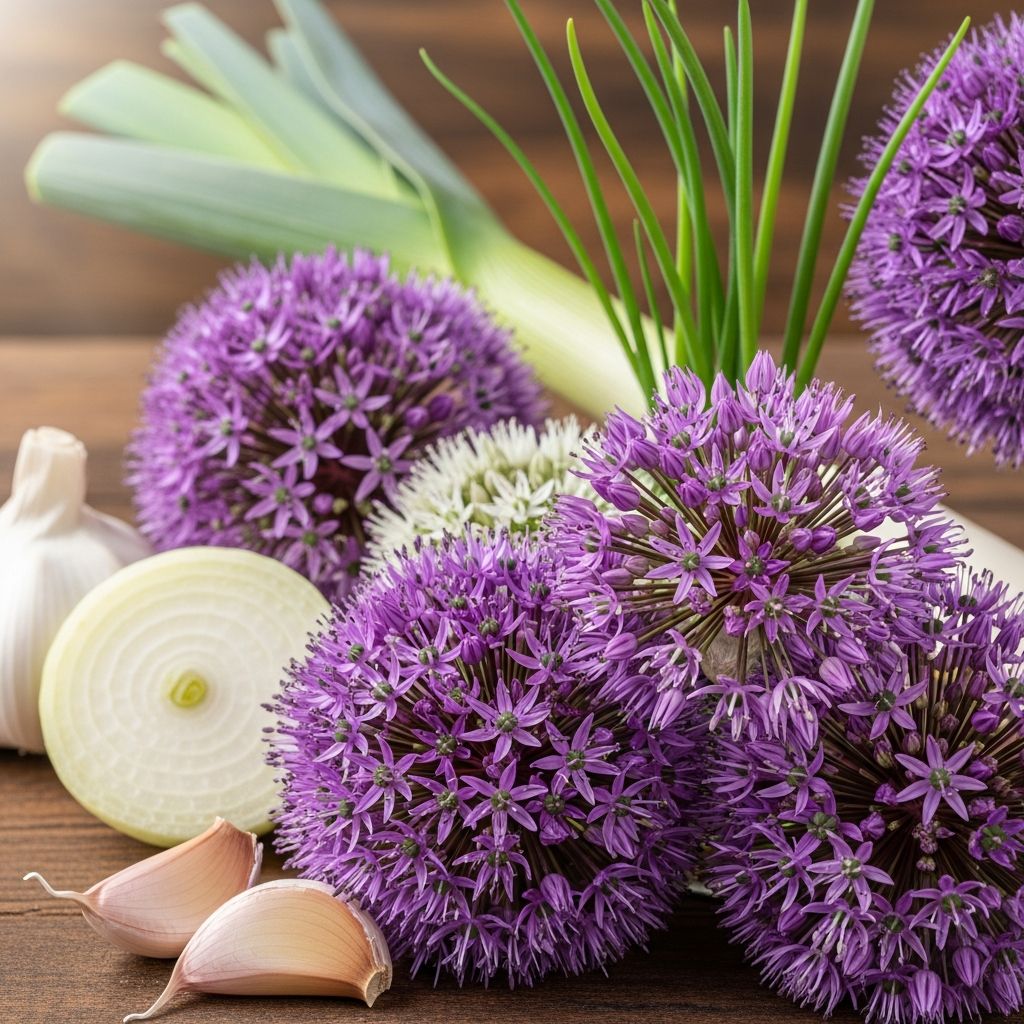
Alliums represent one of the most diverse and impactful plant genera, spanning over a thousand species that blend ornamental appeal, culinary utility, and medicinal value. Native to various global regions, these plants from the Amaryllidaceae family captivate gardeners, chefs, and botanists alike with their unique characteristics and adaptability.
The Botanical Foundations of Alliums
The genus Allium stands as the largest within the Amaryllidaceae family, boasting 1112 accepted species of monocotyledonous flowering plants. These bulbous perennials produce linear or flat leaf blades that often wither from the tips before flowering, supporting scapes that bear umbellate inflorescences. Fruits form as capsules containing black, rounded seeds, while some species develop bulbils in place of flowers.
Alliums thrive in environments mimicking their origins in sandy, dry soils across Siberia, eastern Europe, Turkey, and Persia, demanding excellent drainage for optimal growth. Their basal foliage varies from straight to coiled, with rare broad-leaved exceptions like Allium victorialis. This resilience allows them to persist in challenging terrains, even reaching elevations like Mount Everest.
Ornamental Alliums: Garden Stars with Explosive Blooms
Ornamental alliums transform gardens into spectacles with their globe-shaped flower heads composed of hundreds of tiny stars on sturdy stems. Available in shades of purple, blue, violet, pink, red, yellow, and white, varieties like ‘Gladiator’ and ‘Giganteum’ tower impressively, while ‘Star of Persia’ spans up to 12 inches wide.
These plants offer multi-season interest: fresh blooms in late spring to early summer, followed by sculptural seed heads ideal for dried arrangements. Their low-maintenance nature, drought tolerance, and resistance to deer and rabbits make them perennial border favorites. Pollinators flock to their nectar-rich umbels, enhancing biodiversity.
- Pollinator Magnet: Bees and butterflies thrive on the dense flower clusters.
- Low Maintenance: Minimal care yields reliable returns year after year.
- Drought Tolerant: Adapted to dry conditions with deep roots.
- Pest Resistant: Pungent scent deters mammals like deer and rabbits.
- Architectural Form: Adds height and structure to plantings.
Planting and Nurturing Allium Bulbs
To cultivate alliums successfully, plant bulbs in fall alongside tulips and daffodils, ensuring full sun (at least six hours daily) and well-drained soil. Bulbs resemble small onions, ranging from marble-sized to golf ball dimensions, with papery coatings protecting nutrient-rich layers.
Space larger bulbs 6-8 inches apart and smaller ones closer, burying them at depths twice their height. In clay-heavy soils, incorporate grit for drainage to prevent rot. Water sparingly post-planting, then rely on natural rainfall; overwatering invites fungal issues. Mulch lightly to suppress weeds without retaining excess moisture.
| Variety | Height | Bloom Color | Best Use |
|---|---|---|---|
| ‘Giganteum’ | 4-6 ft | Purple | Back of border |
| ‘Gladiator’ | 4 ft | Purple | Specimen plant |
| ‘Star of Persia’ | 2-3 ft | Yellow | Mid-border |
| ‘Noneuq’ | 1 ft | Purple-pink | Front edging |
After blooming, allow foliage to yellow naturally before removal to nourish bulbs for next season. Divide clumps every 3-4 years in fall to maintain vigor. In zones 4-8, most return reliably; southern gardeners may treat tender types as annuals.
Symbolism and Cultural Legacy of Alliums
Alliums carry profound symbolism rooted in their form: a unified globe of florets on a single stem evokes unity, patience, and abundance. Ancient Egyptians depicted them as cosmic symbols on monuments, while Romans cultivated them extensively, naming the genus after garlic.
In Victorian floriography, they signified humility through subdued hues, patience from slow growth, good fortune via pollinator appeal, prosperity from multiplicative bulbs, and beauty for their striking presence. Today, they adorn centerpieces, embodying elegance and perseverance.
Culinary Cousins: Edible Alliums in the Kitchen
Beyond ornamentals, alliums like onions, garlic, shallots, leeks, scallions, and chives form culinary cornerstones. Their pungent flavors arise from sulfur compounds, released upon cutting, enhancing dishes from savory roasts to fresh salads. Long cultivated for human consumption, they add depth and aroma universally.
Health benefits abound: antioxidants and allicin in garlic support immunity, while onions provide quercetin for anti-inflammatory effects. Incorporate raw for bite or roasted for sweetness; experiment with ramps (Allium tricoccum) in spring foraged dishes.
Health and Ecological Advantages
Alliums contribute to wellness through bioactive compounds. Garlic’s allicin exhibits antimicrobial properties, and the genus broadly offers cardiovascular support via organosulfur elements. Ecologically, they bolster pollinator populations and deter herbivores with their aroma, promoting sustainable gardens.
Design Ideas: Integrating Alliums into Landscapes
Pair alliums with perennials like salvia or peonies for contrasting textures. Plant in drifts for impact, or intersperse among roses for pest control. Container gardening suits patios: use deep pots with gravel bases. For cut flowers, harvest when half-bloomed, stripping lower leaves.
Common Challenges and Solutions
Yellowing leaves signal poor drainage—amend soil accordingly. Non-returning bulbs may stem from wet summers; lift and store in mesh bags. Fungal diseases like downy mildew respond to spacing and fungicides. Rodent damage? Opt for wire mesh at planting.
Frequently Asked Questions (FAQs)
Are all alliums edible?
Many are, like onions and garlic, but ornamentals may cause digestive upset if consumed in quantity. Stick to known edibles.
Can alliums grow in shade?
They prefer full sun; partial shade reduces bloom size and quantity.
How do I store allium bulbs?
Cure in a dry, airy spot post-lift, then store cool and dry over winter.
Do alliums naturalize?
Yes, most self-seed and multiply, creating colonies over time.
What’s the blooming period?
Late spring to midsummer, varying by variety and climate.
References
- Allium – Wikipedia — Wikipedia Contributors. 2023-10-15. https://en.wikipedia.org/wiki/Allium
- Everything You Need to Know About Alliums — Old Castle Cottage. 2022-04-20. https://oldcastlecottage.com/everything-you-need-to-know-about-alliums/
- Alliums: Everything You Need To Know — Freddie’s Flowers. 2023-05-10. https://www.freddiesflowers.com/blog/alliums-everything-you-need-to-know
- Alliums | Chicago Botanic Garden — Chicago Botanic Garden. 2024-03-12. https://www.chicagobotanic.org/plant-information/plant-profiles/alliums
- How To Grow Allium Bulbs — Dutch Grown. 2024-01-08. https://www.dutchgrown.com/pages/how-to-grow-allium-bulbs
- How to Grow & Care for Allium Flowers — Garden Design. 2025-05-07. https://www.gardendesign.com/bulbs/alliums.html
- 10 Facts About Alliums — Grim’s Dyke Hotel. 2023-06-15. https://grimsdyke.com/alliums/
Similar Articles






Read full bio of medha deb