Ultimate Guide to Perfect Cheesecake
Master the art of creamy, crack-free cheesecakes with expert techniques, recipes, and troubleshooting tips for every baker.
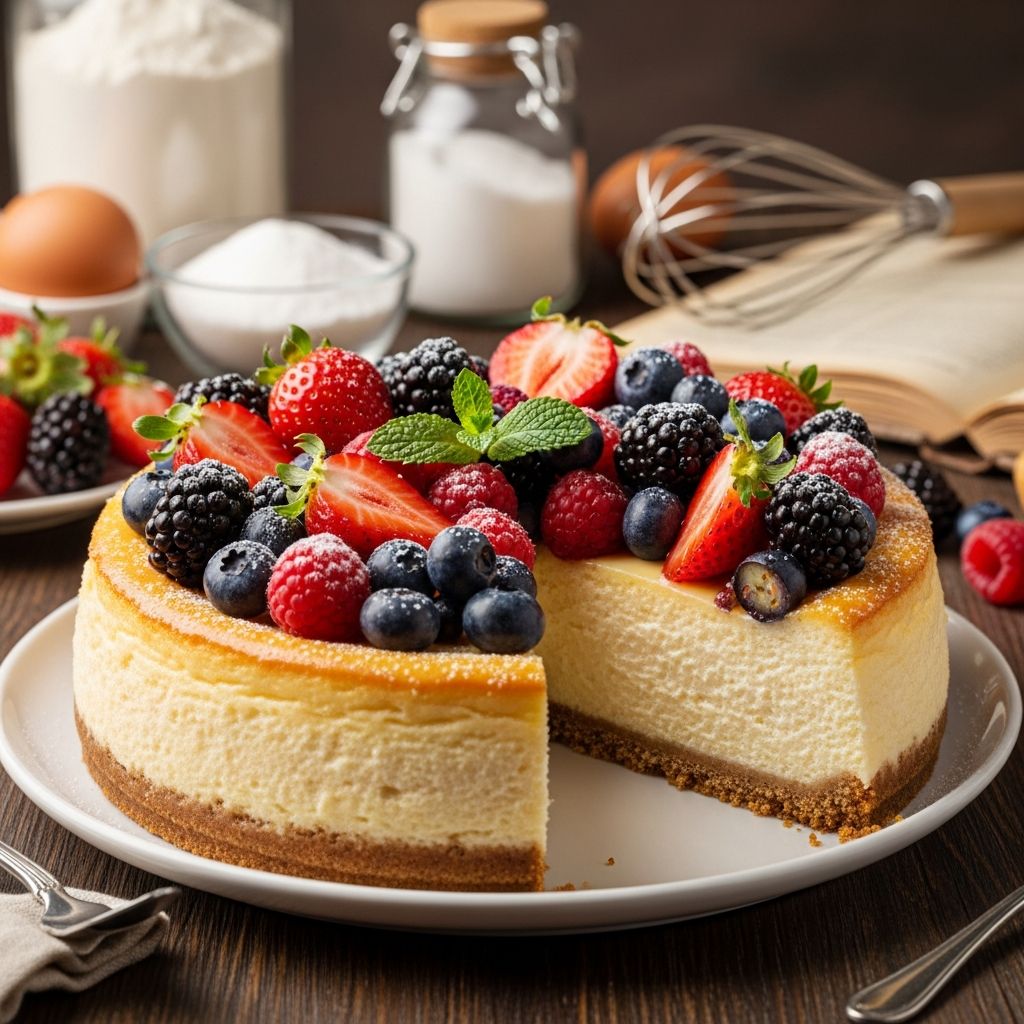
Cheesecake is one of the most beloved desserts worldwide, offering a rich, creamy texture that’s both indulgent and versatile. Whether you’re craving a classic New York-style baked cheesecake or a light no-bake version, achieving perfection requires understanding ingredients, techniques, and common pitfalls. This guide dives deep into everything you need to know to create restaurant-quality cheesecakes at home, with detailed recipes, pro tips, and solutions to ensure success every time.
Understanding Cheesecake Basics
At its core, cheesecake combines a sturdy crust with a smooth, tangy filling. The crust provides structure and contrast, while the filling delivers that signature creaminess. Key to success is balance: too much sugar overwhelms the tang, while improper mixing leads to lumps or cracks. Traditional baked cheesecakes rely on gentle heat to set the eggs in the filling, creating a custard-like texture. No-bake versions use gelatin or thickeners for stability without the oven.
Cheesecake’s history traces back to ancient Greece, where it was served to athletes at the first Olympic games. Modern iterations, especially the dense New York style, evolved in the U.S. during the 20th century. Today, variations span flavors from chocolate swirl to matcha-infused, proving its adaptability.
Essential Ingredients for Success
Selecting high-quality ingredients is non-negotiable. Here’s a breakdown:
- Cream Cheese: Full-fat blocks (not whipped) are ideal for richness. Brands like Philadelphia offer consistent results due to their creamery standards.
- Eggs: Room-temperature large eggs emulsify smoothly, preventing lumps.
- Sugar: Granulated for even dissolving; avoid powdered to prevent graininess.
- Sour Cream or Heavy Cream: Adds moisture and lightness.
- Crust Components: Graham crackers, butter, and a pinch of salt for flavor.
- Flavorings: Vanilla extract, lemon zest, or citrus juice for brightness.
Pro tip: Always soften cream cheese at room temperature for 1-2 hours to ensure a velvety batter.
Building the Perfect Crust
A great crust is crisp yet sturdy, anchoring the creamy filling. Graham cracker crusts are classic, but ginger snaps or Biscoff cookies add unique twists.
| Crust Type | Ingredients | Best For |
|---|---|---|
| Graham Cracker | 1.5 cups crumbs, 6 tbsp butter, 1/4 cup sugar | Classic New York style |
| Oreo | 24 cookies crushed, 5 tbsp butter | Chocolate cheesecakes |
| Nut-Based | 1 cup pecans/almonds, 3 tbsp butter, 2 tbsp sugar | Nutty, gluten-free options |
Steps:
- Pulse cookies in a food processor until fine.
- Mix with melted butter and sugar until it holds when squeezed.
- Press firmly into a 9-inch springform pan, using the bottom of a glass for evenness.
- Bake at 325°F for 10 minutes to set, then cool completely.
This pre-baking prevents sogginess from the filling.
Classic Baked Cheesecake Recipe
Yield: 12 servings | Prep: 20 min | Bake: 60-70 min | Chill: 6 hours
Ingredients (Filling):
- 32 oz cream cheese, softened
- 1 cup granulated sugar
- 3 large eggs
- 1 cup sour cream
- 1 tbsp vanilla extract
- 2 tbsp lemon juice
- 1/4 tsp salt
Instructions:
- Preheat oven to 325°F. Prepare crust as above.
- Beat cream cheese and sugar on low until smooth, 2-3 minutes.
- Add eggs one at a time, mixing just until incorporated.
- Blend in sour cream, vanilla, lemon juice, and salt.
- Pour into crust; tap pan to release air bubbles.
- Bake in a water bath: Wrap pan in foil, place in larger pan with hot water halfway up sides. Bake 60-70 min until edges are set but center jiggles.
- Turn off oven, crack door, cool 1 hour. Chill overnight.
This method yields a 3-inch tall, ultra-creamy cheesecake.
No-Bake Cheesecake for Beginners
Perfect for hot days or those without ovens. Sets in the fridge using gelatin.
Ingredients:
- 24 oz cream cheese
- 1 cup powdered sugar
- 1.5 cups heavy whipping cream
- 2 packets (14g) unflavored gelatin
- 1/2 cup warm water
- 1 tsp vanilla
Steps:
- Bloom gelatin in water for 5 min, then microwave 10 sec to dissolve.
- Whip cream to stiff peaks; set aside.
- Beat cream cheese, sugar, and vanilla until smooth; mix in gelatin.
- Fold in whipped cream gently.
- Pour over crust; chill 4+ hours.
Top with fruit compote for extra flair.
Mastering the Water Bath Technique
A water bath (bain-marie) ensures even, gentle cooking, preventing cracks. USDA food safety guidelines recommend it for custards to avoid overcooking surfaces while centers remain underdone. Wrap springform tightly in heavy-duty foil; test for leaks by placing in water first. Use a roasting pan with 1-inch hot water. After baking, cool gradually to room temp before chilling.
Troubleshooting Common Issues
Even pros face problems. Here’s how to fix them:
- Cracks: Caused by overmixing (excess air), rapid cooling, or overbaking. Solution: Water bath, low speed mixing, gradual cooling.
- Soggy Crust: From unbaked crust or leaky pan. Always pre-bake and double-foil.
- Lumpy Batter: Cold ingredients. Soften everything fully.
- Not Setting: Underbaked or low-fat dairy. Use full-fat and bake until jiggly only in center.
- Grainy Texture: Undissolved sugar. Mix thoroughly on low.
For cracks post-bake, cover with whipped cream or ganache—no one will know!
Flavor Variations to Elevate Your Cheesecake
Experiment beyond vanilla:
- Chocolate: Add 8 oz melted bittersweet chocolate to batter.
- Strawberry Swirl: Puree 1 cup berries, swirl into batter before baking.
- Key Lime: Swap lemon for lime zest/juice, top with whipped cream.
- Pumpkin Spice: Mix 1 cup pumpkin puree, 1 tsp cinnamon, 1/2 tsp nutmeg.
- Salted Caramel: Drizzle no-bake with homemade caramel.
Always taste batter before baking to adjust sweetness.
Storage and Serving Tips
Store baked cheesecakes in the fridge up to 5 days, wrapped tightly. Freeze slices up to 2 months; thaw overnight. Serve at room temp for peak creaminess. Pair with fresh berries, chocolate sauce, or espresso for balance.
According to Food and Drug Administration (FDA) guidelines, refrigerate cheesecakes below 40°F to prevent bacterial growth like Listeria.
Advanced Techniques for Pro Results
For next-level cheesecakes:
- Sift dry ingredients to avoid grit.
- Strain batter through a sieve for silkiness.
- Use a kitchen torch to brown the top lightly post-chill.
- Infuse crust with browned butter for nutty depth.
Practice makes perfect—start with half recipes to test.
Frequently Asked Questions (FAQs)
Can I use low-fat cream cheese?
Yes, but expect less creaminess and potential cracking. Full-fat is best.
How do I prevent my springform pan from leaking?
Double-wrap in foil and press crust high up sides.
Is a water bath absolutely necessary?
Not always, but it drastically reduces cracking risk.
Can I make cheesecake vegan?
Yes, use cashew-based cream cheese, coconut cream, and agar for setting.
How long does cheesecake last?
5 days in fridge, 2 months frozen.
With these techniques, your cheesecakes will impress every time. Happy baking!
References
- Food Code — U.S. Food and Drug Administration. 2022. https://www.fda.gov/food/fda-food-code/food-code-2022
- Baking Science & Technology — Siebel Institute of Technology. 2019. https://www.siebelinstitute.com/baking-science-technology/
- Custard Cookery — USDA Agricultural Research Service. 2023-05-15. https://www.ars.usda.gov/research/publications/publication/?seqNo115=417892
- Cheesecake Production Guidelines — Institute of Food Technologists. 2024-02-10. https://www.ift.org/news-and-publications/food-technology-magazine/issues/2024/february/features/cheesecake-production
Similar Articles




Read full bio of Sneha Tete