Concord Grape Pie Recipe: Classic Double-Crust Plus 4 Variations
Discover the rich history, step-by-step recipes, and pro tips for baking the iconic Concord grape pie that captures fall's essence in every slice.
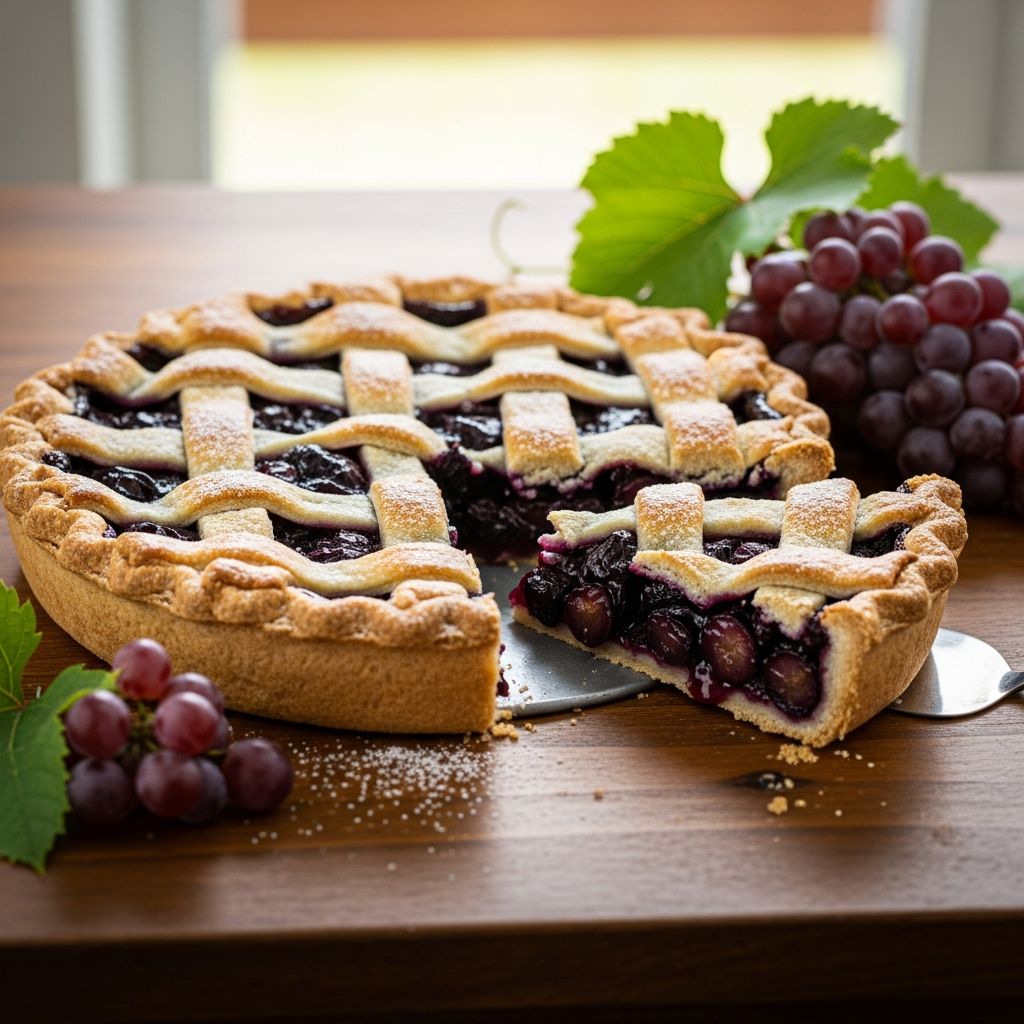
Concord grape pie stands out as a rare and cherished dessert, transforming the bold, musky flavor of Concord grapes into a jammy filling encased in flaky pastry. This treat, deeply rooted in American regional cuisine, offers a unique sweet-tart profile unlike common fruit pies.
The Origins and Cultural Significance of Concord Grape Pie
Concord grapes, developed in the 1840s by Ephraim Wales Bull in Massachusetts, thrive in the cool climates of the northeastern United States, particularly New York’s Finger Lakes region. Their thick skins, juicy pulp, and robust flavor make them ideal for pies, jellies, and juice. The pie’s fame traces back to Naples, New York, in the early 1960s, where local lore credits Irene Bouchard with popularizing it. Restaurant owner Al Hodges adapted her recipe to draw crowds, sparking a local tradition that spread through farmstands and bakeries.
Today, Concord grape pie symbolizes harvest season in grape-growing areas, from the Finger Lakes to parts of Canada. Its preparation demands patience—separating skins, cooking pulp, and straining seeds—but yields a filling with intense grape essence, skins adding chew and color. This dessert evokes nostalgia, often passed down through family recipes with personal tweaks like lemon for brightness or cornstarch for thickness.
Understanding Concord Grapes for Perfect Pies
Fresh Concord grapes peak in late summer to early fall, identifiable by their deep purple-blue hue, slip skins, and seeds embedded in gelatinous pulp. About 2.5 pounds with stems yield roughly 6 cups de-stemmed, reducing further after processing. Their high pectin content naturally thickens fillings, but added starches prevent sogginess—a common pitfall due to the wet pulp.
- Select ripe grapes: Firm but yielding to gentle pressure, with a powdery bloom on skins.
- Preparation basics: Wash, destem, then separate pulp from skins by squeezing—pulp cooks quickly, skins wait for later.
- Seed removal: Simmer pulp, strain through a fine sieve or cheesecloth; discard seeds for smooth texture.
Freezing grapes or pre-made filling extends usability: cook and strain pulp, mix with skins, then freeze. Thaw, add thickeners and sugar before baking.
Classic Double-Crust Concord Grape Pie Recipe
This foundational recipe serves 8, using a 9-inch pie dish. Prep time: 45 minutes active, plus cooling. Bake time: 50-60 minutes.
Ingredients
| Ingredient | Quantity |
|---|---|
| Double-crust pie dough (homemade or store-bought) | 1 recipe |
| Concord grapes (washed, destemmed) | 1.5 lbs (about 4-5 cups pulp/skins) |
| Granulated sugar | 3/4 cup + 2 tbsp |
| Cornstarch | 2.5 tbsp |
| Lemon juice (fresh) | 1.5 tbsp |
| Unsalted butter (cut into dots) | 2 tbsp |
| Egg (for wash) | 1, beaten |
| Turbinado sugar (optional) | 1-2 tbsp for topping |
Step-by-Step Instructions
- Process grapes: Squeeze pulp into a saucepan, reserve skins. Simmer pulp 5 minutes until soft, then strain out seeds, yielding about 1.5 cups puree.
- Combine filling: In a pot, mix strained pulp, skins, sugar, cornstarch, and lemon juice. Cook over medium heat, stirring until thickened and bubbly (about 5-7 minutes). Cool completely.
- Assemble pie: Preheat oven to 400°F. Roll bottom crust into pie pan, fill with cooled mixture, dot with butter. Top with second crust, crimp edges, vent with slits. Brush with egg wash, sprinkle turbinado.
- Bake: 15 minutes at 400°F, reduce to 350°F for 35-45 minutes until golden and bubbling. Cool 2-3 hours to set.
Pro tip: Place a foil-lined sheet below to catch drips.
Variations to Elevate Your Grape Pie
Adapt the classic for different textures and dietary needs.
- Crumb-Topped Version: Skip top crust. Mix 1/2 cup each flour and sugar with 1/4 cup softened butter for streusel. Sprinkle over filling; bake as directed. Gluten-free flour works seamlessly.
- Tapioca-Thickened Canadian Style: Use 3 tbsp quick-cooking tapioca instead of cornstarch for clearer gel. Let grapes macerate 4-5 hours with sugar and tapioca before baking.
- Deep-Dish Crisp: Pour filling into a 2-quart baker, top with double streusel batch. Bake at 350°F for 35 minutes—no crust rolling needed.
- Seedless or Clear Jel Option: For smoother filling, use seedless grapes or Clear Jel thickener (1/2 cup for 8 cups grapes) to mimic commercial quality.
Troubleshooting Common Pie Problems
Grape pie’s juiciness can lead to issues; here’s how to fix them.
| Problem | Cause | Solution |
|---|---|---|
| Soggy bottom crust | Undercooked filling or excess liquid | Fully cool filling before assembly; bake on lowest rack or pre-bake bottom crust 10 minutes with weights. |
| Runny filling | Insufficient thickener | Increase cornstarch to 3 tbsp or use tapioca; ensure full simmer before cooling. |
| Bitter taste | Underripe grapes | Taste pulp and adjust sugar; add more lemon for balance. |
| Cracks in top crust | Too much steam | Proper vents and egg wash; tent edges if browning fast. |
Storage, Freezing, and Make-Ahead Tips
Store baked pie covered at room temperature up to 2 days or refrigerate 5 days. Reheat slices at 325°F for 10 minutes. For freezing: assemble unbaked pie, wrap tightly, freeze up to 3 months. Bake from frozen, adding 10-15 minutes. Pre-make filling: cook, cool, freeze in bags; thaw overnight, then assemble.
Pairing and Serving Suggestions
Serve warm with vanilla ice cream to contrast the tartness, or whipped cream for lightness. Sharp cheddar slices complement the fruitiness in traditional style. For beverages, pair with black coffee, sparkling wine, or Concord grape juice. Fall gatherings shine with this pie alongside pumpkin treats.
Frequently Asked Questions (FAQs)
Can I use store-bought crust?
Yes, it saves time and works well. Opt for deep-dish style to hold the filling.
What if Concord grapes aren’t in season?
Frozen grapes or purees approximate, but fresh yield best flavor. Check farmers’ markets in September-October.
Is this pie gluten-free?
Easily: use gluten-free flour in filling and crust, like Cup4Cup.
How do I know when it’s done baking?
Look for bubbly filling at edges and golden crust. Internal temp of 195°F in center confirms set.
Why separate skins and pulp?
Skins provide color and texture; pulp strains seeds for smoothness without grittiness.
Nutritional Insights and Scaling
Per slice (1/8 pie, double-crust): ~450 calories, high in natural sugars from grapes. Scale sugar down 20% for tart preference. Veganize by using plant-based butter and crust.
References
- Concord Grape Pie – Home in the Finger Lakes — Home in the Finger Lakes. 2015 (updated). https://homeinthefingerlakes.com/concord-grape-pie/
- Vintage Concord Grape Pie with Crumb Topping — MamaGourmand. 2023 (approx., recent recipe). https://www.mamagourmand.com/concord-grape-pie/
- Canadian Classic Concord Grape Pie — A Canadian Foodie. 2013-11-02. https://www.acanadianfoodie.com/2013/11/02/canadian-classic-concord-grape-pie/
- Concord Grape Pie – YouTube — Danette Blair (video). Recent (2023+). https://www.youtube.com/watch?v=FupYMeWKv_0
- Concord Grape Pie — Cookie Dough and Oven Mitt. Recent. https://www.cookiedoughandovenmitt.com/concord-grape-pie-5/
Similar Articles




Read full bio of Sneha Tete