Colorful Tie-Dye Butter Cookies Recipe
Create vibrant marbled butter cookies with this step-by-step guide
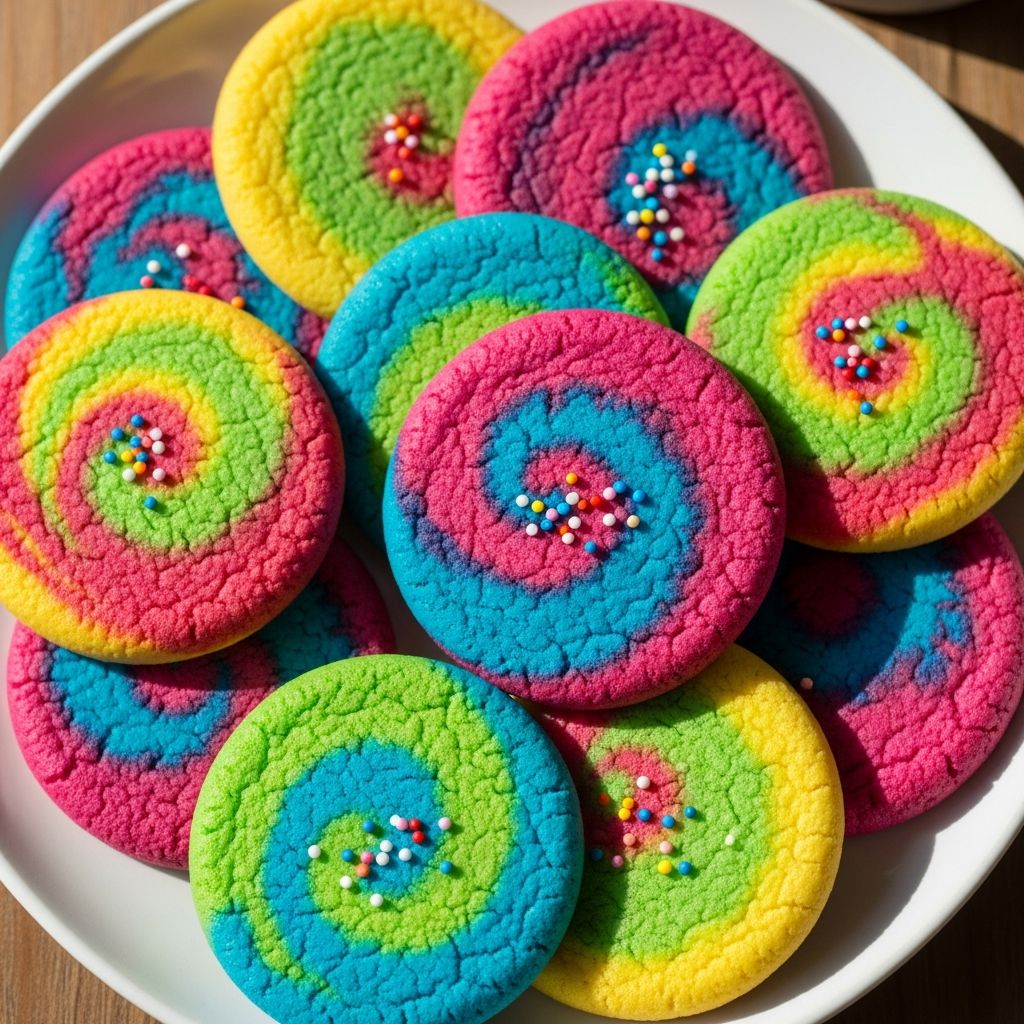
Creating Vibrant Tie-Dye Butter Cookies at Home
Tie-dye butter cookies represent a delightful intersection of culinary creativity and visual artistry. These treats feature striking color patterns swirled throughout tender, buttery dough, making them as visually appealing as they are delicious. Whether you’re planning a celebration, preparing gifts for loved ones, or simply seeking a creative baking project, tie-dye butter cookies offer an engaging way to elevate your dessert game.
The technique for creating these cookies has become increasingly popular among home bakers seeking projects that combine traditional baking fundamentals with modern decorative flair. By understanding the fundamentals of dough preparation, color integration, and shaping techniques, you can produce professional-looking cookies in your own kitchen.
Understanding the Foundation: Selecting Your Base Dough
The foundation of exceptional tie-dye butter cookies begins with a reliable dough base. A quality butter cookie dough should be rich, tender, and capable of holding vibrant colors without becoming overly dense or dry.
The essential ingredients for creating this base include:
- Softened butter — Provides richness and creates the tender crumb structure that defines quality butter cookies
- Granulated sugar — Adds sweetness while contributing to proper texture and spread during baking
- Egg components — Act as a binding agent and contribute to moisture and structure
- Vanilla extract — Enhances flavor and provides subtle aromatic complexity
- All-purpose flour — Forms the structural base and works with leavening agents to achieve ideal texture
- Leavening agents — Baking soda or cream of tartar help achieve light, tender results
- Salt — Balances sweetness and enhances overall flavor profile
The ratio of these ingredients directly impacts the final texture and appearance of your cookies. A dough that’s too wet will spread excessively and lose color definition, while dough that’s too dry may crack during rolling and shaping.
Mastering Color Integration Techniques
The visual impact of tie-dye butter cookies depends entirely on how color is incorporated into the dough. There are several approaches to achieving the signature marbled appearance that makes these cookies so distinctive.
Selecting Appropriate Coloring Agents
Food coloring options have evolved significantly, offering bakers multiple choices for achieving vibrant results:
- Gel food coloring — Provides concentrated pigment without adding excess liquid to the dough, preventing texture changes
- Plant-based powder colorants — Offer natural alternatives that integrate smoothly without compromising dough consistency
- Liquid food coloring — Traditional option that requires adjusting flour amounts to compensate for added moisture
Gel colorings are particularly valued by experienced bakers because they deliver intense hues while maintaining dough integrity. The concentrated pigment means you use minimal amounts, preserving the moisture balance essential for tender cookies.
Creating Marbled Patterns
The marbling technique involves strategically placing colored dough portions within a base layer, then using rolling or folding methods to create the distinctive swirled appearance. This approach differs from completely blending colors throughout the entire batch, instead preserving color definition through partial integration.
To achieve optimal marbling:
- Divide your base dough strategically, keeping a significant portion uncolored to serve as the canvas
- Divide the remaining dough into separate portions and color each differently
- Place colored portions in distinct locations across the plain base rather than distributing them uniformly
- Use gentle rolling or folding motions to partially integrate colors, creating streaks rather than complete blending
- Preserve some color separation to maintain visual interest in the final product
Preparation and Shaping Methods
Once your dough is properly colored and mixed, the shaping method determines whether your cookies will showcase the marbled pattern effectively.
The Roll-and-Slice Approach
One highly effective method involves creating a log-shaped dough roll that showcases the color patterns in cross-section:
- Place your mixed dough on parchment paper and gently flatten it into a rectangle
- Using parchment paper as an aid, roll the dough into a compact log
- The spiral pattern created during rolling reveals the marbled colors when sliced
- This method creates uniform cookie sizes and consistent color display across multiple cookies
Decorative Coating Options
Enhancing your shaped dough with decorative coatings adds textural interest and visual appeal:
| Coating Type | Application Method | Visual Effect |
|---|---|---|
| Nonpareils (pearl sprinkles) | Roll dough log in coatings before chilling | Adds sparkle and dimension to cookie edges |
| Sanding sugar | Press into dough surface before baking | Creates subtle shimmer and texture contrast |
| Colored sugar crystals | Distribute over dough before chilling | Complements marbled colors with additional hue variation |
Chilling and Storage Considerations
Proper chilling is fundamental to successful tie-dye cookie production. Cold dough maintains color definition and prevents excessive spreading during baking, which would blur the marbled patterns.
Chilling protocols:
- Wrap your shaped dough log tightly in parchment paper or plastic wrap
- Refrigerate for a minimum of two hours, or until dough is completely firm
- Extended chilling (4-8 hours) can further enhance color definition and make slicing cleaner
- Overnight chilling allows flavors to meld while maintaining optimal texture
Proper storage extends the shelf life of both dough and finished cookies. Refrigerated dough keeps well for up to one week, while properly stored baked cookies remain fresh for several days at room temperature in an airtight container.
Baking Execution and Timing
Achieving evenly baked tie-dye cookies requires attention to oven temperature and baking duration. Most tie-dye butter cookie recipes benefit from moderate oven temperatures that allow the interior to bake through without over-browning the exterior.
Key baking parameters:
- Preheat your oven thoroughly to ensure consistent temperature
- Typical baking temperatures range from 350°F to 375°F depending on thickness
- Thin-sliced cookies typically require 7-9 minutes to achieve light golden edges
- Remove cookies when edges show light browning but centers remain slightly soft
- Allow cookies to rest on the baking sheet for 1-2 minutes before transferring to cooling racks
The resting period is crucial because it allows carryover cooking to firm the structure without continued color darkening. Transferring cookies too quickly breaks their delicate structure, while leaving them too long risks over-hardening.
Advanced Decorating Techniques
For those seeking to elevate their presentation further, glazing adds an additional dimension to tie-dye cookies:
Creating Complementary Glazes
A simple glaze base combines powdered sugar with milk, creating a smooth coating that accepts additional color. To make a coordinated glaze:
- Combine powdered sugar with milk in a 1:1 ratio by weight
- Adjust consistency until the mixture reaches a pourable yet opaque state
- Divide the glaze and tint each portion with plant-based food coloring powders or gel
- Drizzle or dip cookies to add visual interest while complementing the marbled pattern
Using powdered plant-based colorants in glaze prevents the watering-down that occurs with liquid colorings, maintaining both color vibrancy and proper glaze consistency.
Frequently Asked Questions
Can I prepare tie-dye cookie dough in advance?
Yes, prepared dough logs keep well refrigerated for up to one week or frozen for several months. This makes them ideal for advance preparation before entertaining or gift-giving occasions.
What if my colors appear muted after baking?
This typically results from using insufficient coloring agent or blending colors too thoroughly before baking. Use concentrated gel colorings sparingly, and preserve some color streaking rather than complete blending.
How do I achieve clean slices through colored dough?
A sharp, thin-bladed knife produces cleaner slices than serrated blades. Dip the knife in warm water between cuts, wiping away excess moisture to prevent sticking while maintaining edge sharpness.
Are plant-based colorings more effective than traditional food coloring?
Plant-based powders offer concentrated pigment without adding moisture, making them particularly effective for tie-dye applications. However, quality gel colorings also perform excellently when used properly.
What causes cookies to spread excessively during baking?
Over-warm dough, insufficient chilling time, or dough that’s too soft are common culprits. Ensure adequate refrigeration and use room-temperature butter rather than melted butter for better structure.
Variations and Creative Adaptations
Once you master the basic technique, numerous variations allow for creative expression:
- Flavor variations — Add almond extract, lemon zest, or peppermint flavoring to your base dough
- Color combinations — Experiment with complementary color pairings or seasonal hue schemes
- Shape variations — Try creating square logs or adjusting thickness for different visual effects
- Glaze complementation — Match glaze colors to dough colors for unified presentation
Troubleshooting Common Challenges
Understanding common issues helps ensure consistent success with your tie-dye butter cookie projects. If cookies appear greasy after baking, you may have used excessive butter or baked at insufficient temperature. If colors appear pale or grayish, the issue typically stems from using too little coloring agent or choosing lower-quality food coloring products.
When cookies lack the expected marbled appearance and instead show uniform color, this usually indicates that colors were blended too thoroughly during dough preparation. Future batches should employ less mixing once colors are incorporated.
References
- Tie-Dye Butter Cookies Recipe — Bon Appétit. 2024. https://www.bonappetit.com/recipe/tie-dye-butter-cookies
- Easy Swirled Tie-Dye Cookies — Eat Move Make. 2024. https://eatmovemake.com/swirled-tie-dye-cookies/
- Food Coloring Standards and Safety — U.S. Food and Drug Administration. 2024. https://www.fda.gov/food/food-ingredients-packaging/color-additives-status-list
Similar Articles




Read full bio of Sneha Tete