Grilled Steak With Balsamic And Caprese: Restaurant-Style
Master the art of combining bold balsamic flavors with classic Italian freshness
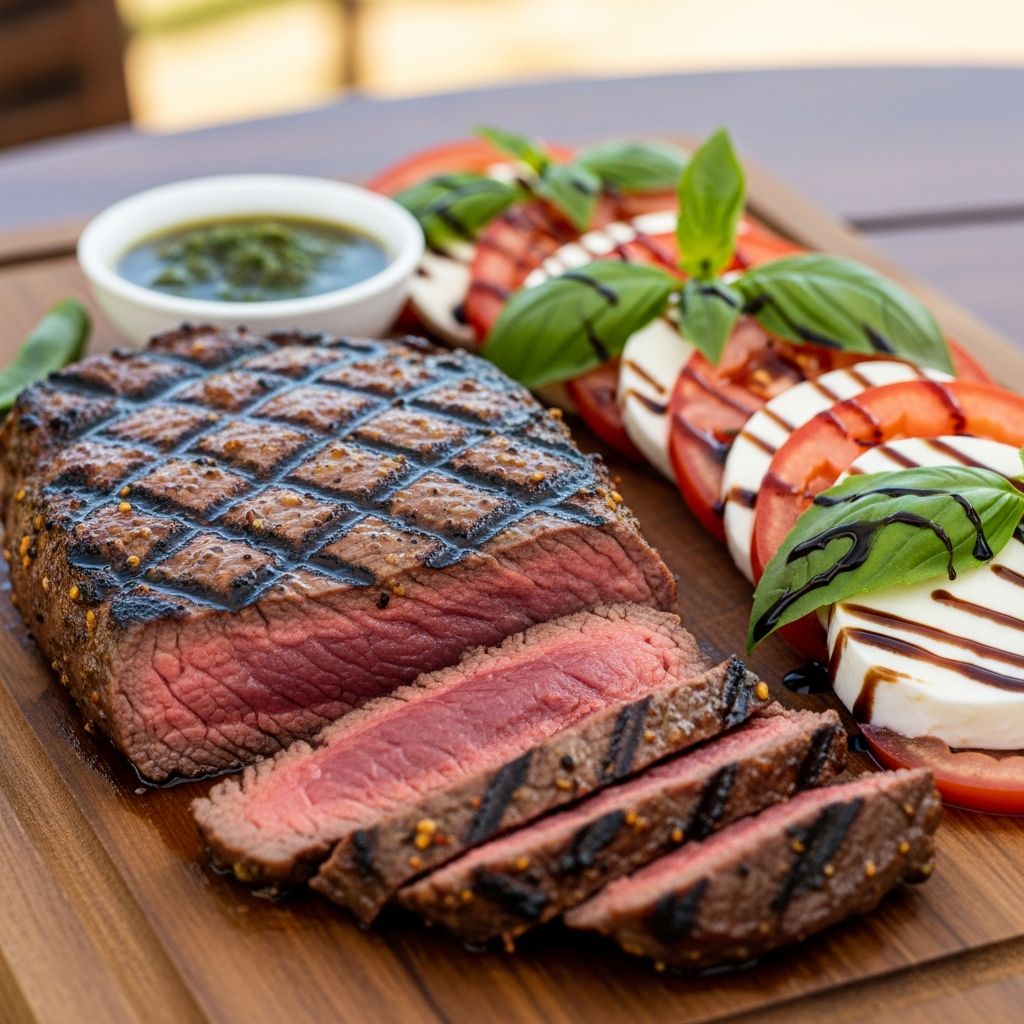
Combining the smoky richness of grilled steak with the bright, refreshing character of Italian caprese ingredients creates a compelling dish that bridges bold and delicate flavors. This culinary approach transforms a simple protein into something that feels restaurant-worthy while remaining approachable for home cooks. The marriage of deep, tangy balsamic notes with creamy mozzarella, juicy tomatoes, and fragrant basil demonstrates how thoughtful ingredient selection and technique can elevate everyday cooking.
Understanding the Flavor Architecture
The foundation of this dish rests on understanding how different flavor components interact. The steak itself provides a savory, protein-rich base that benefits from acidic and aromatic enhancement. Balsamic vinegar introduces depth through its concentrated sweetness and slight tang, while garlic and mustard add complexity and pungency to the marinade. When these elements penetrate the meat during the marinating process, they create a seasoning framework that develops throughout cooking.
The caprese topping layer offers textural contrast and refreshing brightness. Fresh mozzarella contributes a creamy, mild counterpoint to the seasoned steak, while tomatoes provide juiciness and subtle acidity. Basil acts as an aromatic bridge, unifying both the grilled and fresh components through its distinctive herbal profile. This layering of flavors creates complexity without requiring an extensive ingredient list.
Selecting and Preparing Your Protein
The choice of steak significantly impacts the final result. Flank steak remains the most popular option for this preparation because its relatively lean structure benefits from marinating, which adds moisture and flavor. The grain structure of flank steak also cuts easily when sliced thinly after cooking, allowing the caprese topping to adhere properly.
Before marinating, evaluate the steak’s thickness. Meat that measures roughly three-quarter inch works optimally, as it allows adequate marinade penetration without becoming overly saturated. Pat the steak dry with paper towels before placing it in the marinade—surface moisture can inhibit proper marinating. Some cooks prefer scoring the surface lightly with a knife to enhance marinade absorption, though this step remains optional.
Crafting the Optimal Marinade Blend
The marinade serves as the transformative element that infuses the meat with complex flavors. The traditional formula combines balsamic vinegar as the acidic component, olive oil as the fat base, and supporting aromatics and seasonings.
Core Marinade Components
- Balsamic Vinegar: Provides acidity and concentrated sweet notes. Use genuine balsamic rather than imitation varieties for superior depth and complexity.
- Extra Virgin Olive Oil: Carries fat-soluble flavors and maintains meat moisture during cooking. The quality of your olive oil directly impacts the final taste.
- Dijon Mustard: Adds subtle piquancy and helps emulsify the marinade while contributing fermented complexity.
- Honey or Brown Sugar: Balances acidity with sweetness, creating caramelization potential during cooking.
- Garlic: Provides savory, aromatic depth. Freshly minced garlic offers superior flavor compared to pre-minced varieties.
- Salt and Pepper: Enhance all other flavors and begin the seasoning process.
- Worcestershire Sauce (optional): Introduces umami and additional depth for those preferring more complexity.
Combine these elements in a bowl and whisk thoroughly until fully integrated. The goal involves creating an emulsion where oil and vinegar remain suspended rather than separating. This consistent marinade distribution ensures even flavor development across the entire steak.
The Marinating Timeline and Storage
Timing represents a critical variable in marinade effectiveness. A minimum of thirty minutes allows initial flavor penetration, but longer marinating periods yield superior results. Most culinary sources recommend between four and twelve hours for flank steak, with overnight marinating representing the maximum benefit point before the acid begins breaking down proteins excessively.
Place the steak in a resealable bag or shallow dish, pour the marinade over completely, and ensure full coverage. Press out excess air from bags before sealing, then refrigerate at consistent cold temperatures. Turn the steak periodically if marinating beyond six hours to promote even exposure to the marinade.
Remove the steak from refrigeration approximately thirty minutes before cooking. This brings the meat closer to room temperature, promoting more even cooking throughout and preventing the exterior from overcooking while the interior reaches the desired doneness level.
Grilling Techniques for Optimal Results
Before placing steak on the grill, shake off excess marinade to prevent flare-ups. Reserve a portion of the original marinade for finishing the dish, as this will provide fresh flavor without containing raw meat juices.
Preheat the grill to medium-high heat, approximately 400-450 degrees Fahrenheit. Oil the grates lightly to prevent sticking. Place the steak on the grill and resist the urge to move it excessively—allow three to five minutes per side for medium-rare doneness, adjusting based on meat thickness and your temperature preferences.
Watch for clear juices to emerge on the steak’s surface, indicating when to flip. Avoid pressing down on the meat with your spatula, as this squeezes out moisture and reduces tenderness. For accurate doneness assessment, use an instant-read meat thermometer—target 130-135 degrees Fahrenheit for medium-rare, which will rise several degrees during the resting period.
Preparing the Caprese Component
While the steak cooks, prepare the caprese topping elements. Halve cherry or grape tomatoes, as these smaller varieties work better than larger beefsteak tomatoes for this application. The question of whether to char the tomatoes introduces interesting technique variations.
Tomato Preparation Methods
Some preparations involve grilling the tomatoes directly alongside the steak, allowing them to blister and develop concentrated flavors. This requires approximately three to five minutes over medium-high heat in a grill basket or on a perforated grill surface. The heat concentrates their sugars while creating light char marks that add textural interest.
Alternatively, prepare tomatoes in a heavy-bottomed skillet on the stovetop at medium-high heat. Dry-sear them without oil until blistered, then remove to a bowl. This method offers better temperature control and allows the caprese topping to come together while the steak rests.
Fresh mozzarella should be diced or left in small balls, depending on preference and availability. Tear fresh basil into appropriately sized pieces rather than cutting it with a knife, which can bruise delicate leaves and diminish their aromatic qualities.
The Resting and Assembly Process
After removing the steak from the grill, allow it to rest for five to ten minutes on a clean cutting board. This critical step permits carryover cooking to complete while muscle fibers relax, distributing juices throughout the meat. Cutting into steak immediately after cooking forces these juices onto the cutting board rather than into each bite.
Slice the rested steak thinly, cutting against the grain rather than parallel to the muscle fibers. Cutting against the grain shortens the muscle fiber length, resulting in a more tender eating experience. Arrange the slices on a serving platter or individual plates, creating an attractive presentation foundation.
Layer the caprese components over the sliced steak while it retains warmth—the residual heat softens the mozzarella slightly while bringing out the aroma of basil. Drizzle with the reserved marinade or a high-quality balsamic glaze for finishing brightness. A squeeze of fresh lemon juice adds complexity without overwhelming the established flavors.
Variations and Customizations
Different protein options accommodate various preferences. Sirloin steak works when cut thin after cooking, though it lacks the characteristic grain structure of flank steak. Skirt steak offers a closer grain pattern similarity to flank and marbles more heavily, appealing to those preferring fattier cuts.
Caprese components can be adjusted based on seasonal availability and personal preference. Sun-dried tomatoes add concentrated flavor in winter months when fresh tomatoes lack character. Burrata cheese, with its creamy center, provides luxurious richness compared to standard fresh mozzarella. Different basil varieties—Thai basil or opal basil, for instance—introduce subtle flavor variations.
The marinade itself accommodates substitutions. Balsamic reduction can replace straight balsamic vinegar for concentrated sweetness. Red wine vinegar provides different acidity character than balsamic. Thyme or oregano supplement or replace basil in the marinade for different aromatic profiles.
Serving Suggestions and Pairing Strategies
This dish pairs beautifully with simple accompaniments that don’t compete with the established flavors. Grilled bread rubbed with garlic and olive oil serves as an excellent vehicle for absorbed juices. A simple arugula salad with lemon vinaigrette provides refreshing contrast without overwhelming the palate.
Wine pairings should lean toward reds with good acidity—a Barbera or lighter Chianti complements both the balsamic elements and fresh tomatoes. For white wine preferences, a crisp Sauvignon Blanc or Vermentino works well, offering acidity and mineral qualities that bridge the dish’s contrasting components.
Storage and Make-Ahead Considerations
Prepare the marinade up to two days in advance, storing it in an airtight container in the refrigerator. Marinate the steak itself no more than twelve hours before cooking, as extended marinating can result in overly soft exterior texture. Prepare all caprese components within an hour of serving to maintain optimal freshness.
Leftover cooked steak stores well refrigerated for three to four days, though the caprese topping should be consumed fresh. Reheat leftover steak gently—either by slicing thin and warming briefly in a skillet or serving cold with fresh caprese elements and a drizzle of balsamic glaze for a composed salad approach.
Frequently Asked Questions
Can I prepare this dish without a grill?
Yes—use a cast iron skillet or heavy-bottomed pan at medium-high heat indoors. Follow the same cooking times, though you’ll sacrifice the characteristic grill marks and smoky undertones. A broiler can provide some of these qualities in final moments.
How long should I marinate the steak?
Minimum thirty minutes for adequate flavor, but four to twelve hours yields optimal results. Overnight marinating is acceptable and often preferred, though extended marinating beyond twelve hours can negatively impact texture.
What’s the best way to slice the steak?
Always cut against the grain, using a sharp knife and gentle sawing motions. Thin slices—roughly quarter-inch thick—work best for even cooking throughout and better caprese component adherence.
Can I use different cheese in the caprese layer?
Absolutely—burrata, ricotta, or even soft goat cheese accommodate different flavor preferences, though traditional caprese specifically features fresh mozzarella.
How do I know when the steak is done?
Use an instant-read meat thermometer targeting 130-135 degrees Fahrenheit for medium-rare. Remove steak at slightly lower temperatures, as carryover cooking continues during resting.
References
- The Science of Cooking: Understanding Heat Transfer and Meat Doneness — McGee, Harold. Basic Books. 2004. https://www.harlowschool.com/assets/uploads/2019/01/On-Food-and-Cooking.pdf
- Grilling Methods and Marinade Science — United States Department of Agriculture Food Safety and Inspection Service. 2024. https://www.fsis.usda.gov/food-safety/safe-food-handling-and-preparation/meat
- Marinade Penetration and Enzyme Activity in Meat — Journal of Food Science. Published by Institute of Food Technologists. 2023. https://www.ift.org/
Similar Articles








Read full bio of medha deb