Simplified Croissant Baking with Room Temperature Butter
Master the art of homemade croissants using an innovative softened butter technique
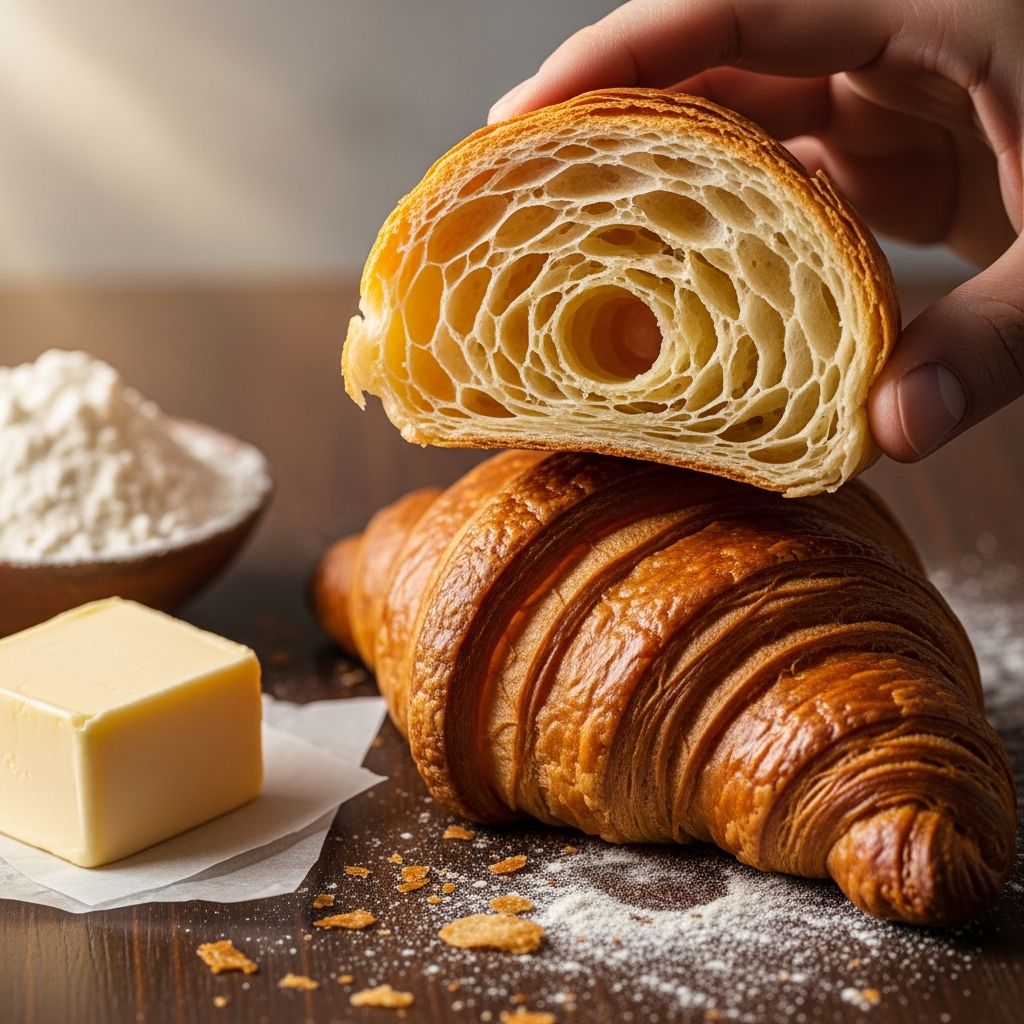
Simplifying the Croissant Experience: The Softened Butter Breakthrough
For decades, croissant baking has been regarded as one of the most challenging endeavors in the culinary world. The traditional lamination process requires precise temperature control, multiple folds, and a butter block that must maintain specific consistency throughout numerous rolling sessions. However, a revolutionary approach utilizing softened butter at room temperature has emerged as a game-changer for home bakers, transforming what was once an intimidating project into an achievable reality for bakers of all skill levels.
This innovative method eliminates the need for the complex butter-block preparation that has traditionally intimidated amateur bakers. By incorporating softened butter directly into the lamination process, home bakers can now achieve the same spectacular results that typically require professional training and experience. The technique maintains all the essential characteristics that make croissants irresistiblethose delicate, paper-thin layers of butter and dough that shatter under your teeth and release their rich, buttery essence.
Understanding the Traditional Barrier to Croissant Success
The conventional croissant-making process has long been shrouded in complexity, primarily due to the intricate butter lamination technique. Traditional methods require bakers to create a precise butter square that must be encased within the dough, followed by a series of carefully executed folds and rests. Each step demands attention to temperature, timing, and technique. The butter must remain cold enough to maintain its structure but not so cold that it shatters or creates uneven layers when rolled.
This traditional approach necessitates:
- Preparation of a separate butter block weeks in advance or at least hours prior to mixing dough
- Precise temperature management throughout the entire lamination process
- Multiple resting periods between folds to prevent butter from melting into the dough
- Extensive knowledge of dough handling and butter behavior
- Specialized equipment or significant manual dexterity with rolling pins
These requirements have resulted in croissant baking remaining largely the domain of professional pastry chefs and experienced home bakers willing to dedicate significant time and effort to mastering the technique.
The Science Behind Softened Butter Integration
The breakthrough with softened butter lies in understanding how butter behaves when combined with flour at different temperatures. When butter reaches room temperature, it becomes malleable and spreadable without losing its structural integrity entirely. The key innovation involves mixing softened butter with a small percentage of flour by weighttypically around 10 percentwhich provides stability and reduces the butter’s tendency to become too greasy or lose definition during the lamination process.
This butter-flour mixture creates what bakers call a “beurrage,” which functions differently than cold, hard butter blocks. The flour coating on each butter particle absorbs excess moisture from the butter, making it more pliable and easier to work with while maintaining the necessary separation between dough layers. The result is remarkably similar to traditional methods but achieved through a more forgiving process.
The science of laminationcreating hundreds of distinct layers of butter and doughremains consistent regardless of the butter’s initial temperature. What changes is the mechanics of achieving those layers. With softened butter, the rolling and folding process becomes less demanding because the butter spreads more evenly within the dough without requiring extreme force or the risk of catastrophic failure if the temperature fluctuates slightly.
Essential Ingredients and Quality Considerations
Creating superior croissants begins with selecting appropriate ingredients. While basic croissant dough requires only flour, sugar, salt, yeast, and milk, the butter selection profoundly influences the final product’s quality.
| Ingredient | Specifications | Why It Matters |
|---|---|---|
| Butter | High-fat content (82-86%), preferably European-style or premium domestic brands | Higher butterfat produces richer flavor and superior flakiness; lower water content ensures clean layering |
| Flour | All-purpose flour, spooned and leveled for accuracy | Provides structure while allowing sufficient moisture absorption for proper dough development |
| Yeast | Active dry yeast, fresh and properly stored | Ensures adequate rise during proofing stages without over-fermenting the dough |
| Milk | Whole milk at cool temperature | Adds richness and affects dough hydration; cool temperature prevents premature butter melting |
| Salt | Fine sea salt, precisely measured | Controls fermentation rate and enhances butter’s subtle flavors |
| Sugar | Granulated sugar, finely measured | Feeds yeast and provides subtle sweetness without overwhelming the dough |
The butter selection deserves particular attention. Regular commercial butter often contains higher water content and lower butterfat percentages than premium alternatives. This distinction becomes crucial when using softened butter because excess water can compromise the lamination process. European-style butters, which typically contain 82-86 percent butterfat compared to standard American butter’s 80 percent, create noticeably superior results with cleaner, more distinct layers.
Preparing the Foundation: Creating Your Croissant Dough
The initial dough preparation differs substantially from the final laminated product. This base dough serves as the vehicle that will eventually encase your butter layers, so proper development ensures superior structure and texture.
Begin by combining dry ingredients—flour, sugar, yeast, and salt—in a large mixing bowl. Thoroughly whisk these components together to ensure even distribution of the yeast and salt, which affects fermentation consistency and flavor development. This step prevents pockets of intense saltiness or uneven yeast activity.
Rather than adding cold butter cubes directly to the flour mixture as in traditional methods, the softened butter approach calls for incorporating butter that has already reached room temperature. Cut the softened butter into small pieces and distribute these throughout the flour mixture, ensuring each piece becomes coated in flour. This coating prevents the butter from clumping together and promotes even distribution throughout the dough.
Pour in cool milk—not warm, which would risk melting the butter prematurely—and stir the mixture using a silicone spatula or wooden spoon rather than an electric mixer. The mixing tool selection matters because electric mixers can fragment the butter into particles too small to create distinct laminated layers. Manual stirring allows you to maintain larger butter pieces that will eventually create the characteristic flaky texture.
Continue stirring until a shaggy dough forms, then turn the dough onto a lightly floured surface and knead gently just until the components cohesively stick together. Avoid developing gluten excessively at this stage, as this dough will undergo further development during the lamination process.
The Critical Resting Phase: Building Flavor and Structure
After the initial mixing, the dough requires an extended resting period in the refrigerator. Wrap the dough tightly in plastic wrap to prevent surface drying and place it in the coldest section of your refrigerator for a minimum of one hour, though overnight resting produces superior results.
This resting period accomplishes multiple objectives beyond simple dough relaxation. The cold temperature allows the gluten network to develop gradually without manual kneading. The flour continues hydrating, resulting in smoother handling characteristics when you begin lamination. The yeast enters a dormant state, which actually develops more complex flavors through enzymatic processes. Additionally, the butter solidifies sufficiently to create distinct layers without becoming so hard that rolling becomes difficult.
The duration of this rest significantly influences final flavor. While one hour produces acceptable results, many experienced bakers recommend extending the refrigeration to overnight or even 24 hours. The extended time allows enzymatic activity to generate more complex flavors that distinguish homemade croissants from mass-produced versions.
Lamination Technique with Softened Butter
Once the dough has adequately rested, remove it from the refrigerator and place it on a generously floured work surface. The lamination process begins with rolling the dough into a rectangle, typically 10 inches by 12 inches, though exact dimensions matter less than consistency.
Prepare your softened butter mixture by combining room-temperature butter with flour—approximately 10 percent flour by weight of the butter. Use a fork or pastry cutter to blend these ingredients thoroughly until the mixture resembles coarse sand. This flour incorporation stabilizes the butter, preventing it from becoming too greasy while maintaining sufficient pliability for spreading.
Spread this butter-flour mixture across two-thirds of your rolled dough rectangle, leaving one-third uncovered. Fold the uncovered third over the buttered portion, then fold the remaining third over that, creating three distinct layers. This creates what bakers call the “single fold” or “letter fold.”
Rotate the dough 90 degrees and repeat this folding process. Each complete cycle—rolling, buttering, and folding—constitutes one “turn.” Traditional croissant recipes typically require four to six turns. With softened butter, four turns generally produces satisfactory results, though five or six creates noticeably superior layer definition and flakiness.
Between each turn, rest the dough in the refrigerator for 15-20 minutes. This prevents the butter from melting into the dough while allowing the gluten to relax, making subsequent rolling easier. These brief rests prove far more manageable than the extensive cooling periods required by traditional cold-butter methods.
Shaping and Final Proofing: The Path to Perfect Crescents
After completing all turns, remove the dough from the refrigerator one final time and roll it into a thin rectangle, typically 1/8-inch thickness. Cut the dough into long isosceles triangles, each measuring approximately 4 inches across the base with a height of 5-6 inches.
To shape each triangle into a crescent, begin at the base and roll toward the point, maintaining even tension and keeping the dough taut. Position the shaped croissants seam-side down on parchment-lined baking sheets, arranging them with adequate spacing—approximately 3 inches between each croissant—to allow for expansion during proofing.
Cover the baking sheets with plastic wrap or a proofing bag and place them in a warm, draft-free environment. The croissants require proofing until they double in volume and become distinctly puffy—typically 60-90 minutes at room temperature, though this duration varies based on ambient temperature and yeast activity.
Finalizing Your Croissants: Egg Wash and Baking
Preheat your oven to 375°F (190°C) approximately 15 minutes before the croissants complete proofing. Prepare an egg wash by whisking one egg with either a tablespoon of milk or water, which creates a glossy, golden surface when applied before baking.
Using a pastry brush, apply the egg wash to each proofed croissant, ensuring even coverage without pooling excessive liquid. Bake for 18-20 minutes, rotating the baking sheets halfway through to promote even browning. The croissants achieve doneness when they develop a rich golden-brown exterior and sound hollow when tapped on the bottom.
Immediately transfer the finished croissants to a cooling rack and allow them to cool for at least 10-15 minutes before serving. This cooling period allows the interior structure to set, preventing the butter from soaking into the surface layers and maintaining optimal texture.
Troubleshooting Common Challenges
Even with the simplified softened butter method, certain issues occasionally emerge. If croissants appear dense rather than flaky, insufficient turns or inadequate folding precision likely caused the problem. Ensure complete closure of folds to maintain distinct layers and verify that you complete the recommended number of turns.
Greasy croissants typically indicate either excessive butter in the lamination or inadequate resting periods between turns. Reduce the butter-flour ratio slightly or extend the resting duration. Conversely, dry croissants suggest insufficient butter or over-baking. Monitor baking time closely and verify your oven temperature accuracy using an independent thermometer.
Uneven browning often reflects uneven oven temperature or improper shelf positioning. Rotate baking sheets more frequently or bake only one sheet at a time if your oven exhibits hot spots.
Storage and Make-Ahead Strategies
Freshly baked croissants taste optimal within a few hours but remain acceptable for up to two days when stored in an airtight container at room temperature. Refrigeration accelerates staling, making room temperature storage preferable for short-term preservation.
For longer storage, freeze completely cooled croissants in an airtight container for up to three months. Thaw at room temperature for 30-45 minutes before serving, or briefly warm in a 300°F oven for superior texture restoration.
Partially prepared dough can be refrigerated for up to 48 hours after lamination is complete but before shaping. This flexibility allows strategic timing—laminating dough one evening and shaping the following morning, for instance.
Why Softened Butter Changes Everything
The softened butter methodology fundamentally democratizes croissant baking by eliminating the most intimidating obstacle: maintaining precise temperature control throughout an extended process. Home bakers no longer require extensive experience, specialized equipment, or professional training to achieve bakery-quality results.
This approach produces croissants virtually indistinguishable from those made through traditional methods while requiring less vigilance, fewer failed attempts, and significantly reduced stress. The technique proves forgiving enough for beginners yet sophisticated enough to satisfy experienced bakers seeking reliable consistency.
Frequently Asked Questions
Can I substitute all-purpose flour with bread flour for stronger gluten development?
While bread flour creates a stronger gluten network, all-purpose flour’s moderate protein content produces superior croissant texture. Bread flour tends to create chewier rather than flaky results, which contradicts the desired croissant characteristics.
What happens if my kitchen is too warm for croissant baking?
Warm environments accelerate butter melting and yeast activity. Work with cooler ingredients, use shorter work intervals, and extend refrigeration periods between turns. Some bakers refrigerate their work surface by placing a marble slab or baking sheet in the freezer beforehand.
}
Is instant yeast appropriate for this recipe, or must I use active dry yeast?
Both yeast types work effectively, though they activate at slightly different rates. Instant yeast typically produces faster fermentation, potentially reducing proofing times by 10-15 minutes. Adjust proofing duration based on your yeast type and kitchen temperature.
How critical is the butter quality to croissant success?
Butter quality profoundly influences both flavor and texture. Higher-fat butters create superior flakiness and richer taste. Regular supermarket butter produces acceptable results but lacks the complexity of European-style alternatives. The investment in premium butter substantially improves outcomes.
References
- Sally’s Baking Addiction: How to Make Croissants — Sally McKenney. Accessed April 8, 2026. https://sallysbakingaddiction.com/homemade-croissants/
- The Flavor Bender: Homemade French Croissants (Step By Step Recipe) — Yelena Strokin. Accessed April 8, 2026. https://www.theflavorbender.com/homemade-french-croissants-step-by-step-recipe/
- Baking A Moment: Easy Homemade Croissant Recipe — Baking A Moment. Accessed April 8, 2026. https://bakingamoment.com/easy-homemade-croissant-recipe/
- Butter and Bliss: Homemade Flaky Croissants Recipe — Butter and Bliss. Accessed April 8, 2026. https://butterandbliss.net/homemade-flaky-croissants/
- Baran Bakery: Easy Croissant Recipe — Baran Bakery. Accessed April 8, 2026. https://baranbakery.com/easy-croissant-recipe/
Similar Articles






Read full bio of medha deb