Savory Noodle Bowl with Poultry and Fungi
Master the art of crafting umami-rich noodle dishes with tender chicken and earthy mushrooms
The Art of Crafting Umami-Forward Noodle Dishes: A Guide to Poultry and Mushroom Combinations
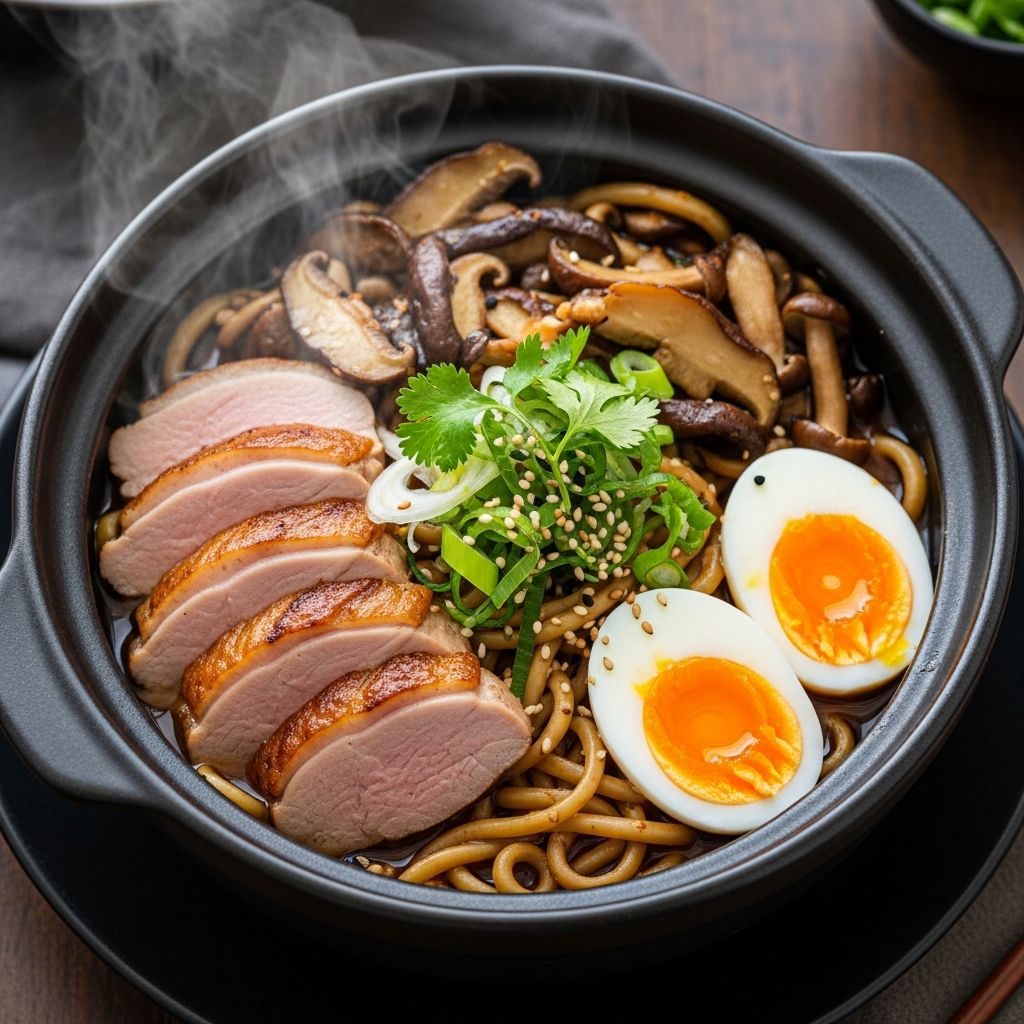
Noodle-based dishes represent one of the most versatile and accessible categories of global cuisine, offering endless opportunities for flavor experimentation and personal customization. Among the most compelling variations are those that combine tender protein with earthy fungi, creating layers of savory depth that satisfy both the palate and the appetite. This comprehensive guide explores the techniques, ingredients, and principles behind creating a sophisticated noodle preparation that showcases the complementary qualities of chicken and mushrooms, elevated through aromatic components and complex sauce development.
Understanding the Foundation: Core Ingredients and Their Roles
The success of any noodle-based dish begins with understanding how individual ingredients contribute to the final composition. Rather than viewing components as separate elements, experienced cooks recognize how each ingredient amplifies or balances the others, creating a harmonious whole. The interplay between proteins, fungi, aromatics, and binding agents establishes the foundation upon which all other flavors rest.
Protein Selection and Preparation
Chicken thighs represent an ideal protein choice for this preparation, offering superior flavor characteristics compared to breast meat. The higher fat content in thighs ensures the meat remains moist during cooking, while dark meat naturally contains more collagen, which breaks down into gelatin and enriches sauce consistency. Thighs can be cut into bite-sized pieces or replaced entirely with ground chicken, each approach offering distinct textural benefits.
- Thigh meat provides better moisture retention during high-heat cooking
- Pre-freezing chicken facilitates cleaner, more uniform cutting
- Ground chicken offers faster cooking times and different textural properties
- Proper portioning ensures even heat distribution and consistent doneness
Fungi as Umami Amplifiers
Mushrooms function as more than simple vegetables in this preparation; they serve as umami powerhouses that deepen and intensify surrounding flavors. Shiitake mushrooms, in particular, contain naturally occurring glutamates and nucleotides that trigger savory taste receptors, creating the sensation of increased depth and richness. The structure of mushroom tissue also absorbs and holds sauce components, distributing flavors throughout each bite.
Preparation of mushrooms requires attention to texture and size consistency. Removing woody stem portions and tearing caps into uniform pieces ensures even cooking and attractive presentation. This approach differs from slicing, which can create thin fragments that may disappear into the sauce or become mushy.
Aromatic Building Blocks: Creating Flavor Foundations
The aromatic layer—comprising garlic, chiles, and fresh herbs—establishes the flavor direction for the entire dish. Rather than being background players, these components deserve careful preparation and strategic timing for optimal impact.
The Garlic and Chile Paste Base
Crushing garlic and fresh chiles together into a coarse paste represents a critical technique that maximizes flavor extraction. The mechanical breakdown of cell walls releases aromatic compounds and sulfurous elements, making them immediately available to permeate surrounding ingredients. Combining these elements with a pinch of salt before crushing activates enzymatic processes that further develop complexity.
This aromatics paste serves as the initial catalyst, introducing intense flavors that mellow and integrate through cooking. The brief cooking period—just thirty seconds—is sufficient to remove raw harshness while preserving the vibrant characteristics that distinguish fresh ingredients from dried alternatives.
Fresh Basil Considerations
Thai basil and holy basil offer distinct flavor profiles that diverge significantly from their sweet basil cousins. These varieties feature anise-like notes with subtle licorice undertones, providing aromatic complexity that complements Asian-inspired dishes. Adding basil at the end of cooking preserves its delicate volatile compounds, which dissipate under prolonged heat exposure. The gentle tossing of noodles with freshly torn basil leaves ensures even distribution without bruising the herb excessively.
Sauce Complexity: Balancing Multiple Flavor Dimensions
The sauce represents the connecting element that unifies all dish components into a coherent composition. Rather than being a simple dressing, it functions as an integral flavor layer that develops through careful combination of distinct components.
Fermented and Umami-Rich Elements
| Component | Function | Flavor Profile |
|---|---|---|
| Sweet Bean Sauce (Tian Mian Jiang) | Primary umami base | Deep, slightly sweet, fermented |
| Red Miso | Umami intensifier | Salty, complex, fermented |
| Dark Soy Sauce | Color and depth provider | Salty, molasses-like, profound |
| Black Vinegar | Acid balance element | Tart, slightly smoky, complex |
These four components work synergistically to create a sauce profile that transcends simple savory notes. The fermented foundations provide depth and complexity that cannot be replicated through single-ingredient approaches. When combined, they establish a flavor base that allows other ingredients to shine while providing structural support for the overall composition.
Sweetness and Acid Balance
Sugar modulates the intensity of fermented elements, preventing the sauce from becoming overwhelmingly salty or pungent. Rather than creating obvious sweetness, the sugar smooths harsh edges and allows the palate to perceive subtle nuances that excessive saltiness would mask. Black vinegar contributes acidity that brightens flavors and prevents the sauce from feeling heavy or cloying.
Execution Techniques: Layering Flavors Through Method
How ingredients are combined and cooked matters as much as the ingredients themselves. Professional execution requires understanding timing, temperature, and moisture management.
Initial Protein and Aromatics Stage
Cooking aromatics in oil before adding protein accomplishes two objectives: first, it extracts volatile flavor compounds from garlic and chiles, distributing them throughout the cooking medium; second, it ensures the pan reaches optimal temperature for searing the protein. The immediate sizzle indicates sufficient heat for surface browning, which develops additional flavor layers through the Maillard reaction.
Once protein is added, constant stirring prevents sticking while ensuring even cooking. The brief three-minute cooking window brings chicken to doneness without drying it excessively. Transferring cooked protein to a separate plate allows independent mushroom cooking, preventing overcrowding and steaming.
Mushroom Development
Cooking mushrooms independently after protein removal serves multiple purposes. Without the protein’s moisture and crowding, mushroom surfaces can contact the hot pan directly, encouraging browning and concentration of umami compounds. This stage develops the mushroom’s flavor profile while reducing excess moisture they naturally contain.
Sauce Integration and Reduction
Combining the prepared sauce with chicken and mushrooms begins an important transformation phase. The sauce initially appears thin and liquid, with visible separation between components. Stirring encourages even distribution while heat gradually evaporates excess liquid. This process concentrates flavors while creating a cohesive, glossy coating that clings to each ingredient.
Adding water after initial sauce concentration rehydrates the mixture to gravy-like consistency, preparing it to coat noodles effectively. The subsequent low-heat simmer allows flavors to marry and integrate fully, developing complexity that exceeds the sum of component parts. This patient approach, requiring twenty to twenty-five minutes, produces a finished sauce with silky texture and profound depth.
Noodle Selection and Preparation
The noodle foundation supports and carries the sauce, affecting both texture and overall eating experience. Fresh or dried thin wheat noodles—including lo mein, lamian, or ramen varieties—offer appropriate structure for this preparation. Their slight chewiness and tender-yet-toothful bite complement the sauce without becoming mushy or breaking apart during tossing.
Proper noodle cooking ensures they reach al dente doneness before final combination with sauce and chicken mixture. Overcooked noodles absorb excessive sauce and lose structural integrity, while undercooked noodles resist sauce absorption and lack the textural satisfaction the dish demands.
Final Assembly and Service Considerations
The final stage requires gentle handling to distribute sauce evenly without breaking noodles or bruising basil leaves. Tossing rather than stirring ensures each noodle strand receives sauce coating while maintaining structural integrity. The handful of freshly torn basil added at this moment provides aromatic freshness and visual appeal.
Service immediately after completion preserves noodle texture and basil vibrancy. Allowing the dish to sit before serving permits noodles to absorb additional sauce, potentially making the final product appear dry or overcooked.
Frequently Asked Questions
Can I substitute different mushroom varieties?
While shiitake mushrooms are traditional, cremini, oyster, or king trumpet mushrooms can replace them successfully. Each variety offers slightly different umami intensity and texture characteristics, though all contribute valuable depth to the final composition.
What if I cannot locate specific sauce components?
The recipe provides hoisin sauce as a direct substitute for sweet bean sauce, allowing substitution without additional adjustments. Miso paste availability varies geographically; if red miso is unavailable, white or yellow varieties can substitute, though they’ll produce different flavor notes.
How far in advance can components be prepared?
Aromatics paste and sauce mixture can be prepared several hours ahead, though the garlic paste will develop increasingly sharp characteristics as it sits. Proteins and mushrooms should be cut immediately before cooking to prevent oxidation and maintain moisture content.
What noodle thickness works best?
Thin noodles allow sauce to coat effectively without overwhelming individual strands. Thicker noodles require additional sauce to achieve satisfactory coating and may feel heavy in the finished dish.
Variations and Adaptations
This foundational approach welcomes thoughtful modifications that respect the core balance. Adding additional vegetables like bell peppers or snap peas contributes textural contrast and visual interest. Adjusting chile quantity modulates heat intensity to match personal preference. Substituting ground chicken reduces cooking time while creating different textural properties. These adaptations maintain the essential character while accommodating individual circumstances and preferences.
Understanding the principles underlying this preparation—umami development through fermented components, flavor balance through acid and sweetness, and texture contrast through varied ingredients—enables confident improvisation within the established framework.
References
- Umami: The Fifth Taste — University of California, Davis, Department of Food Science and Technology. 2023. https://foodscience.ucdavis.edu
- Maillard Reaction in Culinary Applications — International Journal of Gastronomy and Food Science. 2022-11-15. https://doi.org/10.1016/j.ijgfs.2022.100442
- Mushroom Composition and Cooking Methods — Food Chemistry Journal. 2024-03-20. https://doi.org/10.1016/j.foodchem.2024.138922
- Fermented Condiments in Asian Cuisine — Journal of Culinary Science and Technology. 2023-06-10. https://doi.org/10.1080/15428052.2023.2198765
- Thai Basil and Culinary Aromatics — American Spice Trade Association. 2024. https://www.astaspice.org
Similar Articles



Read full bio of medha deb