Roasted Tomato Sauce: 7 Versatile Uses And Easy Oven Method
Transform fresh tomatoes into silky, flavorful sauce through gentle roasting.
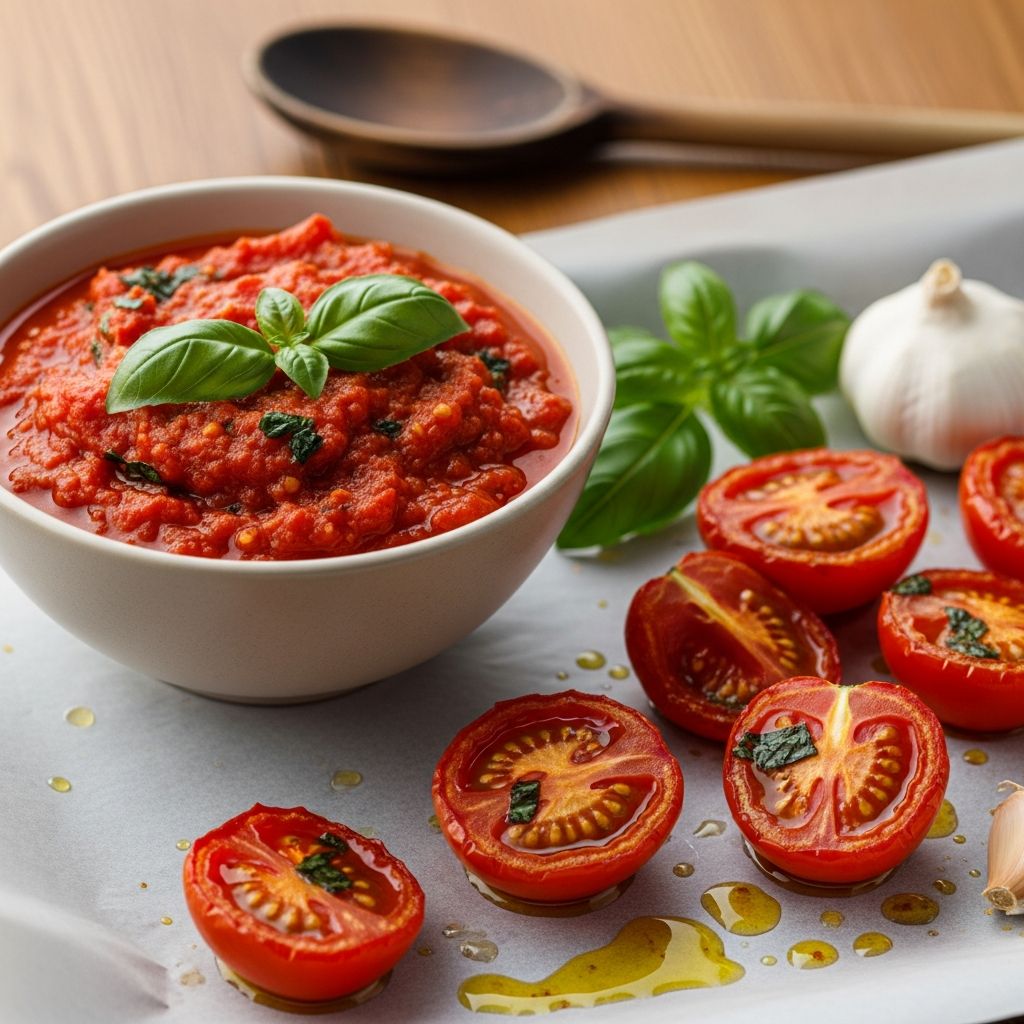
Roasting tomatoes transforms them from ordinary to extraordinary. This ancient cooking technique concentrates natural sugars, deepens flavors, and creates a sauce so versatile it becomes a pantry staple. Whether you’re preserving summer’s bounty or preparing weeknight dinners, roasted tomato sauce offers a foundation for countless dishes.
Understanding the Transformation Through Heat
When tomatoes encounter high heat in the oven, their cellular structure begins to break down, releasing concentrated flavors and natural glutamic acid compounds that create depth and richness. This slow roasting process differs dramatically from quick stovetop methods, producing a sauce with complexity that develops over 30 to 45 minutes. The heat caramelizes the tomato surfaces while keeping the insides tender, resulting in a naturally sweet, umami-rich base that requires minimal additional seasoning.
The beauty of roasted tomato sauce lies in its simplicity. With just a handful of pantry staples and fresh tomatoes, you create something that tastes like it emerged from an Italian grandmother’s kitchen.
Selecting the Right Tomatoes for Maximum Flavor
Tomato selection determines your sauce’s final quality. Different varieties contribute distinct characteristics to your finished product:
- Roma tomatoes – dense flesh with fewer seeds, perfect for thicker sauces
- Cherry tomatoes – naturally sweet with concentrated flavor, excellent for vibrant results
- Heirloom varieties – complex, nuanced flavors that create sophisticated sauces
- Grape tomatoes – smaller size with balanced sweetness and acidity
- Plum tomatoes – meaty texture and low water content, ideal for sauce-making
The ideal tomato feels firm yet yields slightly to pressure, with deep color and minimal blemishes. Overly watery tomatoes produce thin sauces requiring extended cooking to reach desired consistency. For best results, choose ripe tomatoes at peak season when flavor compounds are most concentrated. A mix of varieties creates layered, complex flavors superior to using a single type.
Essential Aromatics and Flavor Builders
While tomatoes form the foundation, aromatic vegetables and herbs elevate the sauce from good to exceptional. The classic combination includes:
| Ingredient | Quantity | Purpose |
|---|---|---|
| Garlic cloves | 4-8 large cloves | Creates savory depth and richness |
| Shallots or onion | 1-2 medium | Adds subtle sweetness and umami |
| Fresh basil | ¼ cup torn leaves | Introduces bright, aromatic notes |
| Fresh oregano | 2 teaspoons dried or fresh sprigs | Provides classic Italian herb character |
| Extra virgin olive oil | 3 tablespoons | Enriches texture and carries flavor |
Optional additions include carrots for natural sweetness, thyme sprigs for herbal complexity, and red pepper flakes for gentle heat. Fresh herbs can be substituted based on preference—marjoram, rosemary, or tarragon each bring unique character.
Preparation Techniques That Matter
Proper preparation ensures even cooking and optimal flavor extraction. Begin by preheating your oven to between 400 and 450 degrees Fahrenheit. The exact temperature depends on your oven’s characteristics; cooler ovens may require 425 degrees for proper caramelization.
Prepare tomatoes by halving them or cutting into half-moon shapes, keeping the skin intact. Arrange tomatoes cut-side down on the roasting pan—this positioning allows direct contact with heat, promoting caramelization and concentrating flavors. Scatter peeled garlic cloves and prepared shallots throughout the pan, then drizzle generously with olive oil and balsamic vinegar. Season with salt, pepper, and desired herbs, ensuring even distribution across all ingredients.
Arrange vegetables in a single layer, avoiding overcrowding, which creates steam rather than browning. Even spacing allows hot air to circulate freely, promoting even cooking and flavor development.
The Roasting Process and Temperature Control
Transfer your prepared pan to the preheated oven and roast for 30 to 45 minutes, depending on tomato size and oven characteristics. During roasting, tomatoes release juices while their exteriors caramelize, creating concentrated flavor. The process is largely hands-off, requiring only occasional checking to ensure even browning.
You’ll know roasting is complete when tomato skins begin to split and edges show light browning. The garlic should be soft and slightly golden, and the aromatic vegetable juices should have partially evaporated, creating a flavorful concentrate in the pan’s bottom.
Allow roasted vegetables to cool to room temperature before proceeding. This cooling period allows flavors to stabilize and makes handling safer.
Two Paths to Your Final Sauce: Texture Choices
Once cooled, you have two distinct approaches to achieving your desired consistency and texture:
The Blended Approach for Silky Smoothness
Transfer all roasted contents into a blender, including all juices and caramelized bits. Add fresh basil torn from stems and blend on high speed for approximately one minute until completely smooth. For ultra-refined texture, pour the blended mixture through a fine-mesh sieve, removing seeds and skin fragments that some prefer to exclude.
If your sauce appears too thin after blending, transfer it to a saucepan and simmer over medium heat, stirring occasionally, until it reaches desired consistency. This stovetop reduction concentrates flavors further while allowing you to control thickness precisely.
The Rustic Approach for Textured Character
For chunkier sauce retaining tomato texture, mash roasted ingredients using a potato masher or wooden spoon directly in the roasting pan. This method preserves some vegetable structure while still breaking down tomatoes into sauce consistency. The resulting texture works beautifully on pizza, in soups, or as a base for other dishes.
Flavor Adjustments and Final Seasoning
Taste your finished sauce and adjust seasoning as needed. The roasting process concentrates flavors, so salt should be added conservatively. Add freshly ground black pepper, additional herbs, or red pepper flakes according to personal preference. If the sauce tastes acidic, add a pinch of sugar to balance. Some recipes incorporate vegetable or chicken stock to achieve desired consistency while adding subtle depth.
For a creamy variation, blend a portion of roasted vegetables with vegetable stock, then combine with remaining roasted tomatoes. This creates a luxurious sauce with both texture and richness, perfect for special occasion pasta dishes.
Storage and Preservation Options
Roasted tomato sauce offers excellent storage flexibility, making it ideal for meal planning:
- Refrigerator storage – keeps for up to one week in airtight containers
- Freezer storage – maintains quality for several months in freezer-safe containers
- Water bath canning – preserves sauce for shelf-stable storage using proper sterilization techniques
For freezing, allow sauce to cool completely before transferring to containers, leaving slight headspace for expansion. Freeze in portion-sized containers for convenient future use. The sauce thaws quickly and reheats beautifully over gentle heat, making it perfect for unexpected dinner needs.
Versatile Applications Beyond Pasta
While pasta represents the obvious pairing, roasted tomato sauce transforms countless dishes:
- Pizza topping – spread directly on dough before adding cheese and toppings
- Soup base – thin with broth for tomato bisque or minestrone
- Stew ingredient – add to beef, chicken, or vegetable preparations
- Egg dishes – stir into scrambled eggs or baked egg preparations
- Grain bowls – layer with roasted vegetables and proteins
- Dipping sauce – pair with crusty bread or mozzarella
- Curry base – combine with spices for tomato-forward curries
The sauce’s concentrated flavor and silky texture make it an indispensable pantry staple for creative cooks seeking quick, delicious meals throughout the year.
Frequently Asked Questions
Can I make roasted tomato sauce with canned tomatoes?
While fresh tomatoes produce superior flavor, quality canned tomatoes work in a pinch. Drain excess liquid before roasting to prevent a watery final sauce. The roasting process still concentrates flavors and creates depth impossible to achieve through stovetop simmering alone.
What temperature produces the best roasted tomato sauce?
Between 400 and 450 degrees Fahrenheit produces optimal results. Higher temperatures promote caramelization, while lower temperatures require extended cooking. Adjust based on your oven’s characteristics and the size of your tomatoes.
How do I prevent my sauce from becoming too thin?
Choose tomato varieties with less water content, like Roma or plum tomatoes. Arrange tomatoes cut-side down to maximize juice evaporation. If your finished sauce is still too thin, simmer over medium heat until it reaches desired consistency.
Can I add meat to roasted tomato sauce?
Yes. Brown ground beef or Italian sausage separately, then stir into your finished sauce. The roasted vegetable base pairs beautifully with seasoned meat, creating a hearty sauce perfect for family dinners.
Should I remove tomato seeds?
This depends on personal preference. Blending incorporates seeds throughout the sauce, while sieving removes them for smoother texture. Seeds add fiber and slight bitterness, which some cooks prefer to avoid.
Conclusion: Mastering a Timeless Technique
Roasted tomato sauce represents culinary simplicity elevated through technique and quality ingredients. The hands-off roasting process transforms humble tomatoes into something remarkable—a sauce worthy of the finest Italian preparations yet achievable in any home kitchen. By understanding ingredient selection, roasting principles, and finishing techniques, you unlock the ability to create restaurant-quality sauce whenever fresh tomatoes are available. Whether enjoyed immediately or preserved for future use, roasted tomato sauce stands as a testament to how simple cooking, executed thoughtfully, produces extraordinary results.
References
- Roasted Tomato Sauce Recipe — Feasting At Home. https://www.feastingathome.com/roasted-tomato-sauce/
- Roasted Tomato Sauce (Meal Prep!) — Sweet As Honey. https://www.sweetashoney.co/roasted-tomato-sauce/
- Oven Roasted Tomato Sauce — The Mediterranean Dish. https://www.themediterraneandish.com/roasted-tomato-sauce/
- Roasted Tomato Sauce: So Easy and Flavorful — OMG! Yummy. https://omgyummy.com/roasted-tomato-sauce/
- Easy Roasted Tomato Sauce — Urban Farm and Kitchen. https://urbanfarmandkitchen.com/roasted-tomato-sauce/
- Simple Roasted Tomato Sauce — Sunday Table. https://sundaytable.co/simple-roasted-tomato-sauce/
- Roasted Tomato Sauce Pasta — Lazy Cat Kitchen. https://www.lazycatkitchen.com/roasted-tomato-sauce-pasta/
- Oven-Roasted Tomato Sauce Recipe — Stephanie’s Dish. https://www.stephaniesdish.com/oven-roasted-garden-tomato-sauce/
- Roasted Tomato Sauce + 3 Ways to Use It — Naturally Ella. https://naturallyella.com/roasted-tomato-sauce/
Similar Articles








Read full bio of medha deb