One-Pan Chicken Bow Tie Pasta: Easy Weeknight Recipe
Quick, creamy, and satisfying weeknight meal ready in under 30 minutes
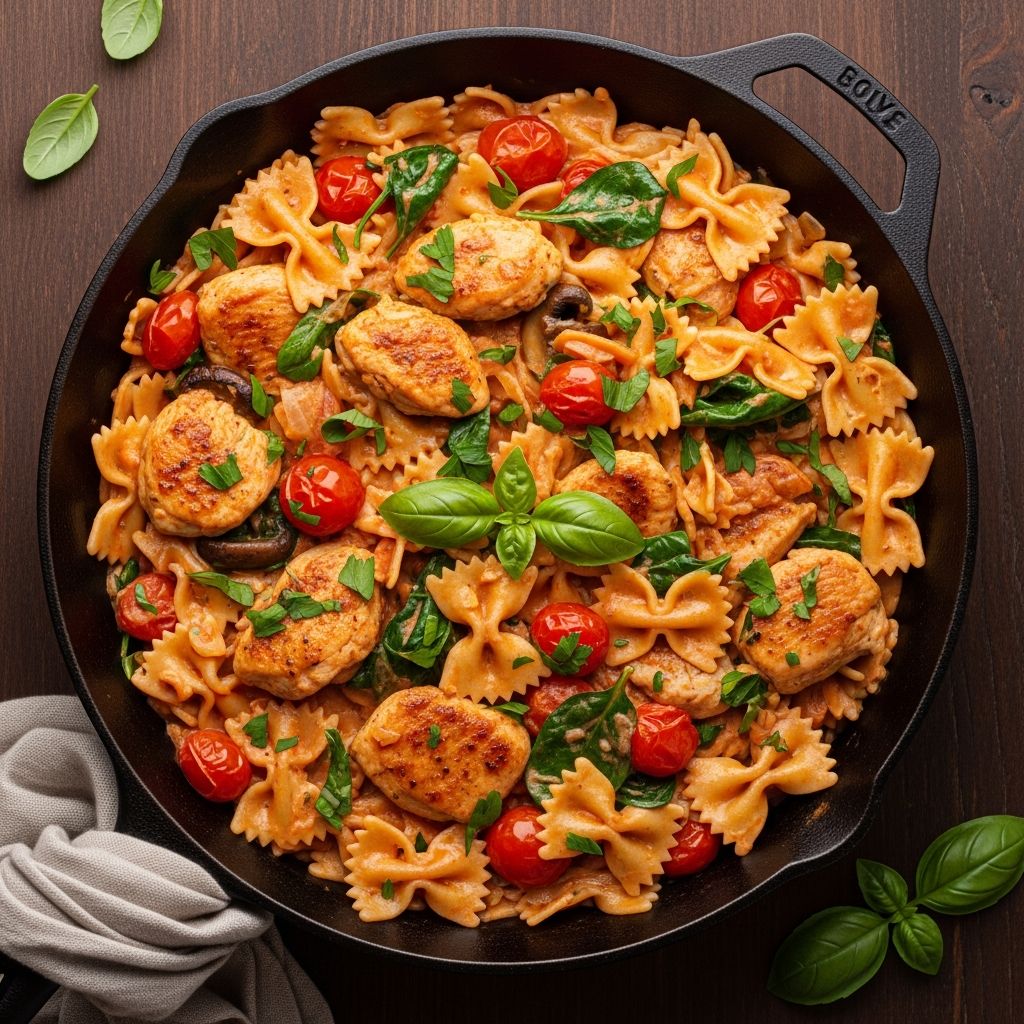
Finding the balance between convenience and flavor can be challenging when planning weeknight meals. A one-pan chicken bow tie pasta dish addresses this need perfectly, combining tender chicken, delicate pasta shapes, and creamy sauce in a single cookware vessel. This approach minimizes cleanup while maximizing taste, making it an ideal solution for busy families and home cooks seeking satisfying dinner options without extensive preparation time.
Understanding Bow Tie Pasta and Its Culinary Benefits
Bow tie pasta, formally known as farfalle, features a distinctive butterfly-like shape that has graced Italian cuisine for centuries. The name derives from the Italian word “farfalla,” meaning butterfly, and this whimsical form serves practical purposes beyond aesthetics. The curved edges and ridged surfaces of bow tie pasta create multiple areas for sauce adhesion, ensuring that creamy preparations coat each piece thoroughly.
The unique structure of bow tie pasta makes it particularly suitable for dishes incorporating protein and vegetables. Unlike long strands that can tangle or smaller shapes that may become lost in sauce, bow tie pasta maintains its structural integrity while providing substantial texture. A standard serving requires approximately 2 cups of uncooked bow tie pasta, equivalent to roughly half a pound, producing generous portions suitable for four servings.
Essential Ingredients for Building Flavor Complexity
Creating a memorable chicken bow tie pasta dish requires understanding how individual components contribute to the overall dining experience. The foundation begins with quality chicken, which can be prepared through various methods depending on your preferred texture and cooking time.
Protein Selection and Preparation Methods
Boneless, skinless chicken breasts represent the most accessible protein option for this dish, offering lean meat that cooks relatively quickly. Cutting chicken into bite-sized pieces before cooking ensures even heat distribution and reduces cooking time. Some recipes recommend pounding chicken breasts to uniform thickness before slicing, a technique that promotes consistent cooking throughout the protein.
Alternatively, boneless chicken thighs provide richer flavor and greater moisture retention compared to breast meat. While slightly higher in fat content, thighs maintain their juiciness throughout cooking and pair beautifully with creamy sauces. Regardless of your protein selection, proper seasoning with salt and pepper before cooking develops deeper flavors through the Maillard reaction, the chemical process that creates browned, flavorful surfaces.
Building the Flavor Foundation
The aromatic base of this dish typically includes diced onions and minced garlic, which provide essential flavor components. Purple onions offer visual appeal and slightly sweeter notes compared to standard yellow varieties. Garlic, whether minced or sliced, contributes pungent compounds that become mellower and more complex through cooking.
Many variations incorporate fresh vegetables including sliced mushrooms, tricolor bell peppers, and fresh spinach. These additions not only enhance nutritional value but also introduce varied textures and complementary flavors. Mushrooms contribute umami depth, peppers add sweetness and visual appeal, while spinach provides earthiness and nutritional density.
Cream-Based Sauce Components
The sauce structure typically combines chicken broth as the primary liquid base, with enrichment from dairy products including whole milk, heavy cream, and half-and-half. The ratio of these components affects sauce consistency and richness. A standard preparation includes 1.75 to 2 cups of chicken broth, with 0.5 to 1 cup combined dairy additions depending on desired creaminess.
Parmesan cheese serves as the finishing touch, adding sharp, salty notes that round out the sauce profile. Fresh or dried herbs such as parsley, thyme, or oregano introduce additional complexity. Some recipes incorporate white wine, which adds acidity and subtle fruity notes that balance the richness of cream.
The Cooking Process: Step-by-Step Execution
Initiating the Protein Cooking Stage
Begin your preparation by heating cooking fat—typically a combination of olive oil and butter—in a large skillet over medium-high heat. This combination provides both the high smoke point of oil and the rich flavor of butter. Once the fat shimmers and butter foams slightly, add your prepared chicken pieces.
Cook the chicken without stirring immediately, allowing a golden crust to develop. This browning process, lasting approximately 3 to 5 minutes per side, creates flavorful compounds while sealing in juices. The chicken should be fully cooked through, with an internal temperature reaching 165°F (74°C) as verified by meat thermometer if available.
Building Sauce Components
After removing cooked chicken from the skillet, add your aromatic vegetables and cook until softened and fragrant. This stage allows onions to caramelize slightly and garlic to release its complex flavors. For recipes incorporating mushrooms, add them during this phase and cook until they release their moisture and develop deeper color.
Once vegetables have softened appropriately, add your liquid components. For recipes including white wine, this typically precedes the addition of chicken broth and dairy. The wine should reduce slightly, allowing its alcohol to evaporate and flavors to concentrate.
Combining Pasta and Creating Creamy Texture
Some recipes add uncooked pasta directly to the simmering liquid, allowing the pasta to absorb the surrounding broth as it cooks. This method concentrates flavors but requires careful attention to prevent scorching or uneven cooking. Bring the mixture to a boil, then reduce heat to low and cover with a lid.
The covered pasta typically simmers for 9 to 12 minutes, depending on the specific pasta brand and your stove’s heat distribution characteristics. During this phase, the pasta absorbs liquid and becomes tender while contributing starch that naturally thickens the sauce.
Alternatively, cook pasta separately according to package directions, then combine with the finished sauce and remaining ingredients. This approach provides more control over pasta texture and allows for easier seasoning adjustments.
Final Assembly and Seasoning Adjustments
Stir the parmesan cheese into the sauce, allowing it to melt completely and create a smooth, cohesive coating. If the mixture appears too thick, add additional milk or cream by the tablespoon until reaching your desired consistency. The sauce should coat the pasta generously without pooling excessively on the plate.
Return the cooked chicken to the skillet along with fresh spinach or other final ingredients. The residual heat wilts fresh greens without requiring additional cooking time. Taste the finished dish and adjust salt and pepper accordingly, keeping in mind that parmesan and broth contribute considerable sodium.
Ingredient Variations and Customization Strategies
| Component | Primary Option | Alternative Selection | Flavor Profile Impact |
|---|---|---|---|
| Protein | Chicken Breasts | Chicken Thighs | Richer, more robust flavor with greater moisture |
| Aromatics | Yellow Onions | Purple Onions or Shallots | Slightly sweeter or more sophisticated depth |
| Vegetables | Bell Peppers | Mushrooms or Asparagus | Earthiness or fresh vegetable notes |
| Cream Base | Heavy Cream | Greek Yogurt or Cottage Cheese | Lighter consistency with tangy undertones |
| Cheese | Parmesan | Asiago or Romano | Sharper or more pungent salt-forward taste |
| Wine | Dry White Wine | Lemon Juice or Vermouth | Acidity and brightness without fermented notes |
Equipment Requirements and Kitchen Setup
A 12-inch skillet or large sauté pan serves as the primary vessel for this one-pan preparation. The generous surface area accommodates chicken pieces without crowding, essential for proper browning. A matching lid allows for covered simmering, trapping steam that cooks pasta evenly.
Additional helpful equipment includes a meat thermometer for verifying chicken doneness, a wooden spoon for stirring and scraping up browned bits (called fond), and measuring cups and spoons for precise ingredient incorporation. A whisk proves useful if you prefer thickening the sauce through a flour-butter roux method, though this step is optional.
Serving Suggestions and Presentation Techniques
Plating this dish offers opportunities for visual appeal and complementary flavor combinations. Transfer portions to individual bowls or plates, ensuring each serving receives adequate sauce. Top with additional fresh parmesan, crushed red pepper flakes for those preferring heat, and chopped parsley for color contrast.
Pairing suggestions include crisp green salads with vinaigrette dressing to cut through sauce richness, crusty bread for sauce absorption, or steamed vegetables for added nutrition. A chilled white wine such as Pinot Grigio or Sauvignon Blanc complements the creamy, herb-forward flavors beautifully.
Storage, Reheating, and Meal Preparation Insights
Leftover chicken bow tie pasta stores well in airtight containers for up to four days in the refrigerator. The dish actually benefits from resting, as flavors meld and intensify during storage. Reheat portions gently on the stovetop over low heat, adding a splash of milk or broth to restore sauce consistency if the pasta has absorbed excess liquid.
This recipe adapts well to meal preparation strategies. Prepare components separately—cook pasta, prepare sauce and chicken—then combine and portion into containers for the week. Alternatively, prepare the complete dish and divide into daily portions for convenient reheating.
Troubleshooting Common Preparation Challenges
Sauce Too Thick: Gradually add milk or cream by the tablespoon, stirring thoroughly between additions until reaching desired consistency. If using cornstarch slurry (cornstarch mixed with cold water), whisk it slowly into the simmering sauce to thicken gradually.
Sauce Too Thin: Allow uncovered simmering to reduce excess liquid. Alternatively, create a slurry using 1 tablespoon cornstarch and 2 tablespoons cold water, whisking this into the simmering sauce to thicken.
Pasta Overcooked: Prevent this by checking pasta doneness 1 to 2 minutes before the recipe’s suggested time, especially when cooking pasta in broth rather than water.
Chicken Dried Out: Ensure chicken reaches only 165°F internal temperature rather than significantly higher temperatures, which cause moisture loss. Consider using chicken thighs, which tolerate longer cooking without drying out.
Frequently Asked Questions
Can this recipe be made gluten-free? Yes, substitute regular bow tie pasta with gluten-free versions, which typically require the same cooking time and absorb liquid similarly.
Is it possible to reduce fat content? Replace heavy cream with milk or half-and-half, use chicken breast instead of thighs, and employ cooking spray or minimal oil during browning stages.
What if I don’t have fresh spinach? Omit spinach entirely or substitute with other vegetables such as asparagus, broccoli, or additional mushrooms based on your preferences.
Can I prepare this dish in advance? Prepare components separately and combine shortly before serving for optimal texture. Complete dishes may become slightly thicker after refrigeration due to starch absorption.
Does the recipe freeze well? Yes, freeze in airtight containers for up to three months. Thaw in the refrigerator overnight and reheat gently on the stovetop, adding milk if necessary to restore sauce consistency.
Conclusion
The one-pan chicken bow tie pasta represents an excellent solution for home cooks seeking convenient, flavorful meals without sacrificing quality or taste. By understanding the role of each ingredient and mastering fundamental cooking techniques, you can prepare this versatile dish with confidence. Whether following the recipe precisely or adapting it to available ingredients and personal preferences, this approach delivers satisfying results that appeal to diverse palates and dietary preferences.
References
- United States Department of Agriculture Food Safety and Inspection Service — USDA. 2024. Safe Internal Temperatures for Poultry
- The Maillard Reaction in Food Chemistry — Journal of the Science of Food and Agriculture, Elsevier. 2023. Peer-reviewed research on browning and flavor development.
- Nutritional Composition of Pasta Shapes and Cooking Methods — Food Chemistry, Academic Press. 2022. Starch absorption and pasta cooking techniques
Similar Articles



Read full bio of Sneha Tete