Quick Microwave Corn: Steam Fresh Ears in Minutes
Master the art of preparing perfectly steamed corn using just your microwave and husk
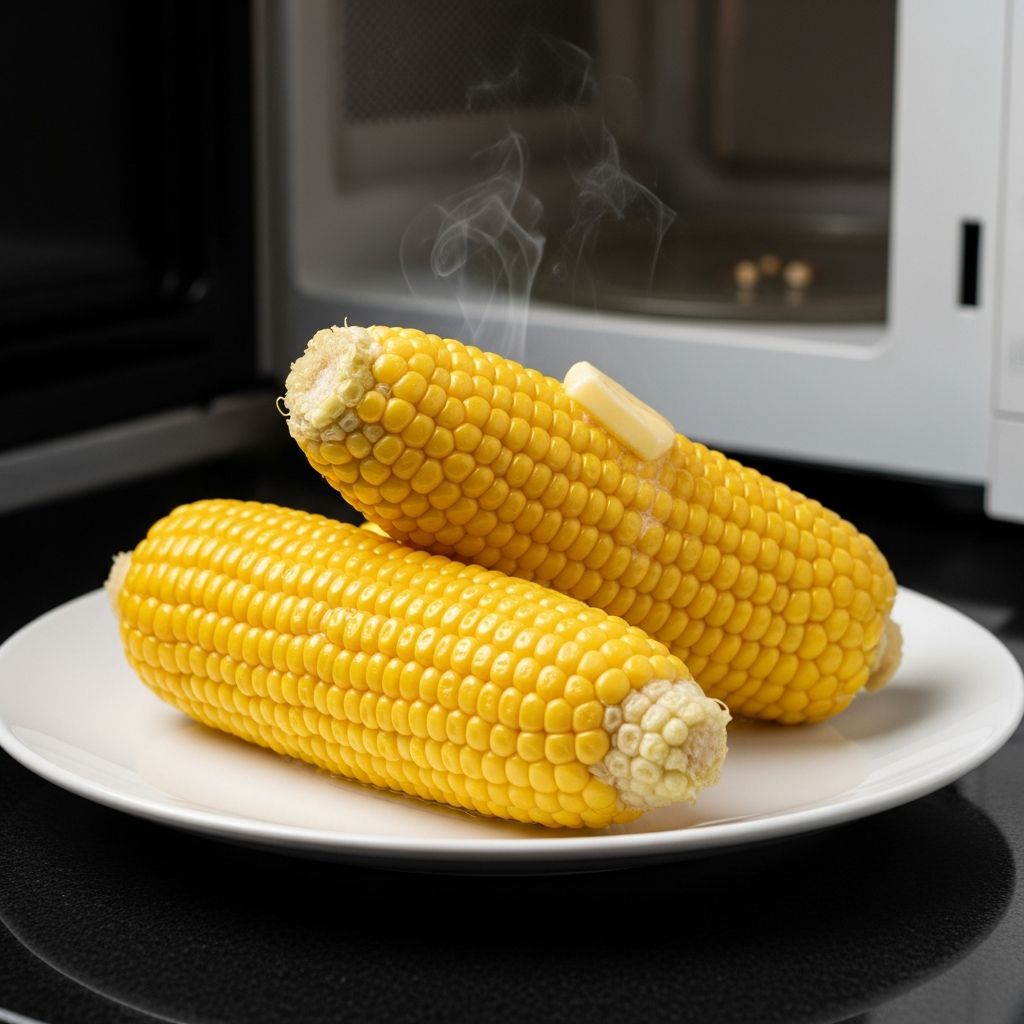
Corn on the cob stands as a seasonal favorite that brings together simplicity and satisfaction on the dinner table. Yet preparing this classic vegetable often demands boiling pots of water, extensive cleanup, or prolonged cooking times. The microwave revolutionizes this process by offering a faster, cleaner alternative that preserves the corn’s natural sweetness and texture. By utilizing the corn’s own protective husk as a steaming chamber, you can achieve restaurant-quality results in your kitchen within just a few minutes.
The Science Behind Husk Steaming
When corn is cooked inside its protective husk, a natural steaming environment develops that locks moisture into the kernels. The husk acts as an insulating barrier, trapping steam generated by the corn’s internal water content. This moist heat environment differs fundamentally from other cooking methods like boiling or grilling, which can strip away natural juices and result in dry, tough kernels. The microwave’s radiation heats the corn and its surrounding moisture simultaneously, creating optimal conditions for tender, succulent results.
This method proves particularly advantageous because it requires minimal preparation. Unlike traditional boiling, which demands a large pot filled with water, or grilling, which requires outdoor equipment and monitoring, microwave steaming needs only the corn itself and a microwave-safe plate. The cooking vessel remains relatively cool and requires just a quick rinse afterward, making cleanup nearly effortless.
Selecting and Preparing Your Corn
The foundation of exceptional microwave corn begins with choosing the right ears from your grocery store or farmer’s market. Fresh corn delivers superior flavor and texture compared to corn that has been sitting for extended periods. Look for ears with husks that remain green and tightly wrapped rather than browning or loosening. The silk emerging from the top should appear pale and slightly moist, indicating freshness.
Organic corn varieties often provide enhanced sweetness and more developed flavor profiles, though conventional corn works equally well for this preparation method. The timing and technique remain the same regardless of whether you select white corn, yellow corn, or bicolor varieties.
Preparation involves minimal steps. Leave the husks intact—they are essential for the steaming process. You may trim the fuzzy silken ends protruding from the top and remove any excessively dried outer husk layers, but the protective wrapping should remain largely undisturbed. Some cooks like to trim approximately one inch from the bottom end, though this step occurs after cooking rather than before.
Understanding Microwave Cooking Times
Cooking duration depends primarily on the number of ears being prepared simultaneously. The microwave’s power level, measured in wattage, also influences how quickly the corn reaches doneness. Most household microwaves operate between 1000 and 1200 watts, which affects heating speed.
| Number of Ears | Cooking Time (minutes) | Power Level |
|---|---|---|
| 1 ear | 2-3 | High |
| 2 ears | 4-6 | High |
| 3 ears | 5-8 | High |
| 4 ears | 6-10 | High |
These timeframes represent starting points rather than fixed rules. Begin with the lower end of each range and add thirty-second increments as needed until the corn reaches your desired tenderness. Larger ears, particularly those with notably thick cobs, may require additional time compared to smaller specimens. Testing by peeling back a small section of husk reveals whether kernels have softened sufficiently or need continued cooking.
An alternative method involves rotating individual ears halfway through cooking. This approach promotes even heating across the entire cob and can reduce overall cooking time by thirty seconds to one minute compared to stationary cooking.
Step-by-Step Cooking Instructions
Step One: Prepare Your Setup
Arrange your corn ears on a microwave-safe plate or directly on the microwave’s interior base. If placing them directly in the microwave without a plate, ensure they lay flat to promote even heat distribution. You may position ears parallel to one another or arrange them in a spoke pattern radiating from the center.
Step Two: Initiate Cooking
Set your microwave to high power and begin cooking according to the timing guide above. The microwave will emit its characteristic hum as radiation heats the corn from all directions. You may notice steam beginning to escape from around the husks’ edges after the first minute—this indicates the steaming process is functioning properly.
Step Three: Cool Before Handling
Allow the corn to rest untouched for approximately three to five minutes following the cooking cycle’s completion. This resting period serves two critical functions: it allows residual heat to finish cooking the kernels through conduction, and it cools the surface just enough for safe handling. The interior remains significantly hotter than the exterior during this phase, so resist the urge to immediately remove the husks.
Step Four: Trim the Bottom End
Using a sharp knife, cut approximately one-half to three-quarter inch from the bottom stem end. This removes the toughest portion of the cob and the first row or two of kernels, which are often less tender than the remainder. Avoid cutting the silk end, as this is your access point for shucking.
Step Five: Remove the Husks and Silk
Grasp the silken end of the corn with a potholder or kitchen towel. Pull gently but firmly downward toward the trimmed base. The husks and silk should slide away from the kernels with minimal resistance—far less effort than with traditionally boiled corn. If resistance occurs, you can peel back a small section of husk and try again, or use your other hand to gently rock the corn while pulling.
Equipment and Safety Considerations
Successful microwave cooking requires minimal equipment. A microwave-safe plate protects your microwave’s interior, though it remains optional. Potholders, oven mitts, or kitchen towels prove essential for safe removal and handling. Standard tongs also work effectively for transferring hot corn.
The corn and steam trapped within the husks achieve temperatures exceeding 160 degrees Fahrenheit during cooking. Never attempt to handle corn immediately after cooking without protective barriers. The steam released when opening husks carries significant heat capable of causing burns. Always use appropriate protective equipment when removing corn from the microwave and when shucking.
Storage and Make-Ahead Options
Fresh corn stored in the refrigerator maintains quality for approximately three to five days. Keep the husks intact until you’re ready to cook, as they protect the kernels and preserve moisture. Whole ears can also be frozen successfully—simply place unhusked corn in freezer bags or wrap tightly in plastic wrap. Frozen corn can be cooked using the same microwave method, though frozen ears may require an additional two to three minutes of cooking time.
Cooked corn stores in the refrigerator for up to five days. You can reheat it by wrapping in a damp paper towel and microwaving for thirty to forty-five seconds, or by placing it on a preheated grill for one to two minutes per side.
Variations and Adaptations
Cooking Shucked Corn
If you’ve already removed the husks, you can still microwave the corn successfully. Wrap the shucked ears in two layers of damp paper towels. These provide the moisture barrier necessary to create steam. Use the same cooking times as with husked corn, reducing by thirty seconds if desired. The paper towel method works remarkably well, though many cooks find the husk method superior for ease of handling.
Adjusting for Microwave Wattage
Standard household microwaves range from 600 to 1200 watts. Lower-wattage models require approximately 25-30% additional cooking time, while high-powered models may finish cooking in 15-20% less time than recommended. If your microwave’s wattage isn’t displayed, check your owner’s manual or look for a label on the unit’s back panel.
Flavor Enhancements
Corn cooked in its husk requires no added seasonings or liquids—the natural sugars and juices provide excellent flavor. After cooking, brush with melted butter, sprinkle with salt, or experiment with herbs like chili powder, garlic powder, or fresh cilantro. Some cooks spread a thin layer of mayonnaise mixed with lime juice and cotija cheese for a Mexican street corn inspired variation.
Common Questions About Microwave Corn
Q: Why is my corn tough or chewy?
A: Overcooking produces tough kernels. Start with minimum recommended time and add thirty-second intervals rather than cooking excessively from the start. Some corn varieties are naturally firmer than others—silky sweet varieties become tender faster than traditional varieties.
Q: Can I cook corn without a plate?
A: Yes, placing corn directly on the microwave base works fine. A plate simply protects the microwave’s interior and contains any moisture that might escape.
Q: How do I know when corn is fully cooked?
A: Pierce a kernel with a sharp knife—fully cooked kernels release their liquid easily. The internal temperature should reach approximately 160-170 degrees Fahrenheit. Alternatively, taste a kernel from the thickest part of the cob.
Q: Is microwave corn as good as boiled corn?
A: Many cooks prefer microwave results because kernels retain more juice and natural sweetness. The husk-steaming method better preserves these qualities than boiling in water.
Nutritional Considerations
Corn provides significant nutritional value as a whole grain rich in fiber, vitamins, and minerals. The microwave cooking method preserves these nutrients better than boiling, which leaches water-soluble vitamins into cooking water. A medium ear of corn contains approximately 17 grams of carbohydrates, 2 grams of protein, and 2 grams of fiber, along with B vitamins and antioxidants.
Conclusion
Microwave cooking represents an efficient, effective method for preparing fresh corn on the cob. The technique requires minimal preparation, delivers consistently excellent results, and demands far less cleanup than traditional methods. By understanding proper timing, safety protocols, and handling techniques, you can produce restaurant-quality corn reliably. Whether serving at family dinners or casual gatherings, this simple method ensures tender, juicy kernels that showcase corn’s natural sweetness and appeal.
References
- Microwave Corn on the Cob in Husk — Dinner Mom. 2024. https://www.dinner-mom.com/microwave-corn-in-cob-husk/
- How to Microwave Corn on the Cob in the Husk — An Edible Mosaic. 2024. https://www.anediblemosaic.com/microwave-corn-on-the-cob/
Similar Articles





Read full bio of medha deb