Mastering Shrimp Étouffée
Discover the authentic flavors of Louisiana with this step-by-step guide to creating a rich, spicy shrimp étouffée that captures Cajun tradition.
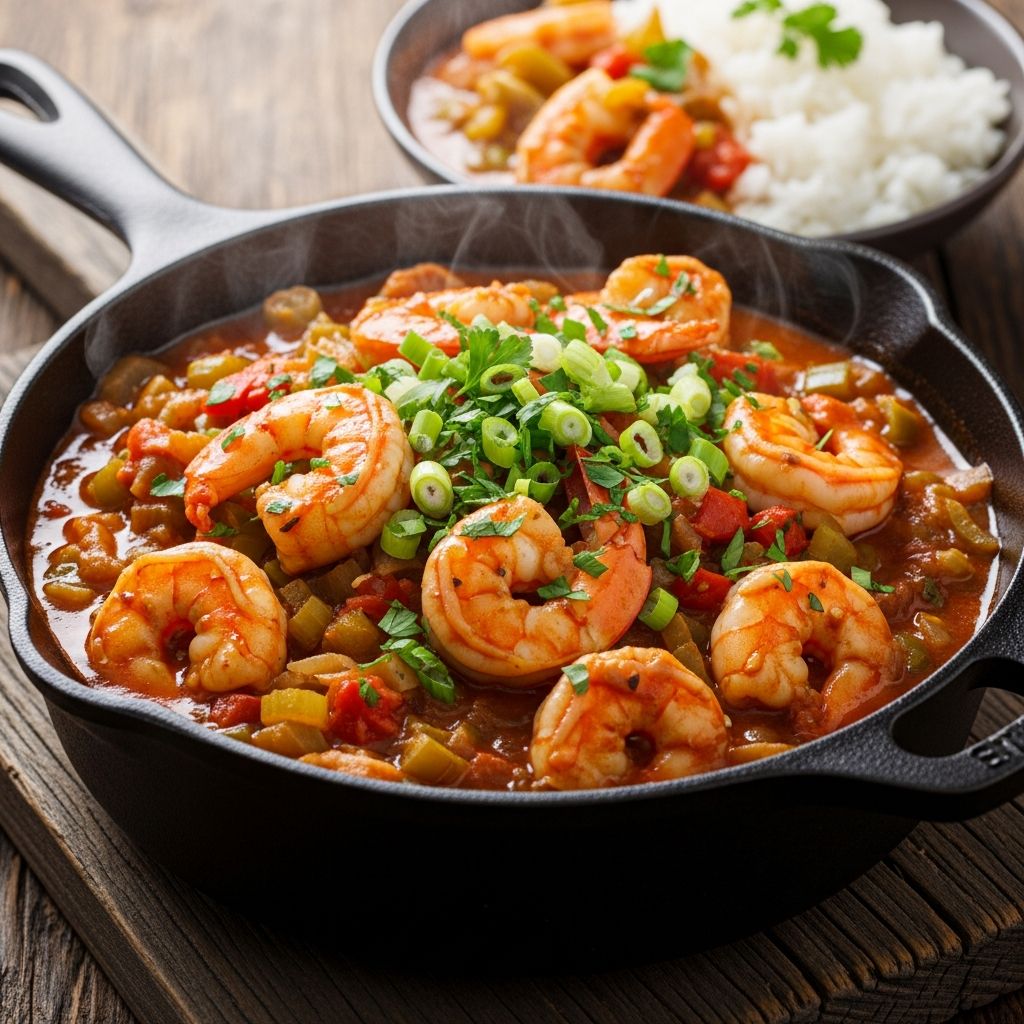
Mastering Shrimp Étouffée: A Cajun Culinary Icon
Shrimp étouffée stands as one of the most beloved dishes from the bayous of Louisiana, embodying the heart of Cajun cooking. This “smothered” seafood stew features tender shrimp enveloped in a velvety, spice-laden gravy made from a meticulously crafted dark roux. Originating in the vibrant food culture of South Louisiana, étouffée has evolved from humble home kitchens to restaurant menus worldwide, yet its essence remains rooted in fresh ingredients and bold seasonings.
The Essence of Étouffée in Cajun Heritage
Cajun cuisine thrives on resourcefulness, blending French, African, and Native American influences into hearty, flavorful meals. Étouffée, meaning “smothered” in French, perfectly describes the technique where seafood is gently cooked in a thick sauce until infused with every spice and aroma. Unlike gumbo’s soup-like consistency or jambalaya’s rice-integrated profile, étouffée offers a luxurious, spoonable texture served over steamed rice.
Paul Prudhomme, a legendary chef from Louisiana, popularized this dish nationally through his innovative seasoning blends and cookbooks. His approach emphasizes a deep, nutty roux as the flavor foundation, paired with the “holy trinity” of onions, celery, and bell peppers. This method ensures each bite bursts with complexity, from smoky heat to subtle herbal notes.
Essential Ingredients for Authentic Flavor
Building an exceptional étouffée starts with quality components. Fresh medium shrimp or crawfish tails provide the star protein, their natural sweetness balancing the roux’s earthiness. Seafood stock, ideally homemade from shells, amplifies maritime depth.
- Vegetables (Holy Trinity): ¼ cup each of finely chopped onions, celery, and green bell peppers for aromatic base.
- Roux Base: 7 tablespoons vegetable oil and ¾ cup all-purpose flour to create the thickening agent.
- Seasonings: Custom Cajun mix including salt, cayenne, white pepper, black pepper, basil, and thyme.
- Butter and Seafood: ½ pound (2 sticks) unsalted butter and 2 pounds peeled shrimp or crawfish.
- Finishing Touches: 1 cup finely diced green onions and 4 cups hot cooked white rice.
These elements, scaled for 8 servings, yield a dish that’s rich yet not overwhelming. Substituting crawfish for shrimp introduces a slightly sweeter, muddier profile true to Louisiana wetlands.
Step-by-Step Guide to Perfect Roux and Assembly
The roux is the soul of étouffée—its color and taste define the dish. Patience and high heat are key to achieving the desired dark red-brown hue without bitterness.
- Prepare Seasoning Mix: Combine 2 tsp salt, 2 tsp cayenne, 1 tsp white pepper, 1 tsp black pepper, 1 tsp dried basil, and ½ tsp dried thyme. Reserve 1-2 tbsp for the recipe.
- Chop Vegetables: Dice onions, celery, and bell peppers uniformly for even cooking.
- Heat Oil: In a heavy cast-iron skillet, heat 7 tbsp oil over high until smoking (about 4 minutes).
- Form Roux: Whisk in ¾ cup flour gradually, stirring constantly until smooth. Cook 3-5 minutes to dark brown, watching closely to avoid burning.
- Incorporate Trinity: Off heat, stir in vegetables and 1 tbsp seasoning. Let cool 5 minutes.
- Build Stock Base: Boil 2 cups seafood stock, add roux spoonfuls, whisking until dissolved. Simmer low 2 minutes to cook out flour taste.
- Sauté Seafood: In a 4-quart saucepan, melt 1 stick butter over medium. Add shrimp/crawfish and green onions; sauté 1 minute.
- Combine and Finish: Add remaining butter, stock-roux mix, and 1 cup stock. Shake pan back-and-forth 4-6 minutes until sauce emulsifies. Do not stir to preserve texture.
Serve immediately over hot rice, heating plates to 250°F for optimal warmth. This technique, straight from traditional recipes, ensures a glossy sauce that clings beautifully to rice.
Customizing Your Étouffée: Variations and Tips
While classic versions shine, tweaks allow personalization. For milder palates, reduce cayenne by half. Crawfish enthusiasts can use tails exclusively, or mix with shrimp for variety.
| Variation | Substitution | Flavor Impact |
|---|---|---|
| Spicy Kick | Add 1 tsp hot sauce to stock | Intensifies heat without overpowering |
| Vegetarian Twist | Mushrooms + veggie stock | Earthy depth mimics seafood |
| Rich Upgrade | Extra ¼ cup butter | Ultra-silky mouthfeel |
| Quick Version | Store-bought stock + pre-made seasoning | Convenient without sacrificing taste |
Common pitfalls include scorching the roux—use a long whisk and constant motion—or overcooking seafood, which turns rubbery. Always use whole, uncooked shrimp for best results, saving shells for stock.
Pairing Étouffée with Sides and Drinks
Étouffée demands simple accompaniments to let its flavors dominate. Steamed white rice absorbs the gravy perfectly, while French bread sopping up extras prevents waste.
- Classic Sides: Coleslaw for crunch, cornbread for sweetness.
- Drinks: Ice-cold beer or crisp white wine like Sauvignon Blanc cuts richness.
- Modern Twists: Hushpuppies or grilled okra for Southern flair.
For festive meals, scale up and serve family-style, garnished with extra green onions.
Health Considerations and Nutritional Insights
Traditional étouffée is indulgent, with butter and oil contributing to its allure. A single serving offers protein from seafood (about 25g) alongside veggies’ fiber and vitamins. To lighten, use less butter or oil-infused roux alternatives, though flavor may mellow.
Seafood provides omega-3s beneficial for heart health, per USDA guidelines on balanced diets. Mind sodium from seasonings—opt for low-sodium stock if needed.
FAQs: Your Étouffée Questions Answered
What if I can’t find crawfish?
Shrimp is an excellent substitute; use medium-sized for similar texture. Frozen crawfish tails work in off-seasons.
How dark should the roux be?
Aim for dark red-brown, like milk chocolate. This takes 3-5 minutes on high heat with vigilant whisking.
Can I make étouffée ahead?
Prepare roux and stock base up to a day ahead; add seafood just before serving to avoid toughness.
What’s the best stock for authenticity?
Homemade from shrimp shells, simmered with onion, celery, and bay leaf for 30 minutes. Store-bought unsalted works in pinch.
Why shake instead of stir at the end?
Shaking emulsifies butter without breaking tender seafood, creating a smooth sauce.
Preserving the Tradition: Tips from Louisiana Kitchens
Home cooks in South Louisiana pass down étouffée secrets verbally, stressing cast-iron for even heat and fresh spices. Paul Prudhomme’s blends, like Seafood Magic, replicate this punch—mix your own for control. Experiment with timing: summer’s sweet shrimp elevate the dish naturally.
Hosting a Cajun feast? Pair with boudin or red beans. This recipe, yielding 8 generous servings, fosters communal dining central to the culture.
References
- Chef Paul Prudhomme’s Shrimp Étouffée — ARTS&FOOD®. 2025-07. https://artsandfood.com/2025/07/chef-paul-prudhommes-shrimp-etouffee.html/
- Shrimp or Crawfish Étouffée (Stew) — Magic Seasoning Blends. N/A. https://www.magicseasoningblends.com/recipes/shrimp-or-crawfish-etouffee-stew/
- Shrimp Or Crawfish Etouffe Recipe — Pitmaster Club. N/A. https://pitmaster.amazingribs.com/forum/recipes-technique-food-cooking/fish-seafood-recipes/1410760-shrimp-or-crawfish-etouffee-recipe
- Crawfish (or Shrimp) Etouffee — The Hills Cookbook Club. 2016-01. https://hillscookbookclub.squarespace.com/s/Crawfish-or-Shrimp-Etouffee.pdf
Similar Articles




Read full bio of medha deb