Chocolate Tempering: 3 Proven Methods For Glossy Results
Unlock professional results at home with precise chocolate tempering methods for glossy, snap-perfect confections every time.
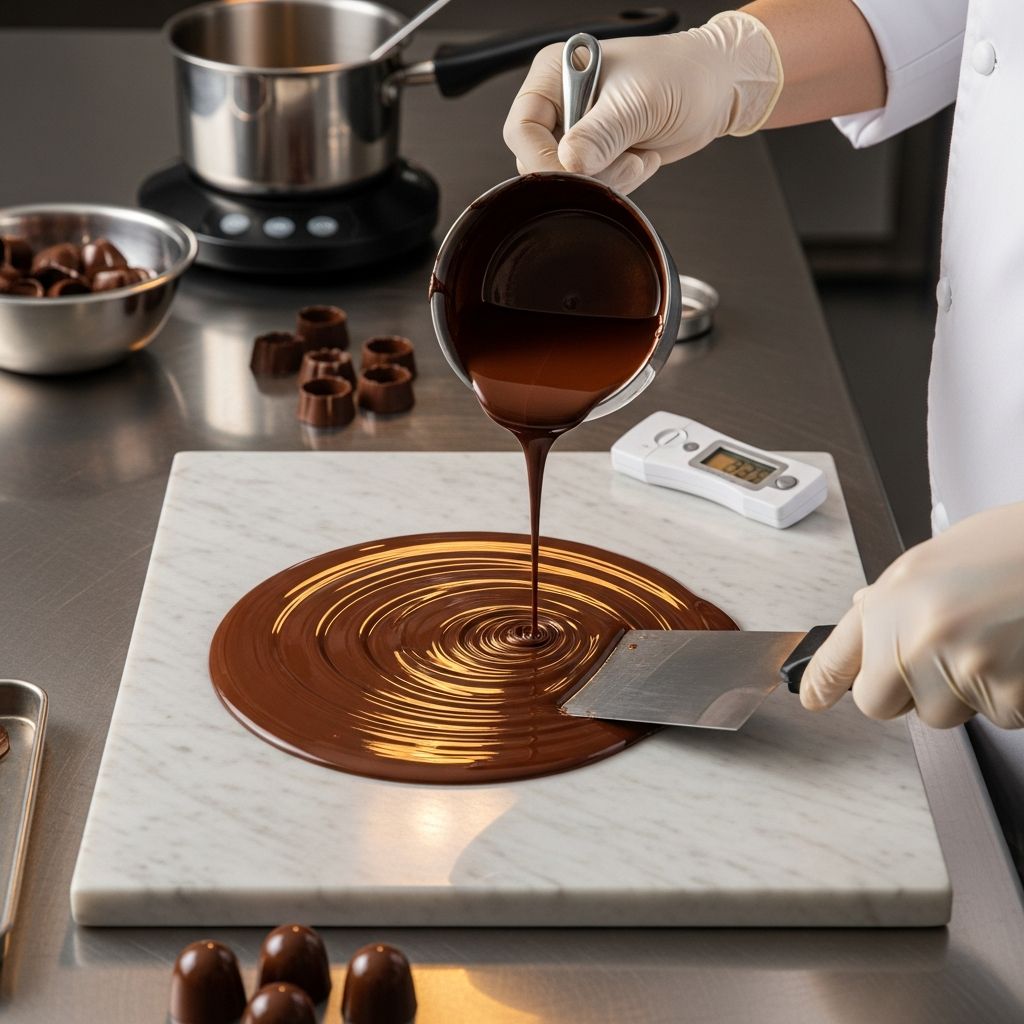
Chocolate tempering transforms everyday melted chocolate into a glossy, firm confection with a satisfying snap. This process stabilizes the cocoa butter crystals, ensuring your creations hold their shape, shine beautifully, and resist melting at room temperature. Whether you’re dipping fruits, molding truffles, or enrobing cakes, proper tempering elevates your results from amateur to professional.
Understanding Cocoa Butter Crystals
The science behind tempering lies in cocoa butter’s six crystal forms, known as polymorphs. Type V crystals are ideal: stable, glossy, and melting at body temperature for that perfect mouthfeel. Improperly tempered chocolate develops unstable forms, leading to dull surfaces, soft textures, or white streaks called bloom.
To achieve Type V dominance, you melt all crystals, then carefully cool and agitate to encourage their growth. Dark chocolate works at 88-90°F (31-32°C), milk at 84-86°F (29-30°C), and white at 82-84°F (28-29°C).
Essential Tools and Ingredients
Success starts with quality equipment:
- Digital thermometer: Precise readings prevent overheating.
- Double boiler or heatproof bowl: Indirect heat avoids scorching.
- Chocolate: Use couverture or high-quality bars (at least 60% cocoa for dark). Avoid chips due to stabilizers.
- Spatula and bench scraper: For tabling method.
- Marble slab: Optional for advanced cooling.
Work in a cool, dry room below 68°F (20°C) with low humidity to prevent seizing from moisture.
Seeding Method: Reliable for Beginners
The seeding technique uses unmelted chocolate as ‘seed’ crystals to guide tempering. It’s forgiving and doesn’t require special surfaces.
- Melt two-thirds of finely chopped chocolate in a double boiler to 115°F (46°C) for dark, 110°F (43°C) for milk/white. Stir constantly.
- Remove from heat. Add one-third unmelted chocolate in batches, stirring until melted and temperature drops to 100°F (38°C).
- Cool further by stirring or using a cool bowl to 84-95°F (29-35°C).
- Gently reheat to working temperature: 89°F (32°C) dark, 86°F (30°C) milk/white.
Test by spreading a thin line on parchment. It should set shiny and firm in 3-5 minutes.
Tabling Method: Traditional Pro Technique
Chefs favor tabling for large batches. Pour melted chocolate onto a cool marble slab to rapidly crystallize.
| Chocolate Type | Melt Temp | Cool Temp | Working Temp |
|---|---|---|---|
| Dark | 115°F | 80-82°F | 88-90°F |
| Milk | 110°F | 78-80°F | 84-86°F |
| White | 110°F | 76-78°F | 82-84°F |
- Melt two-thirds to peak temperature.
- Pour onto slab; spread and scrape with spatula to cool to 80-82°F.
- Return to bowl, add remaining chocolate, stir to working temp.
This method aerates chocolate slightly for smoother flow.
Microwave Tempering: Quick Home Hack
For small batches, microwave offers speed without a double boiler.
- Chop chocolate finely.
- Microwave in 30-second bursts at 50% power, stirring each time.
- Stop at 90°F dark/86°F milk/84°F white. Seed if needed.
Monitor closely; microwaves vary. Ideal for 12 oz or less.
Advanced: Cocoa Butter Beta Crystals
For foolproof results, add 1% beta V crystals (1 tsp per 7 oz) at 96°F during seeding. These pre-formed crystals ensure stability, even in humid conditions.
Troubleshooting Common Issues
Problems arise from temperature errors or moisture:
- Bloom (white streaks): Unstable crystals. Retemper with more seeding.
- Seizing (grainy): Water contamination. Rarely salvageable.
- Dull/no snap: Too cool or under-tempered. Rewarm gently.
- Thickens: Overcooling. Reheat to working temp.
Always test temper before large projects.
Storage and Reuse
Tempered chocolate lasts weeks at 60-65°F (15-18°C). To reuse, gently rewarm to working temperature. Avoid exceeding peaks to preserve crystals.
Creative Applications
- Molds: Tap filled molds for air bubbles; chill briefly.
- Dipping: Use fork for even coating; tap excess.
- Decorations: Pipe or stencil for designs.
Experiment with flavors like sea salt or nuts post-tempering.
Frequently Asked Questions
What if my chocolate overheats?
Add more chopped solid chocolate to lower temp, or start over.
Can I temper compound chocolate?
No; it lacks cocoa butter. Use as-is for coating.
How do I know it’s tempered?
Dip parchment; sets glossy in minutes with snap.
Dark vs. milk temperatures?
Dark higher due to more cocoa butter stability.
Humidity issues?
Use dehumidifier; work fast.
Tempering rewards precision with stunning results. Practice builds confidence for flawless chocolates.
References
- Tempering Chocolate the Easy Way — Sugar Geek Show. 2023. https://sugargeekshow.com/tempering-chocolate/
- Tempering Chocolate Tips — Ghirardelli. 2024. https://www.ghirardelli.com/tempering-chocolate
- How to Temper Chocolate — Handle the Heat. 2024-01-15. https://handletheheat.com/temper-chocolate/
- Tempering Chocolate — Valrhona. 2023. https://www.valrhona.com/en/l-ecole-valrhona/discover-l-ecole-valrhona/chocolate-terminology/tempering-chocolate
- Technique: Tempering Chocolate — Le Cordon Bleu. 2022-06-10. https://www.cordonbleu.edu/news/technique-tempering-chocolate/en
Similar Articles





Read full bio of medha deb