Hard Boiled Eggs In An Air Fryer: Easy Step-By-Step Guide
Discover the fastest, easiest method to cook perfect hard boiled eggs using your air fryer
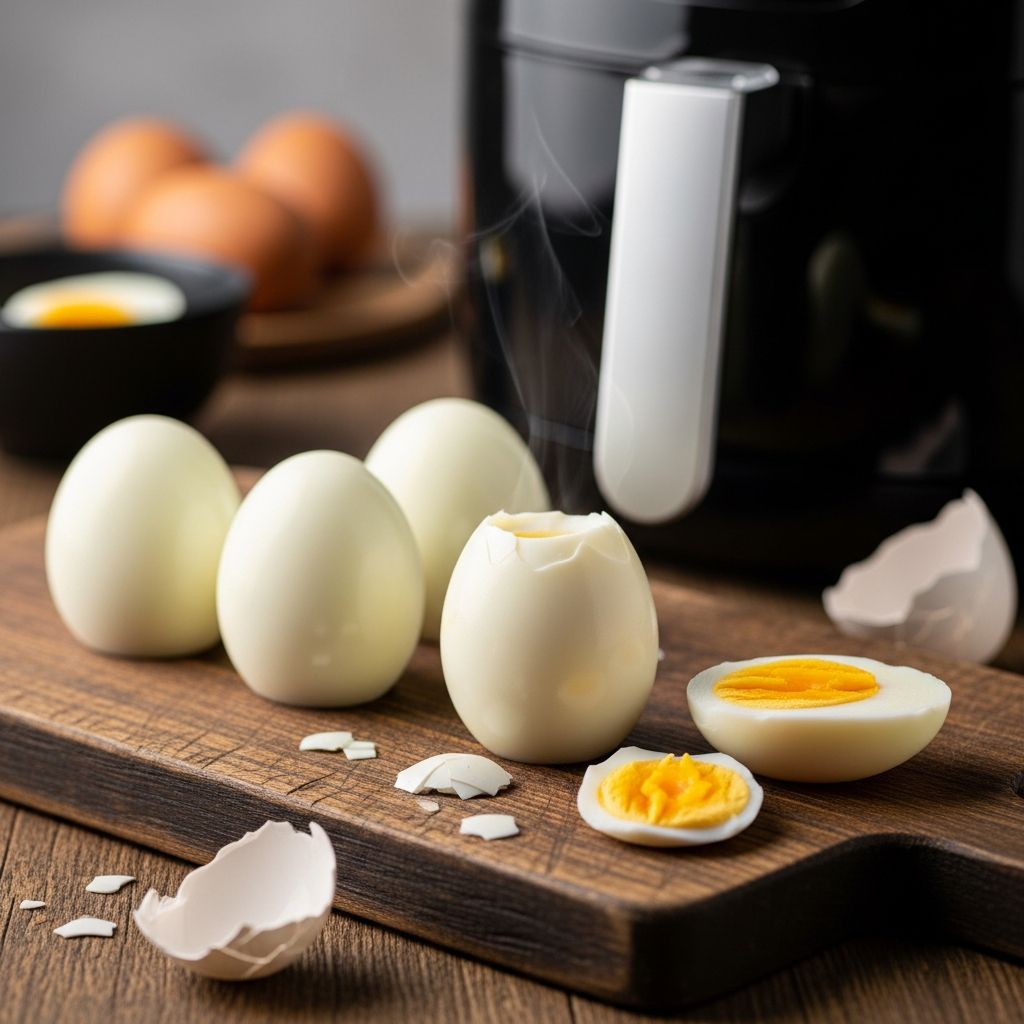
The traditional method of boiling eggs on the stovetop has long been a kitchen staple, but modern appliances have revolutionized the way we approach this simple task. Using an air fryer to prepare hard boiled eggs represents a significant departure from conventional cooking methods, offering convenience, consistency, and remarkable results. This innovative approach eliminates the need to monitor a pot of boiling water, reduces energy consumption, and produces eggs that are remarkably easy to peel. Whether you’re preparing eggs for meal prep, protein-rich snacks, or salad toppings, the air fryer method delivers dependable outcomes that traditional boiling methods often struggle to achieve.
Understanding the Air Fryer Advantage
The primary benefit of using an air fryer for egg preparation lies in its ability to circulate heated air at precise temperatures around each egg. This consistent, uniform heat distribution ensures that every egg cooks at the same rate, eliminating the variables that often plague stovetop methods. Unlike boiling, where water temperature fluctuations and bubbling intensity can affect cooking outcomes, air fryers maintain steady, controllable conditions throughout the cooking process.
Another significant advantage involves the reduction of hands-on attention required. With traditional boiling, you must time the cooking process, ensure water remains at a rolling boil, and manage the transition to an ice bath with careful timing. Air fryer preparation demands minimal intervention—simply set the temperature and timer, then walk away. This passive cooking method proves especially valuable for busy individuals or those preparing eggs in large quantities for meal planning purposes.
The peeling process also benefits dramatically from air fryer preparation. The steam and dry heat environment of an air fryer creates conditions that naturally separate the shell membrane from the egg white, making the peeling stage considerably faster and more efficient than traditionally boiled eggs. Many cooks report that air fryer eggs release their shells in nearly complete sections rather than fragments, transforming a tedious task into a manageable one.
Essential Temperature Settings and Preparation
Achieving perfect results begins with proper temperature calibration. Most air fryer models perform optimally when set between 250 degrees Fahrenheit and 275 degrees Fahrenheit for egg cooking. This lower temperature range mimics the gentle heat of simmering water, preventing the eggs from cracking or cooking unevenly. It’s important to note that maintaining temperatures below 300 degrees Fahrenheit helps avoid catastrophic shell failure, which can result in broken eggs and messy cleanup.
Before introducing eggs to the cooking chamber, allow your air fryer to preheat for approximately five minutes. This warming period ensures consistent internal temperatures and allows the air circulation system to reach optimal efficiency. Preheating proves crucial for obtaining accurate cooking times, as introducing eggs to an unprepared air fryer can extend cooking duration and produce inconsistent results.
When placing eggs in the basket, arrange them in a single layer with sufficient spacing between each egg. This arrangement permits unobstructed air circulation around every egg’s surface. Overcrowding the basket restricts air movement and creates hot spots, resulting in uneven cooking and potential cracking. If your air fryer includes accessory racks or liners, these tools can help organize eggs while maintaining proper spacing.
Timing Guide for Desired Doneness Levels
The cooking duration directly determines the final texture of your egg yolk, ranging from liquid centers to fully solid yolks. Understanding the relationship between time and doneness allows you to achieve your personal preference with precision.
| Doneness Level | Cooking Duration | Yolk Texture |
|---|---|---|
| Soft Boiled | 9-12 minutes | Liquid or partially set center with runny consistency |
| Medium Boiled | 12-14 minutes | Jammy interior with creamy, semi-liquid yolk |
| Hard Boiled | 15-17 minutes | Fully cooked solid yolk with pale yellow appearance |
These timing estimates assume an air fryer operating at 270 degrees Fahrenheit. If your appliance runs warmer, typically operating at 300 degrees Fahrenheit, subtract approximately one to two minutes from each duration. Conversely, older or less powerful models may require adding time to achieve desired results. The wattage of your specific air fryer significantly influences cooking speed—units with 1700 watts or higher generally cook faster than lower-wattage models.
Because air fryers vary considerably in design, heating elements, and efficiency, conducting a test run with a single egg proves invaluable. This experimental approach allows you to identify the exact timing your particular appliance requires before preparing larger batches. Once you’ve determined your air fryer’s precise cooking parameters, you can replicate these settings reliably for future preparation.
The Critical Ice Bath Process
The moment eggs finish cooking, immediately transferring them to an ice bath becomes essential for achieving multiple objectives simultaneously. The rapid temperature reduction halts the cooking process, preventing the development of a gray-green ring around the yolk—a harmless but undesirable discoloration that occurs when eggs overcook. This ring, scientifically known as ferrous sulfide, forms when iron in the yolk reacts with sulfur in the white at high temperatures.
To prepare an effective ice bath, fill a bowl halfway with ice cubes, then add cold water until the bowl reaches approximately three-quarters capacity. This combination of solid ice and liquid water maintains temperatures significantly lower than refrigerated water alone, accelerating the cooling process. Submerge the hot eggs immediately upon removal from the air fryer, using tongs or a slotted spoon to prevent contact with direct heat or burns.
Allow eggs to remain in the ice bath for approximately four to five minutes until they feel cool to the touch but not uncomfortably cold. Removing eggs at this intermediate cooling stage proves beneficial for peeling success. Eggs that remain in the ice bath until completely chilled become more difficult to peel, as the cold causes the egg white to contract and adhere more firmly to the membrane. Conversely, warm eggs resist peeling attempts due to the structural rigidity created by residual heat.
Mastering the Peeling Technique
Once eggs have cooled sufficiently, the peeling process can begin. Start by gently tapping the larger end of the egg against a hard surface to create initial cracks. This end naturally contains the air pocket that develops during cooking, making it the most logical starting point. Roll the egg along the work surface with moderate pressure to establish cracks radiating across the entire shell surface.
Begin peeling from the air pocket end, using your thumb to separate the membrane from the egg white. Work slowly and deliberately around the egg’s circumference, lifting the shell gently to avoid removing bits of white along with the shell. Some cooks find that holding the egg under cool running water during peeling helps further separate the membrane, making the process smoother and reducing the likelihood of gouging the delicate egg white.
If peeling proves challenging, it often indicates that your air fryer’s timing requires adjustment. Eggs that resist peeling typically need additional cooking time, as the separation between membrane and white improves with slightly extended heat exposure. Each adjustment provides valuable data for refining your technique with subsequent batches.
Storage and Food Safety Considerations
Properly cooked and cooled hard boiled eggs maintain quality for extended periods when stored correctly. After peeling, place eggs in an airtight container and refrigerate within two hours of cooking. Hard boiled eggs remain safe and palatable for up to seven days in the refrigerator. For longer storage, unpeeled eggs last somewhat longer due to the protective shell barrier, though seven days represents a reasonable guideline for both peeled and unpeeled varieties.
Labeling containers with the preparation date assists in tracking freshness and ensures you use older eggs first. If you notice any off-odors or discoloration when retrieving eggs from storage, discard them to prevent potential foodborne illness.
Troubleshooting Common Issues
Cracked or Burst Eggs: This typically occurs when cooking temperatures exceed 300 degrees Fahrenheit. Reduce your air fryer’s temperature setting and ensure you’re not overcrowding the basket. Starting with room-temperature rather than refrigerated eggs may also help.
Green Ring Around Yolk: While harmless, this discoloration indicates slight overcooking. Reduce your cooking time by one to two minutes and ensure you transfer eggs to an ice bath immediately when the timer sounds.
Difficult-to-Peel Eggs: This suggests either insufficient cooking time or inadequate time in the ice bath at the optimal intermediate temperature. Increase cooking duration slightly, and ensure you remove eggs from the ice bath while they retain some warmth.
Inconsistent Results Across Multiple Eggs: Arrange eggs so they don’t touch or stack, as this prevents even air circulation. Additionally, ensure your air fryer has reached full temperature during preheating before introducing eggs.
Maximizing Your Air Fryer Investment
Using your air fryer for egg preparation represents just one application of this versatile kitchen tool. Once you’ve mastered the technique, you can confidently prepare eggs in bulk for the week ahead, knowing you’ll achieve consistent results. Many people prepare a dozen eggs simultaneously, storing them for quick breakfasts, salad ingredients, or protein-rich snacks throughout the week.
The energy efficiency of air fryer cooking compared to stovetop methods also deserves mention. Air fryers reach desired temperatures quickly and use less total energy than heating a full pot of water to rolling boil. This efficiency translates to modest savings on utility bills, particularly for those preparing eggs regularly.
Frequently Asked Questions
Can I Cook Eggs Directly from the Refrigerator?
Yes, refrigerated eggs work perfectly in air fryers. No preheating to room temperature is necessary. Simply place cold eggs directly into the preheated basket and add one to two minutes to your standard cooking time to account for the lower starting temperature.
What Size Eggs Should I Use?
Large eggs represent the standard for timing guidelines. If using extra-large or jumbo eggs, add approximately one to two minutes to your cooking duration. Similarly, reduce cooking time by one to two minutes when preparing small or medium eggs.
Can I Cook Different Doneness Levels Simultaneously?
Unfortunately, this approach creates complications, as removing some eggs while leaving others to cook longer requires opening the air fryer mid-cycle, disrupting temperature and air circulation. Prepare separate batches if you need varying doneness levels.
How Many Eggs Can I Cook at Once?
Capacity depends on your air fryer’s basket size. Standard models accommodate six to twelve eggs comfortably. Arrange them without touching or stacking to ensure even cooking. Overcrowding reduces air circulation and compromises results.
Should I Use Air Fryer Liners?
While not essential, silicone liners or perforated parchment paper can prevent eggs from rolling excessively during cooking. Ensure any liner allows adequate air circulation and doesn’t block the basket’s air holes.
References
- Nutritional and Functional Characteristics of Eggs and Their Components — International Egg Commission. 2023. https://www.internationaleggcommission.org/
- Food Safety Guidelines for Egg Storage and Handling — U.S. Department of Agriculture Food Safety and Inspection Service. 2024. https://www.fsis.usda.gov/food-safety/safe-food-handling-and-preparation/eggs-and-egg-products
- Air Fryer Technology and Convection Cooking Methods — Institute of Food Technologists. 2023. https://www.ift.org/
- Thermal Properties and Heat Transfer in Cooking Applications — American Chemical Society. 2024. https://www.acs.org/
- Egg Quality and Cooking Performance Standards — American Egg Board. 2023. https://www.aeb.org/
Similar Articles





Read full bio of medha deb