Maple Tahini Sweet Potatoes: A Complete Guide
Master the art of preparing sweet potatoes with maple and tahini
Maple Tahini Sweet Potatoes: A Complete Guide to Flavor and Technique
Sweet potatoes have long been a staple in kitchens around the world, prized for their natural sweetness, versatility, and nutritional density. When combined with the nutty richness of tahini and the warm complexity of maple syrup, these humble tubers transform into a sophisticated side dish that appeals to diverse palates and dietary preferences. Whether you’re preparing a holiday feast, planning weekday meals, or exploring plant-based cooking, understanding how to prepare maple tahini sweet potatoes opens doors to countless culinary possibilities.
Understanding the Key Ingredients
The foundation of any successful maple tahini sweet potato dish rests on selecting quality ingredients and understanding their individual contributions to the final product.
Sweet Potatoes: The Foundation
Sweet potatoes come in various varieties, with the most common being the orange-fleshed varieties that provide vibrant color and creamy texture when cooked. When selecting sweet potatoes for maple tahini preparations, choose firm specimens without soft spots or sprouting eyes. Medium to large potatoes work best for most applications, though your specific preparation method may influence size preferences. The starches in sweet potatoes convert to sugars during cooking, which naturally complements the maple and tahini additions without requiring excessive sweetening.
Tahini: The Nutty Element
Tahini, a paste made from ground sesame seeds, provides the characteristic nutty depth that distinguishes this dish from standard sweet potato preparations. Hulled tahini, which has had the sesame seed hulls removed, offers a milder flavor and lighter color compared to unhulled varieties. This ingredient contributes creaminess, plant-based protein, and valuable minerals including calcium and magnesium. When shopping for tahini, ensure the label indicates hulled sesame seeds for the most pleasant flavor profile, as unhulled varieties can taste bitter or astringent.
Maple Syrup: The Sweet Note
Pure maple syrup brings a distinctive caramel-like sweetness with subtle complexity that distinguishes it from refined sugar or corn syrup alternatives. The grade of maple syrup you select influences the final flavor intensity—lighter grades provide delicate maple notes, while darker grades deliver more pronounced, almost molasses-like characteristics. For maple tahini sweet potatoes, medium-grade maple syrup typically offers the optimal balance between flavor and subtlety.
Supporting Ingredients
Cinnamon adds warmth and spice without overwhelming the palate, while salt enhances all flavors present in the dish. For creamy preparations, plant-based milk or regular dairy milk adjusts consistency. Butter or vegan butter enriches the dish and aids in incorporating all components into a cohesive whole.
Preparation Methods and Techniques
The cooking method you choose significantly impacts texture, flavor intensity, and preparation time. Each approach offers distinct advantages depending on your available equipment and desired outcome.
The Boiling and Mashing Approach
This traditional method prioritizes creamy texture and quick preparation. Begin by peeling sweet potatoes and cutting them into uniform chunks approximately 2 inches in size. Uniform sizing ensures even cooking throughout. Place chunks in a large pot, cover with cold water, add a pinch of salt, and bring to a boil. Cook for 15 to 20 minutes until potatoes are completely tender and easily pierced with a fork. Drain thoroughly and return potatoes to the hot pot for 1 to 2 minutes, allowing excess moisture to evaporate through steam.
Add vegan or regular butter, tahini, 2 tablespoons of maple syrup, salt, pepper, optional cinnamon, and ¼ cup plant-based milk. Mash using a potato masher for a rustic texture with small lumps, or employ an immersion blender for completely smooth, whipped consistency. Adjust creaminess by adding additional milk gradually. Taste and modify maple syrup and salt as needed before serving in a heated serving vessel.
The Roasting Method
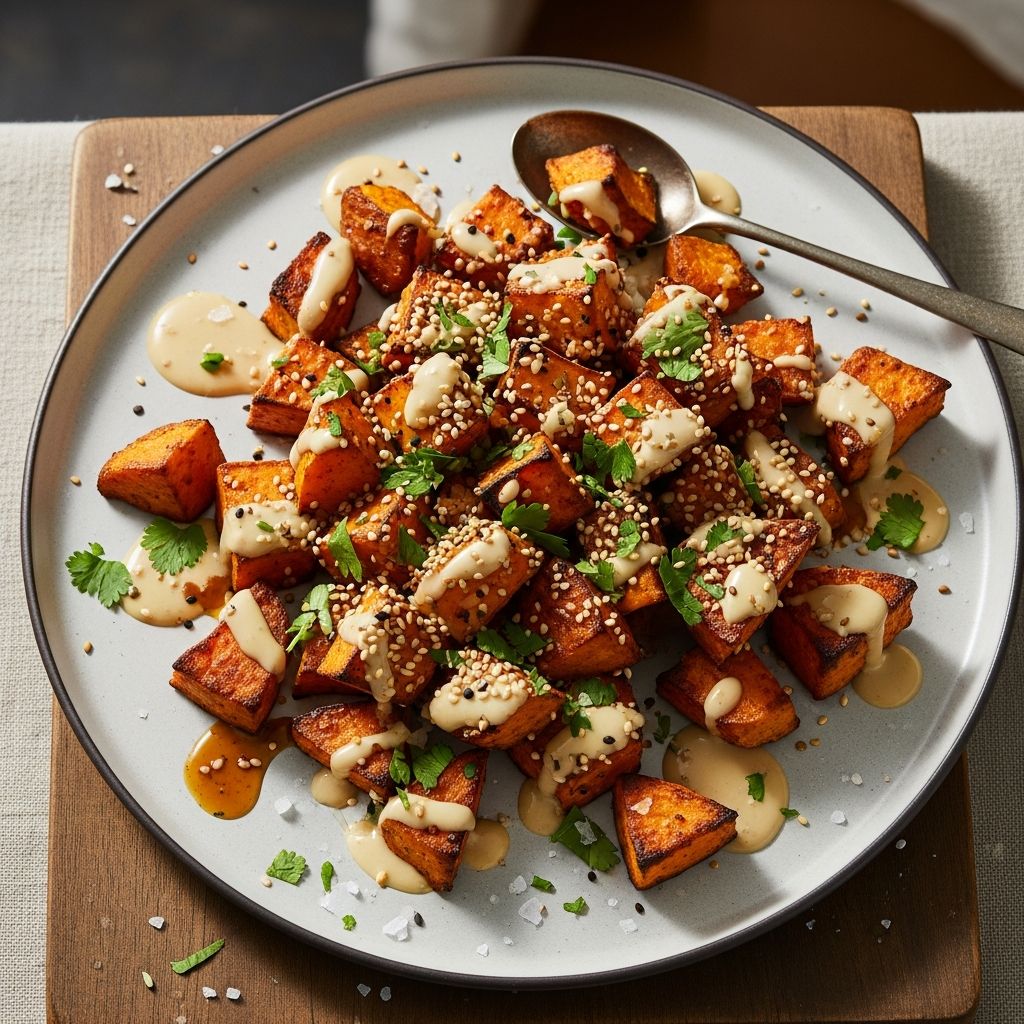
Roasting concentrates natural sugars and creates caramelized exteriors while maintaining creamy interiors. Preheat your oven to 400 to 450 degrees Fahrenheit. Cut peeled or unpeeled sweet potatoes into consistent wedges or slices approximately ¾ inch thick. Arrange on parchment-lined baking sheets in a single layer. Toss with olive oil and salt, ensuring even coating. Roast for 45 to 50 minutes, flipping halfway through cooking, until tender and caramelized at the edges.
While potatoes roast, prepare the maple tahini sauce by combining maple syrup, tahini, butter, and salt in a small saucepan over medium heat, stirring until completely combined and creamy. Alternatively, heat in a microwave for 30-second intervals, stirring between each pulse. Serve roasted sweet potato wedges or slices topped with the warm maple tahini sauce, fresh herbs like thyme, and flaky sea salt.
The Grilling Technique
For warmer months or year-round grill enthusiasts, grilling imparts smoky complexity. Cut sweet potatoes into ½-inch thick slices or wedges. Toss with olive oil, salt, and seasonings such as garlic powder and cumin. Wrap individual portions in aluminum foil with a drizzle of maple syrup inside each packet. Place on a preheated grill over medium heat and cook for 20 to 25 minutes, rotating occasionally, until potatoes are tender. Unwrap carefully and serve with a generous dollop of maple tahini sauce.
Creating Flavor Variations
While the maple and tahini foundation provides a solid base, numerous variations expand the culinary possibilities.
Asian-Inspired Renditions
Incorporate sesame oil, coconut aminos or tamari, lime juice, and additional garlic powder into the tahini sauce for an Asian-inflected interpretation. Crushed peanuts or chopped pistachios add textural contrast and visual appeal. This variation works particularly well with roasted wedges served as an appetizer or part of a larger Asian-inspired meal.
Mediterranean Approaches
Add fresh herbs like oregano and thyme to roasted potatoes. Top finished dishes with pomegranate arils, crumbled feta cheese, or additional chopped herbs. Lemon juice brightens the maple tahini sauce while maintaining the essential flavor profile.
Spiced and Warming Versions
Increase cinnamon quantities and add warm spices like nutmeg, ginger, or cardamom. These variations evoke holiday meals and cozy autumn gatherings. Candied nuts provide festive garnish options.
Nutritional Considerations and Dietary Applications
Sweet potatoes contribute beta-carotene, vitamin C, potassium, and fiber to any diet. Tahini provides plant-based protein, healthy fats, and mineral content including copper and manganese. When prepared with plant-based butter and milk, this dish accommodates vegan diets completely. The combination offers sustained energy through complex carbohydrates and plant proteins, making it suitable for athletes, individuals managing blood sugar, and anyone seeking nutrient-dense meals.
Serving Suggestions and Pairing Ideas
Meal Context Ideas
- Holiday Tables: Serve as a Thanksgiving or holiday dinner side dish alongside roasted vegetables, grains, and plant-based or traditional proteins.
- Casual Weeknight Dinners: Pair roasted wedges with grain bowls, legume-based dishes, or grilled proteins.
- Appetizer Platters: Offer maple tahini sweet potato wedges on shared platters with hummus, other dips, and fresh vegetables.
- Breakfast or Brunch: Incorporate mashed versions into breakfast bowls alongside granola, plant-based yogurt, and fresh fruit.
- Buddha Bowls: Layer roasted wedges with quinoa, chickpeas, leafy greens, and additional tahini sauce for balanced, photogenic meals.
Storage and Make-Ahead Options
Maple tahini sweet potatoes accommodate advance preparation gracefully. Roasted wedges keep refrigerated for up to four days in airtight containers and reheat successfully in a 350-degree oven for 10 to 15 minutes. Mashed versions store refrigerated for three to four days; reheat gently on the stovetop or in the microwave, adding additional milk if consistency becomes too thick. Tahini sauce stores separately in the refrigerator for up to one week. Frozen storage works for mashed preparations for up to three months, though texture may become slightly less creamy upon thawing. Reheat from frozen gradually to prevent uneven heating.
Common Preparation Questions and Solutions
Frequently Asked Questions
Why do my mashed sweet potatoes lack creaminess?
Insufficient liquid or inadequate blending typically causes this issue. Add plant-based or dairy milk in small increments while blending. For extremely creamy results, employ an immersion blender rather than manual mashing, or use a food processor.
Can I omit tahini if I don’t have it available?
Yes. Increase butter or vegan butter to 6 tablespoons total to compensate for the creaminess and richness tahini provides. Nutty depth will be reduced, but the dish remains delicious.
How do I prevent roasted wedges from becoming mushy?
Cut potatoes to consistent thickness and arrange in a single layer. Avoid overcrowding the pan, which traps steam. Flip halfway through cooking. Use a properly preheated oven and monitor closely during the final 10 minutes.
Is maple tahini sauce better served warm or at room temperature?
Warm sauce integrates better with hot potatoes and flows more easily. However, room temperature sauce works acceptably and may be preferable for certain serving contexts.
What can I substitute for plant-based milk in mashed preparations?
Regular dairy milk, Greek yogurt, non-dairy yogurt, or even vegetable broth work effectively. Yogurt varieties add subtle tang while broth reduces sweetness.
Ingredient Quality and Selection Tips
Success with maple tahini sweet potatoes begins at the grocery store. Select sweet potatoes that feel heavy for their size, indicating good moisture content and density. Avoid potatoes with soft spots, wrinkled skin, or sprouting eyes. At farmers markets, ask growers about harvest dates—recently harvested potatoes offer superior flavor and texture compared to storage potatoes.
For tahini, read labels carefully to confirm sesame seeds as the only or primary ingredient. Some commercial products contain added oils or sweeteners. Natural tahini may show a layer of separated oil at the top, which is normal and beneficial. For maple syrup, look for “pure” on the label, distinguishing genuine maple from pancake syrups containing corn syrup or other additives.
Scaling Recipes for Different Occasions
Most maple tahini sweet potato recipes scale easily. For small households, divide ingredient quantities by half or quarters. For large gatherings, proportions multiply predictably. When cooking for groups exceeding 8 to 10 people, consider preparing in batches rather than attempting one enormous pot or sheet pan, which may result in uneven cooking. Alternatively, prepare components separately—roast or boil potatoes, prepare sauce independently, and combine during plating or serving.
Conclusion: From Simple Preparation to Culinary Canvas
Maple tahini sweet potatoes represent more than a single recipe; they constitute a foundational technique adaptable to countless contexts and preferences. Whether you embrace the straightforward comfort of boiled and mashed preparations or explore roasted, grilled, or internationally-inspired variations, this combination of ingredients delivers satisfaction through balanced flavors, appealing textures, and genuine nutrition. As you develop familiarity with basic preparation methods, feel emboldened to experiment with seasonal ingredients, complementary spices, and creative presentations. This humble dish has earned its place on tables ranging from casual family dinners to elegant celebration meals.
References
- Sweet Potato Nutrition and Health Benefits — United States Department of Agriculture (USDA). 2024. https://www.usda.gov/
- Tahini: Composition, Production, and Nutritional Value — Food Composition Database, U.S. National Library of Medicine. 2024. https://pubchem.ncbi.nlm.nih.gov/
- Maple Syrup Nutritional Profile and Production Standards — Agriculture and Agri-Food Canada. 2024. https://www.agr.gc.ca/
- Plant-Based Cooking Techniques and Methods — Academy of Nutrition and Dietetics. 2024. https://www.eatright.org/
Similar Articles





Read full bio of medha deb