Kitchen Aids for Parkinson’s Cooking
Discover adaptive tools and strategies to simplify meal prep and dining for those living with Parkinson's disease.
Parkinson’s disease often brings motor challenges like tremors, reduced grip strength, and coordination difficulties that can turn simple kitchen tasks into frustrating ordeals. Fortunately, a range of adaptive tools and smart strategies can restore confidence and safety in meal preparation and eating. This guide highlights proven assistive devices, environmental adjustments, and techniques drawn from occupational therapy insights and patient experiences to make cooking more accessible.
Understanding Motor Challenges in the Kitchen
Individuals with Parkinson’s frequently face issues such as hand tremors, bradykinesia (slowed movements), and rigidity, which complicate gripping utensils, pouring liquids, or stabilizing food during chopping. These symptoms heighten risks of spills, burns, or cuts, but targeted adaptations address them directly. Occupational therapists emphasize selecting tools that compensate for weakness, instability, and limited dexterity, enabling independent cooking without excessive fatigue.
Planning ahead is crucial: gather ingredients and tools beforehand to minimize movement across the kitchen, conserving energy for the task at hand. Rearranging storage—placing frequent items at waist height and in the fridge’s upper shelves—further reduces strain.
Gripping Solutions: Handles and Utensil Enhancements
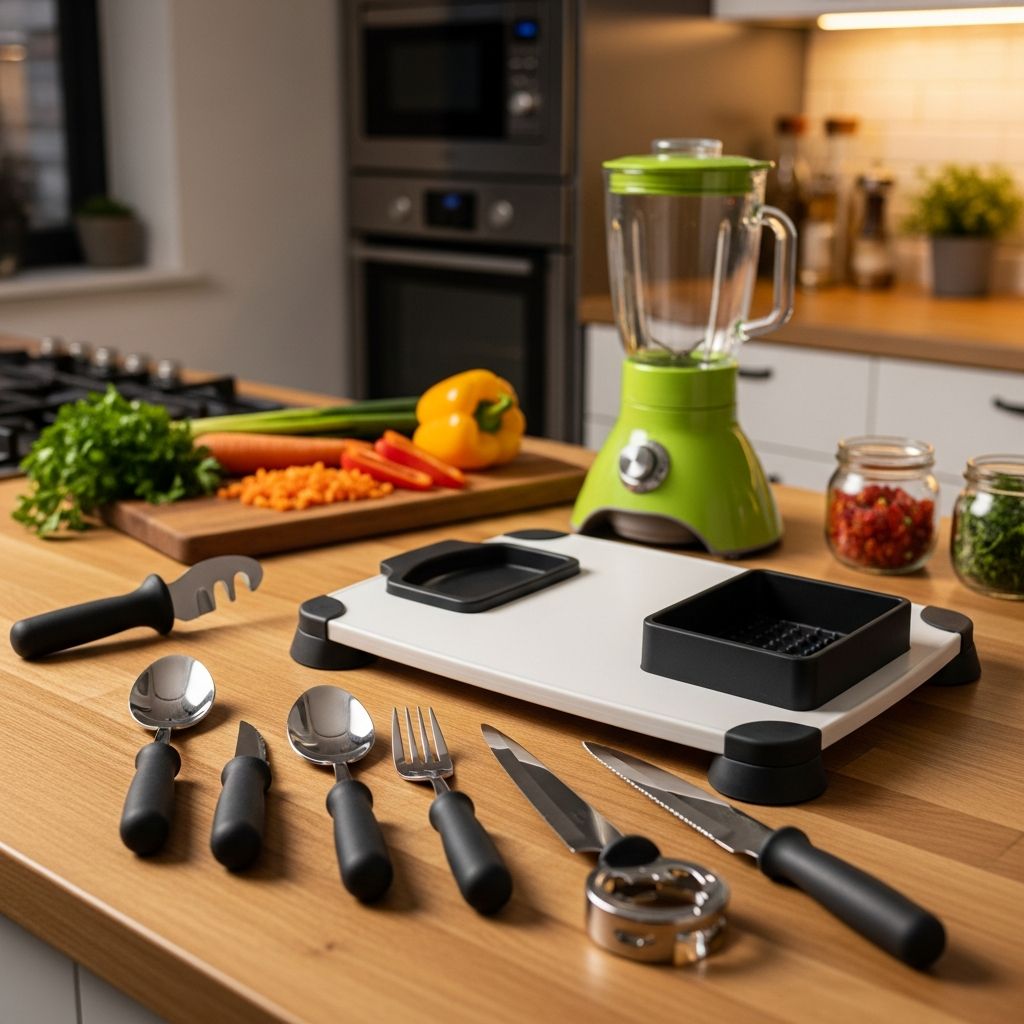
Tools with enlarged, cushioned handles are foundational for overcoming grip limitations. These designs distribute pressure evenly, steady tremors, and accommodate stiffened fingers.
- Built-up handles: Wide, ergonomic grips on peelers, spatulas, whisks, and grinders provide better control. Foam tubing, available at hardware stores, slips over existing handles for a customizable, dishwasher-safe solution—ideal for budget-conscious adaptations.
- Weighted utensils: Adding about half a pound of weight to forks, spoons, and knives counteracts tremors, stabilizing the hand during transport from plate to mouth.
- Swivel mechanisms: Spoons and forks with pivoting heads automatically level despite shakes, preventing food from sliding off.
For severe grip loss, universal cuffs or hand clips secure utensils to the palm, adjustable for various handle sizes. DIY options like foam hair rollers from dollar stores offer portable fixes for dining out or travel.
Stabilizing Surfaces and Boards
Slippery counters exacerbate instability; non-slip aids anchor items firmly.
- Non-slip mats (e.g., Dycem): These flexible sheets grip plates, bowls, and boards, freeing one hand for tasks like mixing or cutting.
- Suction-based pots and dishware: Bottom suction cups adhere to counters or tables, ideal for stirring or serving without sliding.
Adaptive cutting boards elevate safety during prep. Featuring stainless spikes to impale food, raised edges to contain pieces, and suction feet for anchoring, they support one-handed operation and reduce accident risks. Alternatives like manual choppers, electric food processors, or rocker knives—curved blades rocked with one hand—minimize knife use altogether.
Pouring and Heating Safely
Handling hot liquids poses burn hazards due to weakened arms.
- Kettle tippers: Frames cradle electric kettles, pivoting them for controlled pouring without lifting heavy weights.
- Pot stands: Suction-secured holders tilt pots steadily for mixing or draining.
Electric knives offer another low-effort cutting option, vibrating through ingredients with minimal pressure.
Dining Adaptations: From Plate to Palate
Mealtime challenges persist post-cooking. Plate guards—rim attachments—create barriers for pushing food onto utensils, while scoop plates with high, curved edges simplify scooping. Straws reduce cup-lifting needs, aiding those with tremors.
| Tool Type | Key Benefit | Best For |
|---|---|---|
| Weighted Utensils | Stabilizes tremors | Eating transport |
| Rocker Knife | One-handed cutting | Meal portioning |
| Scoop Plates | Easier scooping | Dining independence |
| Non-Slip Mats | Anchors items | Prep stability |
| Kettle Tipper | Spill prevention | Hot pouring |
Kitchen Organization for Efficiency
Beyond gadgets, layout matters. Countertop placement for daily essentials like plates and mugs keeps them reachable. Microwaves built into cabinets free space, and dedicated adaptive utensil sets for restaurants ensure portability. Color-coding foam-tubed handles aids quick location in drawers.
Real-World Benefits and Patient Tips
Users report weighted tools and non-slip aids drastically cut spills and boost enjoyment. Start with versatile items like foam tubing before investing in specialized gear. Consult occupational therapists for personalized assessments, as needs evolve with disease progression.
FAQs
What are the best beginner tools for Parkinson’s cooking?
Start with foam tubing for handles, non-slip mats, and weighted utensils—they’re affordable and versatile.
Can I modify my existing kitchen items?
Yes, pipe insulation or foam rollers build up grips effectively on current utensils and tools.
Are electric options worth it?
For chopping or knives, yes—they save energy and enhance safety when manual tasks prove taxing.
How do I choose utensils for tremors?
Opt for weighted or swivel designs; test combinations to match specific symptoms.
Where to find these tools?
Medical supply stores, online retailers, or hardware shops stock most; check for Parkinson-specific lines.
References
- In the Kitchen: Assistive Devices for People with Parkinson’s — Michael J. Fox Foundation. 2023-05-15. https://www.michaeljfox.org/news/kitchen-assistive-devices-people-parkinsons
- Tips for Cooking with Parkinson’s — Peterson for Parkinson’s. 2024-02-10. https://petersonforparkinsons.org/tips-for-cooking-with-parkinsons/
- Must-Have Kitchen Gadgets for People with Parkinson’s — Brian Grant Foundation. 2023-11-20. https://briangrant.org/must-have-kitchen-gadgets-for-people-with-parkinsons/
- Mealtime & Dining Out — Parkinson’s Foundation. 2025-01-08. https://www.parkinson.org/living-with-parkinsons/management/activities-daily-living/eating
Similar Articles




Read full bio of Sneha Tete