Hoppin’ John: Southern Luck Dish
Discover the rich history, symbolism, and easy recipes for Hoppin' John, the iconic Southern black-eyed peas dish for New Year's prosperity.
Hoppin’ John: The Ultimate Southern Tradition for Good Fortune
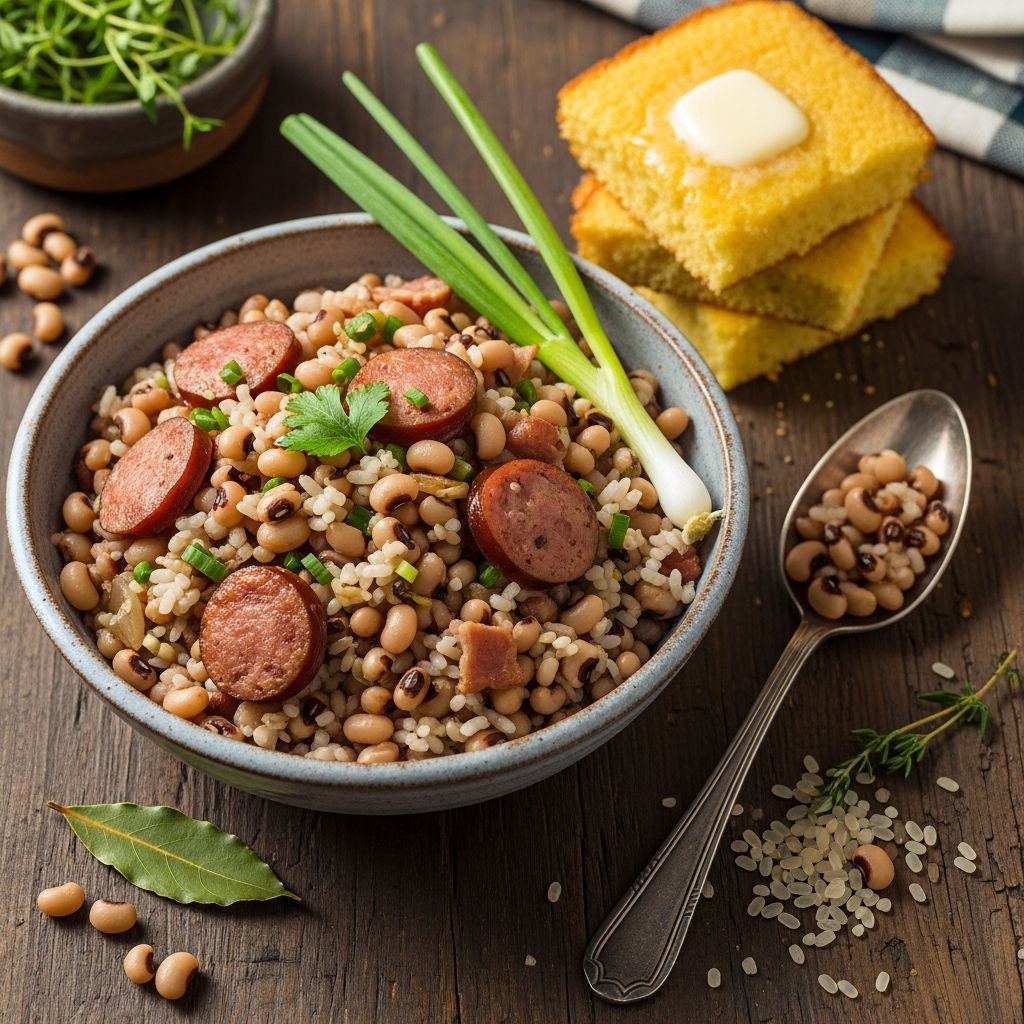
Hoppin’ John stands as a cornerstone of Southern culinary heritage, particularly associated with New Year’s celebrations. This hearty dish combines black-eyed peas, rice, and smoky pork elements to create a flavorful stew believed to bring prosperity and luck into the new year. Rooted in African, Native American, and European influences, it has evolved over centuries while retaining its core appeal.
Origins and Cultural Significance
The dish’s beginnings trace back to the American South, with the earliest printed recipe appearing in 1847, though oral traditions suggest even older roots. Thought to originate in South Carolina, Hoppin’ John likely emerged from field peas cultivated by enslaved Africans, who adapted West African cowpea dishes to local ingredients like rice—a staple crop in the region’s Lowcountry.
One popular legend attributes the name to a Charleston street vendor who sold the peas and rice mixture from a cart. The moniker ‘Hoppin’ John’ evokes images of lively street food culture. By the mid-19th century, it gained prominence in cookbooks, solidifying its place in Southern kitchens.
Symbolism plays a key role in its New Year’s ritual. Black-eyed peas represent coins and financial growth, while collard greens or kale symbolize paper money for wealth. Cornbread, often served alongside, stands for gold. Some families hide a dime or coin in the pot, with the finder promised extra luck.
Essential Ingredients Breakdown
At its heart, Hoppin’ John relies on a few staple components that deliver bold flavors and comforting textures. Here’s a detailed look:
- Black-eyed peas: The star ingredient, providing earthy flavor and creamy texture. Use dried (soaked overnight) for authenticity or canned for convenience.
- Rice: Long-grain white or brown rice absorbs the rich broth, creating a cohesive one-pot meal.
- Smoky pork: Ham hock, bacon, or smoked sausage infuses deep umami. Vegetarian versions swap in smoked paprika.
- Aromatic vegetables: The ‘holy trinity’ of onion, celery, and bell pepper forms the flavor base, often with garlic for pungency.
- Seasonings: Cayenne, chili powder, thyme, and bay leaves add heat and complexity without overpowering.
| Ingredient | Traditional Amount | Role |
|---|---|---|
| Black-eyed peas | 1 lb dried or 2 cans | Protein base, symbolic coin |
| Ham hock or bacon | 1 hock or 1/2 lb | Smoky depth |
| Onion, celery, pepper | 1 each diced | Aromatic foundation |
| Rice | 2 cups cooked | Starchy binder |
| Broth | 4-5 cups | Flavor carrier |
Classic Stovetop Recipe
Prepare this timeless version for 6-8 servings. Total time: about 2 hours (plus soaking).
- Soak 1 lb dried black-eyed peas in water for 6-8 hours or overnight. Drain and rinse.
- In a large pot, heat 2 tbsp butter or oil over medium. Sauté 1 diced onion, 2 celery stalks, 1 green bell pepper, and 3 minced garlic cloves for 4-5 minutes until softened.
- Add the peas, 1 ham hock (or 1/2 lb bacon), 5 cups chicken broth, 1 tsp salt, 1/2 tsp black pepper, 1/8 tsp cayenne, and 1 bay leaf. Bring to a boil, then simmer covered for 45-60 minutes until peas are tender.
- Stir in 2 tbsp white vinegar for brightness. Remove ham hock, shred meat, and return to pot. Fold in 3 cups cooked rice and chopped greens like kale. Simmer 5 more minutes.
- Garnish with green onions or scallions. Serve hot.
This method yields a brothy, flavorful result perfect for scooping over rice.
Modern Variations and Adaptations
Hoppin’ John invites creativity while honoring tradition. Consider these tweaks:
- Vegetarian/Vegan: Omit pork; use liquid smoke or extra smoked paprika. Swap broth for vegetable stock. Add mushrooms for meaty texture.
- Instant Pot: Sauté aromatics, add remaining ingredients, pressure cook on high for 30 minutes. Natural release.
- Skillet Style: Cook bacon first, then one-pan with rice for a crispy bottom.
- Spicy Kick: Incorporate diced jalapeños, fire-roasted tomatoes, or hot sauce like Tabasco.
- Sea Island Peas: For authenticity, seek heirloom red peas from South Carolina for superior flavor.
These options make the dish accessible year-round, beyond holidays.
Nutrition and Health Benefits
Beyond luck, Hoppin’ John packs nutritional punch. Black-eyed peas offer plant-based protein (13g per cup cooked), fiber for digestion, and folate for heart health. Greens provide vitamins A, C, and K, plus iron. Whole-grain rice boosts fiber, while moderate spices aid metabolism.
A serving (about 1.5 cups) delivers roughly 350 calories, balancing carbs, protein, and healthy fats when using lean pork or vegetarian swaps. It’s naturally gluten-free and can be low-sodium with fresh ingredients.
Pairing Suggestions and Serving Ideas
Elevate your meal with these complements:
- Skillet cornbread or hot water cornbread for golden ‘gold.’
- Collard greens simmered with vinegar and sugar.
- Sweet potato pie or pecan pie for dessert.
- Cold beer, sweet tea, or bourbon punch as beverages.
Serve in shallow bowls with a side of pickled okra for tang.
Common Mistakes and Pro Tips
Avoid these pitfalls for perfection:
- Don’t skip soaking: Reduces cooking time and improves digestibility.
- Season gradually: Taste as you go; ham hock adds saltiness.
- Broth matters: Low-sodium chicken or homemade prevents over-salting.
- Rest the dish: Flavors deepen overnight in the fridge.
- Quick canned version: Use drained peas, reduce broth, simmer 20 minutes with ham.
FAQs
What is Hoppin’ John made of?
Primarily black-eyed peas, rice, smoky pork like ham hock, and the vegetable trinity of onion, celery, and bell pepper.
Why eat Hoppin’ John on New Year’s?
It symbolizes prosperity: peas for coins, greens for money, cornbread for gold.
Can I make Hoppin’ John vegetarian?
Yes, replace pork with smoked paprika, liquid smoke, or mushrooms; use vegetable broth.
How long does it last in the fridge?
Up to 4 days; freezes well for 3 months. Reheat with a splash of broth.
What’s the origin of the name?
Possibly from a Charleston vendor; exact etymology unknown but dates to 1840s recipes.
Embrace Hoppin’ John to kick off the year with flavor and fortune. Its simplicity belies a profound cultural legacy.
References
- Hoppin’ John Recipe – WellPlated.com — Well Plated. 2023-12-28. https://www.wellplated.com/hoppin-john-recipe/
- Hoppin’ John Recipe – The Pioneer Woman — The Pioneer Woman. 2023-01-01. https://www.thepioneerwoman.com/food-cooking/recipes/a10902/hoppin-john/
- Hoppin’ John Recipe: Southern-Style Black-Eyed Peas — Stacy Lyn Harris. 2022-12-20. https://stacylynharris.com/hoppin-john-recipe/
- New Year’s Hoppin’ John – Southern Black Eyed Peas — Oat & Sesame. 2023-12-30. https://www.oatandsesame.com/new-years-hoppin-john/
- Southern Hoppin’ John — Southern Bite. 2024-01-01. https://southernbite.com/southern-hoppin-john/
- Hoppin’ John: A Southern Beans and Rice Dish That’s Full of Flavor — America’s Test Kitchen (YouTube). 2023-12-28. https://www.youtube.com/watch?v=5dwDWGYLP7I
Similar Articles








Read full bio of Sneha Tete