Homemade Apricot Jam: Easy 3-4 Jar Recipe & Tips
Master the art of crafting luscious apricot jam at home with simple ingredients and foolproof techniques for beginners and experts alike.
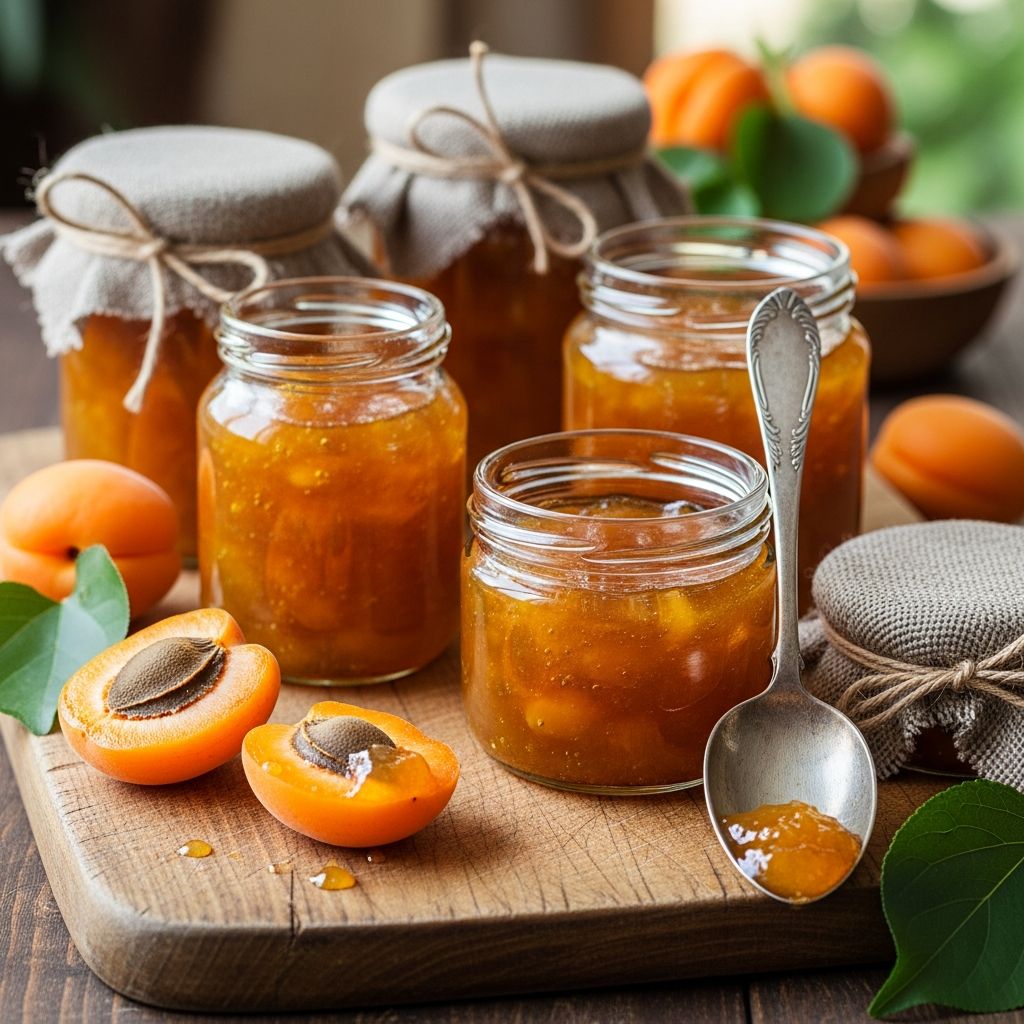
Creating your own apricot jam captures the essence of summer’s bounty in a versatile preserve that enhances everything from toast to desserts. This guide draws on time-tested methods to help you produce golden jars of spreadable delight using basic pantry staples and fresh fruit.
Why Choose Apricot Jam?
Apricots offer a unique balance of tartness and sweetness, making their jam a standout choice for home preservers. Unlike more common berry varieties, apricot jam features a velvety texture with tender fruit pieces suspended in a glossy syrup. Its natural pectin content allows for setting without commercial thickeners, resulting in a product that’s both pure and flavorful.
Health enthusiasts appreciate the fruit’s vitamins A and C, which remain intact through gentle cooking. A single batch yields multiple jars, providing an economical way to enjoy seasonal produce year-round. Whether you’re new to preserving or a seasoned canner, apricot jam rewards with minimal effort and maximum taste.
Selecting the Best Apricots
Prime apricots are key to exceptional jam. Look for fruits that yield slightly to gentle pressure, displaying deep orange hues without green tinges. Ripe specimens, even bordering on overripe, release juices readily, aiding the cooking process.
Avoid firm or bruised produce; the former resists breakdown, while the latter introduces off-flavors. Farmers’ markets often provide the freshest options during peak season from May to July. Aim for about 2 to 2.5 pounds of whole fruit per batch to fill 3-4 half-pint jars.
- Color: Vibrant orange-gold
- Firmness: Soft but intact skin
- Aroma: Fruity and sweet
- Size: Medium for even cooking
Essential Ingredients and Tools
A basic apricot jam relies on just three core components: fresh apricots, granulated sugar, and lemon juice. Sugar preserves moisture and aids gelling, while lemon’s acidity balances sweetness and activates pectin.
| Ingredient | Quantity (for 3-4 jars) | Purpose |
|---|---|---|
| Fresh apricots | 2-2.25 lbs | Main flavor and texture base |
| Granulated sugar | 3 cups | Sweetening and setting |
| Lemon juice (fresh) | 1 tsp | Acidity for balance and pectin activation |
| Water (optional) | 1/4 cup | Initial softening |
For equipment, gather a wide pot or Dutch oven for even evaporation, a long spoon for stirring, and chilled plates for testing set. Canners need jars, lids, a funnel, tongs, and a large water bath pot.
Step-by-Step Jam Making Process
Follow these stages for reliable results. Prep time averages 20 minutes, with cooking around 25-30 minutes.
- Prepare the fruit: Wash apricots, halve, and pit them. No peeling required—the skins soften during cooking.
- Initial cook: Combine halves with water in a pot. Cover and simmer over medium heat until tender, about 10 minutes. Stir to prevent sticking.
- Incorporate sugar: Add sugar gradually, stirring until dissolved. Uncover and simmer, skimming foam as it forms.
- Achieve set: Boil vigorously, stirring frequently. Test by chilling a spoonful on a frozen plate; it should wrinkle when pushed after 1 minute.
- Jar immediately: Ladle hot jam into sterilized jars, leaving 1/4-inch headspace. Process in a boiling water bath for 10 minutes.
For a quicker small-batch version, use 700g apricots, 1 cup sugar, and 2 tbsp lemon in a wide pan over high heat for 8 minutes, targeting 105°C.
Perfecting the Set and Texture
Achieving the ideal consistency prevents runny or rubbery results. Natural pectin from apricots gels best at a rolling boil around 220°F. Frequent stirring avoids scorching, especially as the mixture thickens.
Common issues include undercooking (liquid jam) or overcooking (stiff preserve). The plate test is foolproof: if runny, boil longer in 5-minute increments. For chunkier texture, mash lightly; for smooth, blend midway.
Variations like adding kirsch or orange liqueur introduce subtle twists without complicating the base recipe.
Safe Storage and Shelf Life
Proper canning ensures safety. Sterilize jars by boiling 10 minutes, then fill while hot. Water bath processing seals lids with a characteristic pop.
Store in a cool, dark pantry for up to a year. Refrigerate after opening for 3 weeks. Unprocessed jam lasts 3 weeks chilled. Check seals before use—bulging lids indicate spoilage.
Creative Ways to Enjoy Apricot Jam
Beyond breakfast toast, apricot jam shines in savory and sweet applications.
- Glaze for roasted meats like pork or chicken
- Filling for thumbprint cookies or tarts
- Swirl into yogurt or cheesecake batter
- Base for barbecue sauces with vinegar and spices
- Pairing with cheese boards alongside brie or goat cheese
In baking, substitute for apricot preserves in linzer cookies or danishes. Its tangy profile complements almond flavors exceptionally well.
Troubleshooting Common Problems
| Issue | Cause | Solution |
|---|---|---|
| Runny jam | Insufficient boil time | Reboil with lemon juice |
| Crystals on top | Undissolved sugar | Stir thoroughly next time |
| Foam persists | Normal during cooking | Skim or add butter |
| Didn’t seal | Improper processing | Refrigerate and use soon |
Nutritional Profile
A 1-tablespoon serving provides about 50 calories, mostly from natural sugars. It retains fiber from fruit skins and small amounts of vitamin C. Use in moderation as part of a balanced diet.
Seasonal Tips and Scaling
Jam best with peak-season fruit. For larger yields, process in batches to maintain control. Freezing pitted apricots extends usability beyond harvest. Small batches suit testing flavors or quick gifts.
Frequently Asked Questions
Can I reduce the sugar?
Yes, but expect softer set; use low-sugar pectin for alternatives. Traditional recipes rely on full sugar for preservation.
Is peeling necessary?
No, skins contribute color and pectin. They break down fully.
How do I know jars are sealed?
Lids pop inward upon cooling; they shouldn’t flex when pressed.
Can I make this no-cook?
Freezer jam works with pectin, but stovetop yields superior flavor.
What if I lack a water bath?
Refrigerate unprocessed jars for short-term use.
References
- Easy Apricot Jam for a Canning & Preserving Novice — Sweet Cayenne. 2023. https://sweetcayenne.com/easy-apricot-jam/
- Apricot Jam — The Cozy Apron. 2023. https://thecozyapron.com/apricot-jam/
- Apricot Jam recipe — David Lebovitz. 2023. https://www.davidlebovitz.com/apricot-jam/
- The easiest 8-minute small batch apricot jam recipe — Drizzle and Dip. 2023-12-03. https://drizzleanddip.com/2023/12/03/the-easiest-8-minute-small-batch-apricot-jam/
- Apricot Jam — It’s Not Complicated Recipes. 2023. https://itsnotcomplicatedrecipes.com/apricot-jam/
- Apricot Jam — Poetry & Pies. 2023. https://www.poetryandpies.com/home/apricot-jam
Similar Articles





Read full bio of Sneha Tete