Grilled Pork Shoulder Steaks With Herb Salad
Master the art of transforming lean pork cuts into restaurant-quality grilled steaks
Transforming Pork Shoulder Into Perfectly Grilled Steaks
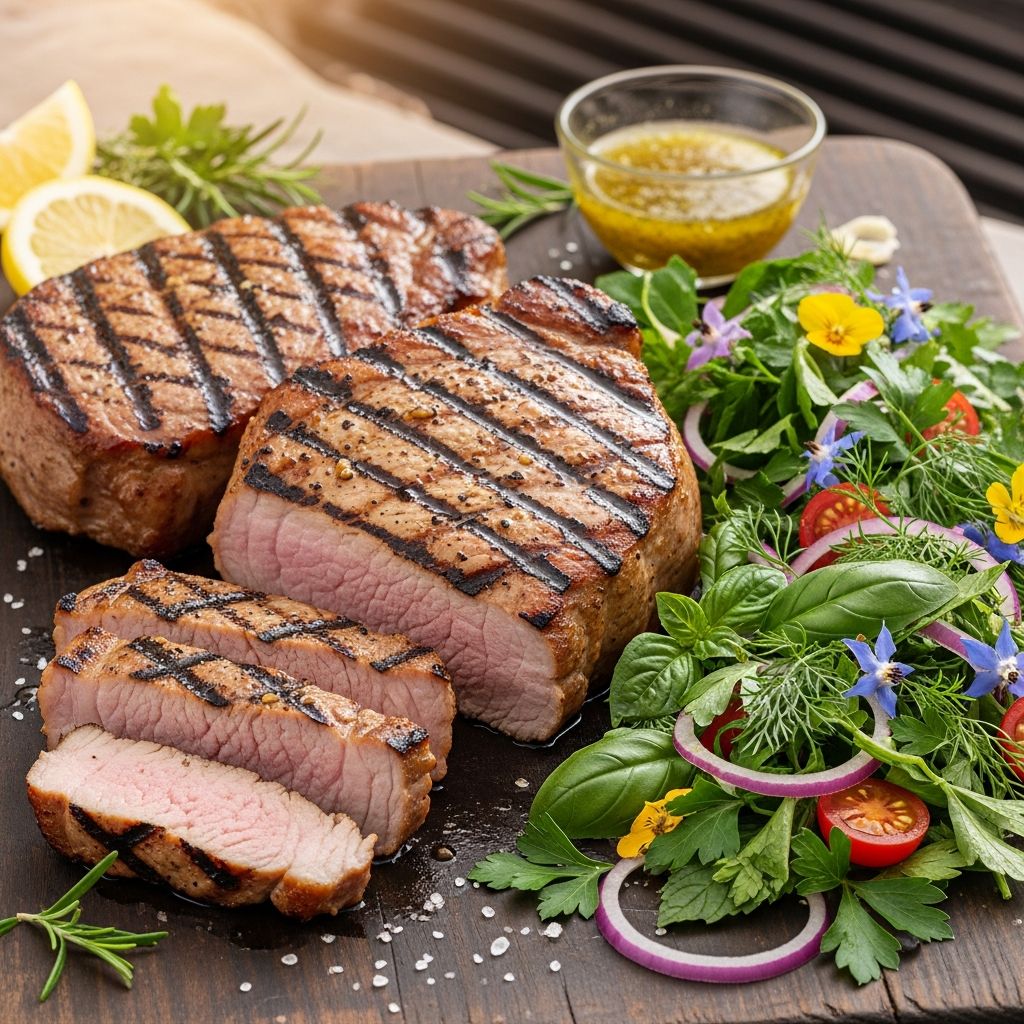
Pork shoulder is traditionally known as a cut meant for low-and-slow cooking methods such as braising, smoking, or stewing. However, this versatile meat can be transformed into something entirely unexpected when sliced properly and grilled with high heat. By cutting the shoulder crosswise into thick steaks and applying the right techniques, you can achieve a beautifully charred exterior while maintaining a tender, juicy interior. Pairing these grilled steaks with a bright, herbaceous salad creates a balanced dish that feels both casual and refined.
Understanding Pork Shoulder Steaks
Pork shoulder steaks are cut from the shoulder portion of the pig and typically measure three-quarters of an inch thick. This thickness is crucial because it allows the exterior to develop a flavorful crust through high-heat grilling while the interior remains medium-rare. The shoulder contains intramuscular fat and collagen, which break down during cooking and contribute to the meat’s inherent juiciness and tenderness. When sliced against the grain and cooked quickly, these characteristics make for an unexpectedly successful grilled preparation.
The beauty of this approach lies in its speed and efficiency. Unlike traditional pork shoulder preparations that require hours of cooking, grilled steaks are ready in less than thirty minutes from start to finish. This makes the preparation ideal for weeknight dinners or when you want impressive results without extensive planning.
Crafting the Marinade Foundation
The marinade serves as both a tenderizing agent and a flavor vehicle. A balanced combination of aromatic and acidic components creates depth in every bite. The foundation typically includes shallots and garlic, which provide a pungent base that mellows during marinating. Fresh lime juice contributes acidity that helps break down the meat’s protein structure, making it more tender, while fish sauce adds umami richness and salty complexity.
Light brown sugar balances the savory and salty elements while promoting caramelization on the grill’s surface. The proportions matter significantly: too much acid can over-tenderize the meat to an unpleasant mushy texture, while insufficient marinade time fails to build adequate flavor penetration. A one-hour room-temperature marinating period is sufficient for flavor development, though overnight refrigeration creates more pronounced seasoning if your schedule allows.
Marinade Components Breakdown
- Shallots and garlic: Provide aromatic depth and natural sweetness when blended smooth
- Fish sauce: Delivers umami and saltiness; approximately 80 milliliters creates adequate seasoning without overwhelming
- Fresh lime juice: Contributes acidity for tenderization and brightness; around 80 milliliters balances the fish sauce
- Light brown sugar: Enhances caramelization and rounds out flavors; approximately 30 grams provides adequate sweetness
- Water: Creates proper marinade consistency for even coating and penetration
Preparation Techniques for Success
Begin by blending the chopped shallots, garlic cloves, fish sauce, fresh lime juice, and brown sugar until completely smooth. This ensures even distribution of flavoring agents throughout the marinade. Season your pork shoulder steaks lightly with kosher salt before adding them to the marinade, remembering that fish sauce contributes considerable saltiness, so restraint prevents over-seasoning.
Transfer the steaks to a large bowl or baking dish, pour the prepared marinade over them, and use tongs to turn each piece several times, ensuring thorough coating on all surfaces. The steaks can rest at room temperature for one hour, developing surface flavors while remaining relatively raw inside. Alternatively, cover the bowl and refrigerate for up to twelve hours, which creates deeper marinading throughout the meat. If choosing the extended refrigeration method, turn the steaks once halfway through the process for even seasoning.
Grilling for Optimal Results
Preheat your grill to high heat, ensuring the grates are clean and lightly oiled to prevent sticking. Remove the steaks from the marinade and allow excess liquid to drip away briefly. Place them on the hot grill surface and refrain from moving them immediately; allow them to develop a charred crust before turning.
Turn the steaks every one to two minutes rather than flipping once and leaving them stationary. This frequent turning technique might seem counterintuitive, but it promotes even cooking and browning while preventing flare-ups that create bitter charring. The entire process takes approximately seven to nine minutes, at which point an instant-read thermometer inserted into the thickest section should register 60 degrees Celsius (140 degrees Fahrenheit) for medium-rare doneness.
Transfer the finished steaks to a cutting board and let them rest for at least five minutes. This resting period allows muscle fibers to relax and reabsorb released juices, resulting in more tender, flavorful meat when sliced. Slice the steaks thinly across the grain once resting is complete.
Creating the Herb Salad Component
While the steaks grill, prepare the accompanying herb salad, which balances the rich, smoky meat with fresh, vibrant flavors. The salad dressing combines the remaining portions of fish sauce, fresh lime juice, and brown sugar with thinly sliced Thai chiles, creating a tart, spicy, and slightly sweet liquid that coats the greens and herbs.
Thai or sweet basil forms the primary herb base, contributing anise-like aromatic notes and slight licorice undertones. Cilantro adds citrusy brightness and slight bitterness, while dill introduces feathery texture and fresh, grassy notes. Together, these herbs create complexity that prevents the salad from feeling one-dimensional. Thinly slice fresh shallots to add gentle onion flavor and pleasant crunch that contrasts with the tender herbs.
Herb Salad Assembly Process
- Combine the remaining fish sauce, fresh lime juice, and brown sugar in a large mixing bowl
- Add thinly sliced Thai chiles and approximately 15 milliliters of water to create proper dressing consistency
- Stir until brown sugar dissolves completely and flavors are well-combined
- Add sliced shallots and a combination of fresh basil, cilantro, and dill leaves
- Toss thoroughly until all herbs and shallots are evenly coated with the dressing
- Taste and adjust seasoning with additional kosher salt if needed
Plating and Flavor Integration
Arrange the sliced pork steaks on a serving platter, creating a base that showcases the beautiful color variation from the charred exterior to the pink interior. Scatter the herb salad generously over the meat, allowing the dressing to drizzle across the steaks and create flavor integration. The warm meat slightly softens the raw herbs while the fresh herbs cool the residual heat from the meat, creating textural and temperature contrast.
This presentation style encourages diners to encounter both components in each bite, ensuring the bright acidity of the dressing cuts through the richness of the pork while the herbs provide aromatic freshness that cleanses the palate between bites.
Ingredient Selection and Quality Considerations
Selecting high-quality pork shoulder steaks begins at the butcher counter. Look for meat with good marbling—thin lines of fat distributed throughout the muscle—which indicates the steak will remain juicy during grilling. Pale pink color suggests proper handling, while graying indicates oxidation and potential quality concerns.
Fish sauce quality significantly impacts the final dish’s flavor profile. Premium fish sauce from Vietnam or Thailand contains fewer additives and delivers cleaner, more complex umami notes compared to mass-market varieties. Invest in fresh lime juice rather than bottled versions, as fresh citrus provides superior brightness and acidity levels. For herbs, choose vibrant green leaves free from browning or wilting, which indicate age and diminished flavor potency.
Flavor Profile Analysis
This dish balances four fundamental taste categories: salty elements from the fish sauce and kosher salt; acidic brightness from fresh lime juice; sweet notes from brown sugar and caramelized pork exterior; and spicy heat from Thai chiles. The umami contribution from fish sauce and the pork’s natural compounds creates savory depth that prevents any single flavor from dominating. Fresh herbs provide aromatic complexity that lifts the entire composition above its basic components.
The temperature contrast between warm grilled pork and room-temperature herb salad creates additional sensory interest, while textural variation from tender meat and crispy charred bits, combined with tender herbs and crunchy shallots, engages multiple textural preferences with each bite.
Nutritional Perspective
Pork shoulder steaks provide substantial protein content essential for muscle maintenance and tissue repair. The grilling method requires minimal added fat, making this preparation relatively lean compared to other pork preparations. Fresh herbs contribute vitamins, minerals, and phytonutrients with minimal caloric contribution. The dressing’s emphasis on lime juice and fish sauce rather than oil-based elements keeps the overall caloric density moderate while maintaining full flavor impact.
Modification and Customization Options
This recipe framework accommodates numerous variations based on ingredient availability and personal preferences. Sambal chili paste can replace fresh Thai chiles for those preferring more structured heat control. Substituting cilantro-heavy profiles for those with aversion to coriander’s soapy flavor compounds for some individuals. Rice noodles or steamed jasmine rice serve as excellent accompaniments for those seeking additional substance, while the recipe stands alone as a light, protein-focused meal.
Regional variations might include adjusting herbs to local availability: basil with mint, adding fresh turmeric root to the marinade, or incorporating Southeast Asian chili oil for richness. Cast-iron stovetop preparation works well when grilling isn’t available, though the grill’s ability to generate high heat creates superior crust development and smoke flavor.
Storage and Make-Ahead Strategies
Prepare the marinade up to three days in advance, storing it in an airtight container in the refrigerator. Marinate the steaks for up to twelve hours as detailed above. The herb salad components can be prepped—herbs washed and dried, shallots sliced, chiles minced—several hours before service, keeping components separate in airtight containers to prevent moisture accumulation.
Combine the dressing components with herbs only shortly before serving to maintain optimal texture and prevent excessive wilting. Leftover grilled steaks store well in the refrigerator for up to three days and work wonderfully sliced cold in rice bowls, salads, or grain-based preparations.
Frequently Asked Questions
What if I cannot find pork shoulder steaks?
Request your butcher slice a boneless pork shoulder into three-quarter-inch-thick steaks. Alternatively, use boneless pork shoulder and cut pieces yourself using a sharp knife, working crosswise across the meat grain.
Can this recipe accommodate gluten-free requirements?
Fish sauce is naturally gluten-free. Verify your specific brand contains no additives, though most quality fish sauce contains only fish and salt. All other ingredients are inherently gluten-free, making this preparation suitable for gluten-restricted diets.
How do I adjust heat level?
Add or reduce Thai chiles based on personal spice tolerance. Remove seeds and membranes from chiles for milder heat while retaining flavor. Sambal paste provides more controllable heat in single-teaspoon increments.
What doneness level is recommended?
Medium-rare (60 degrees Celsius internal temperature) provides the ideal balance of food safety and palatability for pork shoulder steaks, resulting in tender, juicy meat with slight pink coloring.
References
- Pork Cooking Guidelines and Safety — U.S. Department of Agriculture Food Safety and Inspection Service. 2024. https://www.fsis.usda.gov/food-safety/safe-food-handling-and-preparation/pork
- Southeast Asian Cooking Methods: Fish Sauce and Traditional Preparations — Oxford Research Encyclopedia of Food Science. 2023. https://oxfordre.com/foodscience
- Marinade Science and Meat Tenderization Mechanisms — Journal of Food Science, Institute of Food Technologists. 2023. https://doi.org/10.1111/1750-3841.16000
- Grilling Techniques for Optimal Meat Preparation — American Meat Science Association Technical Resources. 2024. https://www.meatscience.org/publications-resources
Similar Articles






Read full bio of Sneha Tete