Golden Braised Cabbage & Chickpea Curry
A vibrant, plant-based dish combining tender cabbage with aromatic spices and creamy coconut
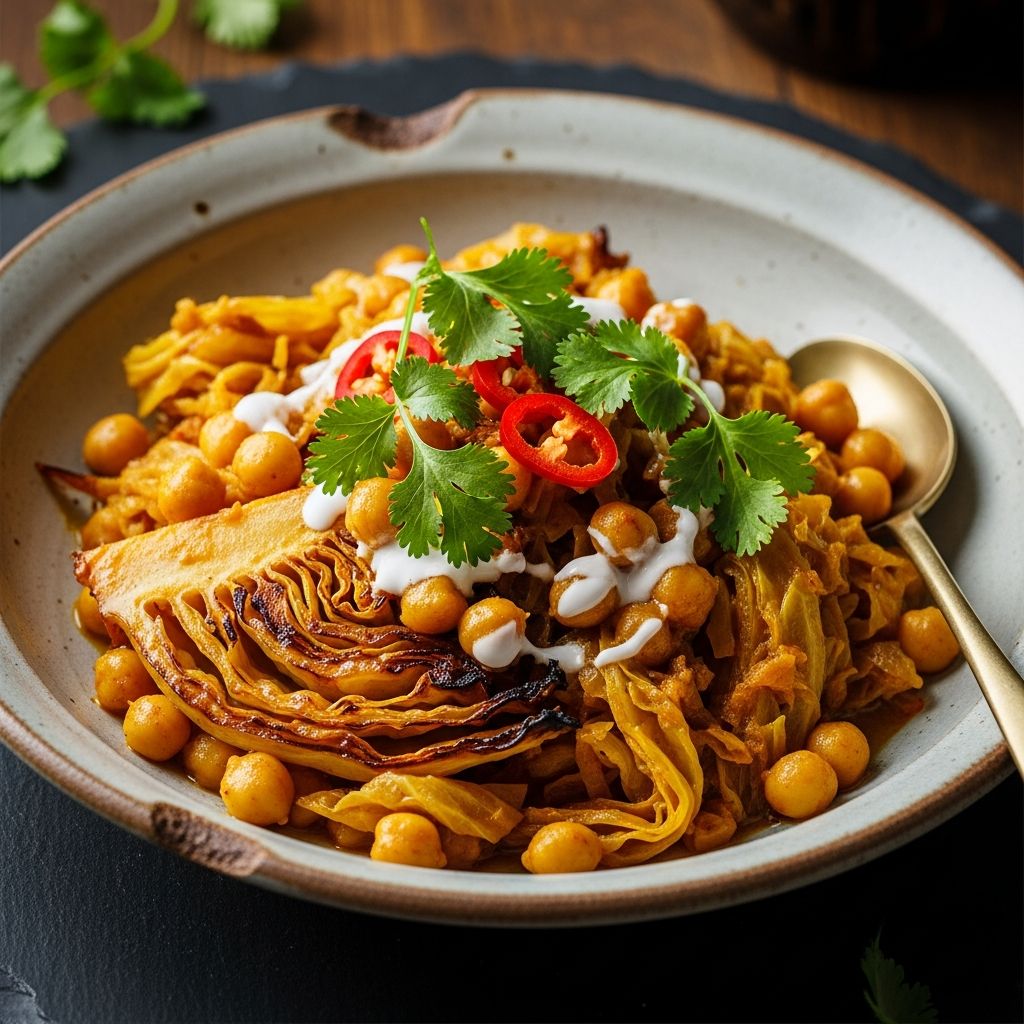
Golden Braised Cabbage & Chickpea Curry: A Modern Pantry Staple
In contemporary kitchen culture, cabbage has quietly become an unsung champion of practical, weeknight cooking. Its versatility, affordability, and nutritional density make it an ideal foundation for dishes that satisfy both nutritionally and emotionally. When combined with warming spices and the richness of coconut milk, this humble cruciferous vegetable transforms into something extraordinary. This comprehensive guide explores the preparation, technique, and variations of a turmeric-forward braised cabbage dish that celebrates the ingredient’s natural sweetness while building layers of complex flavor through strategic spice application.
Understanding the Core Components
This dish operates on a simple principle: seared cabbage wedges are gently simmered in a fragrant coconut-based broth enriched with legumes and aromatic seasonings. The technique relies on three fundamental elements working in harmony. First, the cabbage is caramelized through direct heat contact, which develops deep flavors through the Maillard reaction. Second, a spice-infused base built from aromatics creates the flavor foundation. Third, a gentle braising process allows the cabbage to absorb these flavors while maintaining its structural integrity.
The Spice Profile and Its Functions
Turmeric serves as the primary flavor driver, contributing earthy warmth and distinctive golden coloration. Brown mustard seeds add a sharp, peppery note that punctuates the richness of coconut milk. Ground cumin rounds out the spice combination with nutty undertones that complement both the vegetable and the legume. Fresh aromatics—shallots, garlic, and ginger—build an aromatic base that prevents the dish from tasting one-dimensional. A fresh green chile introduces brightness and heat, cutting through the richness while stimulating the palate.
Ingredient Selection and Preparation Strategy
Choosing Your Cabbage
Green cabbage works exceptionally well in this preparation, offering a mild flavor that doesn’t overpower the spice blend and a naturally sweet undertone that emerges during cooking. Unlike red cabbage, which can turn an unappealing grayish-purple when combined with acidic or turmeric-based preparations, green cabbage maintains its visual appeal throughout the cooking process. A half-medium head (approximately two pounds) serves four people adequately when paired with rice or bread. This quantity creates a manageable pan situation while producing enough braising liquid to properly soften the vegetable.
Preparing Aromatics for Maximum Impact
The aromatic foundation requires careful cutting to ensure even cooking and flavor distribution. Medium shallots should be peeled, halved, and thinly sliced rather than minced—this approach provides textural contrast and allows them to partially caramelize in the initial oil. Ginger, a one-inch piece, should be peeled using a spoon to minimize waste, then finely minced to distribute its heat and brightness throughout the dish. Garlic cloves benefit from being crushed with the knife’s side before mincing, which breaks down cell walls and releases more of the sulfurous compounds that contribute to the final flavor complexity. The green chile can be prepared with or without seeds depending on desired heat level—removing the white membrane and seeds significantly reduces intensity while retaining flavor.
The Chickpea Advantage
Canned chickpeas offer convenience without sacrificing nutritional value or taste. Rinsing them under running water removes excess sodium and the starchy liquid that can muddy the sauce. Chickpeas contribute plant-based protein, fiber, and a subtle earthiness that grounds the dish. Their firm texture contrasts nicely with the tender cabbage, creating a more interesting eating experience. For those preferring alternative legumes, cooked lentils provide similar nutritional benefits with a slightly firmer texture that holds up well during the braising process.
The Cooking Process: Technique and Timing
Step-by-Step Execution
Initial Preparation Phase: Assembling all ingredients before cooking—what French chefs call mise en place—prevents scrambling and ensures consistent results. Slicing cabbage through the core creates four sturdy wedges that maintain their shape during cooking, preventing the vegetable from dissolving into the braising liquid. These wedges should be approximately two to three inches wide at the thickest point.
The Searing Stage: Heat two tablespoons of extra-virgin olive oil in a large high-sided skillet over medium-high heat. Once the oil shimmers, carefully place cabbage wedges cut-side down. Season generously with kosher salt. The salt draws moisture from the vegetable cells, which then evaporates, allowing the exposed surface to make direct contact with the hot pan. Cook undisturbed for five minutes—resist the urge to move the wedges, as this interrupts the caramelization process. The bottom should develop a light golden-brown color with some charred spots. Flip each wedge and cook the other side identically. Transfer the caramelized cabbage to a plate.
Building the Aromatic Base: In the same pan, heat the remaining tablespoon of olive oil over medium-high heat. Add the prepared shallots, ginger, garlic, and chile. Cook while stirring constantly for approximately one minute until the mixture becomes fragrant—this is the signal that the aromatics are releasing their volatile compounds. Add the brown mustard seeds, cumin, and turmeric powder, continuing to stir. Within another minute, the mustard seeds begin to pop and dance in the pan, indicating the spices are blooming—their oils are releasing, intensifying their flavors exponentially.
Creating the Braising Liquid: Shake the can of coconut milk vigorously before opening to ensure the thick cream at the top is incorporated with the thinner liquid below. Pour the entire contents into the pan. Rinse the chickpeas and add them along with the vegetable stock or water and remaining salt. Stir thoroughly to combine, scraping any browned bits from the pan bottom into the liquid—these fond particles contain concentrated flavor.
The Gentle Braise: Return the caramelized cabbage wedges to the pan. Using a large spoon, baste the cabbage with the coconut milk mixture, ensuring the top surfaces are coated. Bring the liquid to a boil, then reduce heat to low and cover the pan. Simmer for fifteen to twenty minutes until the cabbage reaches complete tenderness—it should yield to gentle pressure but maintain its wedge shape.
Seasoning and Adjustment
After the braising period, taste the dish and adjust seasoning with additional salt and freshly ground black pepper as needed. The coconut milk may have absorbed some of the salt during cooking, and personal preferences vary regarding salinity levels. The pepper should be ground fresh from whole berries rather than pre-ground, as the volatile compounds in fresh pepper provide superior brightness and complexity.
Scaling and Customization Options
Adapting for Larger Groups
If feeding more than four people or accommodating larger appetites, using an entire cabbage head requires adjustments. Increase the braising liquid to one cup total by adding additional stock or water. You may need to sear the cabbage wedges in batches using a larger pan to maintain proper heat distribution—overcrowding prevents caramelization. A Dutch oven or large enameled cast-iron pot works excellently for this application, distributing heat evenly and maintaining temperature stability during the extended cooking period.
Legume Substitutions
While chickpeas are traditional, other legumes integrate seamlessly. Cooked lentils—particularly brown or green varieties—provide earthiness with a firmer texture. Black-eyed peas contribute subtle sweetness and interesting visual contrast. White beans like cannellini offer creaminess when partially broken down. Each substitute brings different nutritional profiles and flavor notes worth exploring based on dietary preferences or pantry availability.
Heat Level Modifications
The serrano chile can be adjusted or replaced based on heat tolerance. Complete removal leaves the dish entirely without chile heat. Using milder poblano or bell peppers provides sweetness without peppery intensity. Those seeking more significant heat can add additional serranos or substitute with habaneros, which provide fruity undertones alongside fiercer heat levels. Dried red chiles, bloomed in warm water and pureed, create a different flavor dimension worth experimenting with.
Serving Strategies and Accompaniments
Rice Selection and Preparation
Steamed white rice provides the traditional foundation for this dish, offering neutral starch that doesn’t compete with the spice blend. Jasmine rice, with its subtle floral notes, complements the turmeric particularly well. Basmati rice, offering individual grains and delicate fragrance, also works admirably. Brown rice increases fiber and nutritional complexity but requires longer cooking times and slightly more liquid. Coconut rice—prepared by cooking rice in coconut milk or incorporating toasted coconut flakes—creates cohesion between the grain and the braising liquid.
Fresh Garnishes and Finishing Touches
Fresh cilantro leaves scattered over the finished dish provide herbaceous brightness that cuts through richness. Lime wedges served alongside allow each diner to control acidity levels and brightness. A drizzle of additional coconut milk creates luxurious visual presentation while adding richness. Toasted sesame seeds sprinkled over the top add nutty flavor and textural contrast. Thinly sliced red onions provide sharp, peppery notes if cilantro isn’t available or preferred.
Nutritional Considerations
This dish delivers substantial nutritional value for minimal caloric investment. Cabbage provides fiber, vitamin C, and compounds associated with reduced inflammation. Chickpeas contribute plant-based protein, supporting satiety and sustainable energy levels. Coconut milk, while calorie-dense, contains medium-chain triglycerides that some research suggests may support metabolic function. Turmeric’s curcuminoids have been studied for potential anti-inflammatory properties. Ginger and garlic contribute antimicrobial compounds and flavor without adding sodium or refined ingredients. Together, these components create a dish that nourishes both body and palate.
Storage and Make-Ahead Strategies
This curry improves with time as flavors continue developing and integrating. Stored in an airtight container, it maintains quality for four to five days under refrigeration. The cabbage becomes increasingly tender as it sits, though it won’t completely disintegrate. Freezer storage extends shelf life to three months, though cabbage’s cellular structure may change slightly upon thawing. When reheating, add a splash of water or stock to restore the sauce consistency that may reduce during storage. Gentle warming on the stovetop over low heat preserves the vegetable’s texture better than microwave reheating.
Frequently Asked Questions
Can this dish be made vegan?
Yes—the recipe is naturally vegan as written. The olive oil, coconut milk, and all other ingredients contain no animal products. It’s an excellent option for plant-based diets and works well in mixed households accommodating various dietary preferences.
What if I don’t have brown mustard seeds?
While brown mustard seeds provide distinctive texture and flavor, yellow mustard seeds work as acceptable substitutes, though they’re milder. Alternatively, one-half teaspoon of Dijon mustard stirred in at the same point provides similar mustard flavor without the seed texture.
How can I make this less spicy?
Remove the chile entirely for a heat-free version. Reduce turmeric to three-quarters teaspoon. Use less cumin if preferred. The dish remains flavorful with these reductions—you’re simply adjusting intensity rather than eliminating flavor.
Is this suitable for meal preparation?
Absolutely. Prepare the full recipe on a Sunday and portion into containers for weekday meals. The flavors actually improve by the third or fourth day as components continue marrying. Pair with freshly cooked rice each day rather than cooking rice in advance, which prevents drying or mushiness.
References
- Nutritional Composition of Brassica Vegetables and Their Health Benefits — National Institutes of Health. 2024. https://www.nih.gov
- Curcumin and Anti-inflammatory Properties — Journal of Medicinal Food. 2023. https://www.liebertpub.com/journal/jmf
- Plant-Based Protein Sources and Complete Amino Acid Profiles — Academy of Nutrition and Dietetics. 2024. https://www.eatright.org
- Culinary Techniques for Flavor Development in Plant-Based Cooking — Bon Appétit Culinary Institute. 2024. https://www.bonappetit.com
- Medium-Chain Triglycerides in Coconut Oil and Metabolic Function — American Journal of Clinical Nutrition. 2023. https://academic.oup.com/ajcn
Similar Articles






Read full bio of Sneha Tete