Glass Cookware Safety: Understanding Thermal Damage
Learn why modern glass bakeware breaks and how to prevent kitchen accidents.
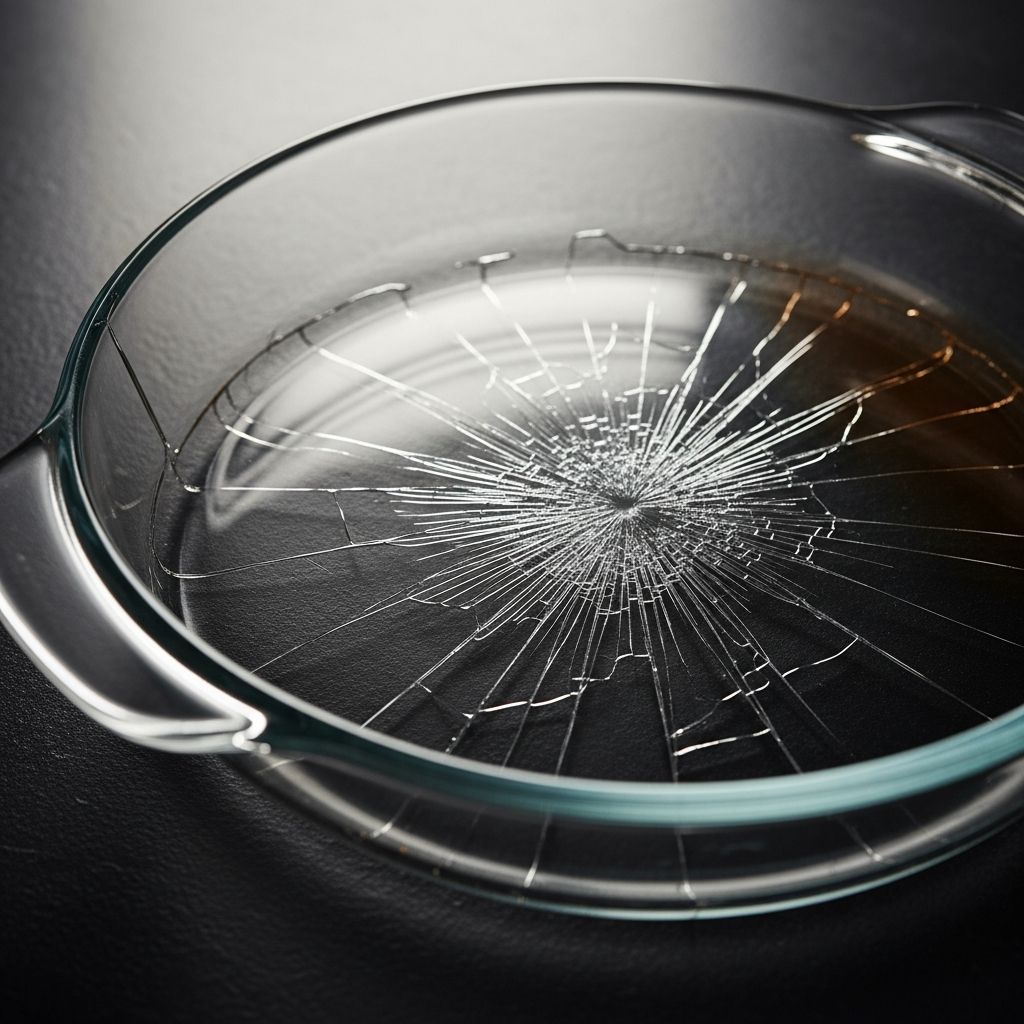
Understanding Glass Cookware Failure: A Comprehensive Safety Guide
Glass cookware has become a staple in modern kitchens, valued for its versatility and ability to withstand high temperatures. However, many home cooks have experienced the alarming moment when their favorite glass baking dish suddenly shatters or breaks unexpectedly. Understanding the mechanics behind these failures and learning proper care techniques can significantly reduce the risk of dangerous accidents in your kitchen.
The Science of Thermal Shock in Glass Materials
The primary culprit behind most glass cookware failures is a phenomenon known as thermal shock. This occurs when a material experiences a rapid change in temperature, creating internal stress that can exceed the glass’s structural capacity. The fundamental principle is straightforward: when glass is heated or cooled quickly, different sections of the material expand or contract at varying rates.
Imagine the outer surface of a baking dish being exposed to intense oven heat while the interior remains cool. The outer layer expands rapidly while the inner portions resist change, creating tension between these zones. If this temperature differential becomes too extreme, the accumulated stress will eventually cause the glass structure to fail, resulting in the characteristic violent shattering.
This stress concentration doesn’t distribute evenly throughout the cookware. The regions where the temperature gradient is steepest experience the highest stress levels, and these become the most likely failure points. This is why breaks often appear to occur spontaneously—the material may have been enduring accumulated stress until it suddenly reached its breaking point.
Modern Glass Composition and Durability Changes
A critical factor affecting glass cookware safety is the change in manufacturing composition over recent decades. Traditional borosilicate glass, used in scientific laboratory equipment and older Pyrex products, possesses superior thermal shock resistance due to its unique chemical composition. Borosilicate glass contains boron oxide, which creates a tighter molecular structure capable of withstanding dramatic temperature variations.
Contemporary consumer glass cookware, however, is predominantly manufactured from tempered soda-lime glass. While tempered glass offers advantages—particularly in impact resistance and the way it breaks into small, relatively harmless cubes rather than sharp shards—it exhibits significantly lower thermal shock tolerance than borosilicate. This manufacturing shift represents a crucial distinction that many consumers remain unaware of when using modern cookware.
Tempered glass achieves its impact resistance through a specialized cooling process that creates compressed outer layers and stressed inner zones. This configuration makes the glass resistant to normal knocks and drops, but it simultaneously makes it more vulnerable to thermal stress. The very engineering that protects against mechanical damage compromises thermal resilience.
Identifying Vulnerable Points in Glass Cookware
Several factors combine to create conditions where glass cookware becomes susceptible to failure. Understanding these vulnerability factors allows cooks to identify and avoid problematic situations:
- Manufacturing defects: Microscopic flaws, air bubbles, or stress concentrations introduced during production create weak points where failure is more likely to initiate
- Surface damage: Chips, scratches, or small cracks compromise the structural integrity of the glass and serve as nucleation points for fracture propagation
- Uneven heating: Rapid temperature differences between various sections of the cookware generate extreme internal stress
- Direct contact with heat sources: Placing cookware directly on stovetop burners or under broilers exposes localized areas to concentrated, intense heat
- Thermal cycling: Repeated exposure to temperature fluctuations can gradually degrade the glass properties over time
Common Scenarios Leading to Glass Breakage
Certain cooking practices and kitchen habits significantly increase the likelihood of glass cookware failure. Recognizing these high-risk scenarios enables cooks to modify their behavior and prevent accidents.
Direct stovetop placement: One of the most common causes of glass cookware failure occurs when cooks place baking dishes or glass bowls directly on stovetop burners. Stovetop heat is highly concentrated and rapidly transferred through direct contact, creating extreme temperature differentials across the cookware. Unlike ovens, which heat more gradually and evenly through circulated air, stovetop burners deliver intense, localized heat that glass simply cannot tolerate.
Broiler exposure: Similar to stovetop usage, placing glass cookware under broiler elements subjects the material to extreme radiant heat from above, often causing the top surface to heat rapidly while other portions remain cooler, creating dangerous stress gradients.
Rapid temperature transitions: Moving glass cookware directly from a hot oven to a cool countertop, or conversely from a freezer to a hot oven, creates shock conditions that can exceed the glass’s thermal tolerance. Even “heatproof” surfaces like granite or stainless steel conduct temperature changes efficiently, transferring heat rapidly to cookware in contact with them.
Preheating with cookware inside: Some recipes or cooking methods involve placing glass dishes in the oven during preheating. As the oven temperature rises gradually, the glassware experiences continuous heating before recipes are actually ready to use, potentially stressing the material unnecessarily.
Practical Safety Measures for Glass Cookware Users
Protecting yourself and your food from glass cookware failures requires implementing specific safe-handling practices:
Before and After Purchase
- Examine cookware carefully before purchasing, rejecting any items with visible chips, blisters, or manufacturing imperfections
- Check packaging and manufacturer websites for care instructions and temperature limitations
- Understand the warranty coverage period and any conditions that may void protection
Temperature Management
- Preheat ovens completely before inserting cookware, never place cold glass dishes into a preheating oven
- Place room-temperature baking sheets under glass cookware before placing it on hot oven racks, creating a thermal buffer
- Allow cookware to cool completely at room temperature before washing or stacking, ideally on a dry towel rather than cold countertops
- Never remove hot glass cookware and immediately place it on cold surfaces or in cold water
Usage Restrictions
- Avoid stovetop placement entirely—use only cookware specifically designed for stovetop cooking
- Do not use glass cookware under broilers or directly over flame
- Never add cold water or food to hot glass cookware, as this creates immediate thermal shock
- Respect the manufacturer’s maximum temperature recommendations, typically 350°F for most modern glass cookware
Maintenance and Care
- Discontinue using any glass cookware that develops chips or cracks, as these compromise structural integrity
- Handle stacked glassware carefully when removing from storage, as pieces may stick when stacked for extended periods
- Avoid storing hot items by stacking them while still warm, as this can cause surface damage
Comparing Glass Types and Their Performance
| Glass Type | Thermal Shock Resistance | Impact Resistance | Break Pattern | Common Use |
|---|---|---|---|---|
| Borosilicate | Superior | Lower | Sharp shards | Laboratory equipment, older cookware |
| Tempered Soda-Lime | Lower | Superior | Small cubes | Modern consumer cookware, bakeware |
| Standard Soda-Lime | Low | Low | Sharp shards | Drinking glasses, decorative items |
Frequently Asked Questions About Glass Cookware Safety
Is modern glass cookware dangerous?
Modern tempered soda-lime glass cookware is not inherently dangerous when used according to manufacturer instructions. The risk of failure increases only when cookware is subjected to thermal stress beyond its designed tolerance, misused on stovetops or under broilers, or used after becoming damaged.
Can I use glass bowls on stovetops?
No. Glass bowls and baking dishes should never be placed on stovetop burners, as the concentrated direct heat creates thermal conditions that contemporary glass cookware cannot withstand. Use only cookware specifically manufactured for stovetop use.
Why do some glass dishes break more easily than others?
Variations in thickness, composition, manufacturing quality, and design all influence thermal resilience. Thinner glass typically tolerates thermal stress less effectively than thicker material. Manufacturing consistency also varies between products and brands.
What should I do if my glass cookware breaks?
Discontinue using the item immediately, as the structural compromise means subsequent failures become more likely. Carefully collect all glass fragments, checking food and surrounding areas thoroughly. Consider the cookware a single-use item once damaged.
Are older Pyrex products safer than newer ones?
Older Pyrex manufactured from borosilicate glass demonstrates superior thermal shock resistance compared to current products made with tempered soda-lime glass. However, older cookware may have accumulated internal stress or micro-damage from years of use.
Transitioning to Safer Cooking Practices
If you currently use glass cookware regularly, implementing safer practices involves gradual habit changes. Start by identifying your highest-risk behaviors—such as placing bowls on stovetops or moving hot cookware to cold counters—and consciously modify these practices first. Allow additional time for cookware to cool naturally rather than rushing the cooling process. When using glass bakeware, follow a simple sequence: preheat the oven, prepare food in the glass dish at room temperature, place a room-temperature baking sheet on the oven rack, position the glass cookware on the sheet, and set the oven to the desired temperature.
Consider investing in alternative cookware options for tasks that expose glass to risky conditions. Metal baking pans, ceramic cookware, or other specialized materials may better serve specific cooking needs while eliminating thermal shock risks entirely.
Understanding Manufacturer Warranties and Liability
Most modern glass cookware manufacturers provide limited warranties, typically covering two years from the purchase date and requiring proof of purchase. These warranties usually exclude damage from improper use, including thermal shock caused by user behavior. Understanding your cookware’s warranty terms helps clarify what protection you actually have and identifies which damage scenarios fall outside coverage.
Manufacturers typically design their limited warranties around normal, recommended usage. Thermal shock damage resulting from stovetop use, rapid temperature changes, or broiler exposure generally voids warranty protection, as these scenarios exceed the intended use parameters.
References
- Why We’re Not Worried About Pyrex Bakeware Exploding — Advanced Technical Products. 2024. https://advancedtechnicalprod.com/industry-news-blog/why-were-not-worried-about-pyrex-bakeware-exploding/
- Why Pyrex Bowls Explode — Consumer Reports. 2010. https://www.consumerreports.org/consumerist/why-pyrex-bowls-explode/
- Why is Pyrex exploding? — How To Cook That, YouTube. https://www.youtube.com/watch?v=YVbkDAw4aJs
Similar Articles



Read full bio of Sneha Tete