Festive Easter Bread Mastery
Discover the art of crafting vibrant, egg-adorned Easter bread that blends rich flavors with holiday symbolism for unforgettable celebrations.
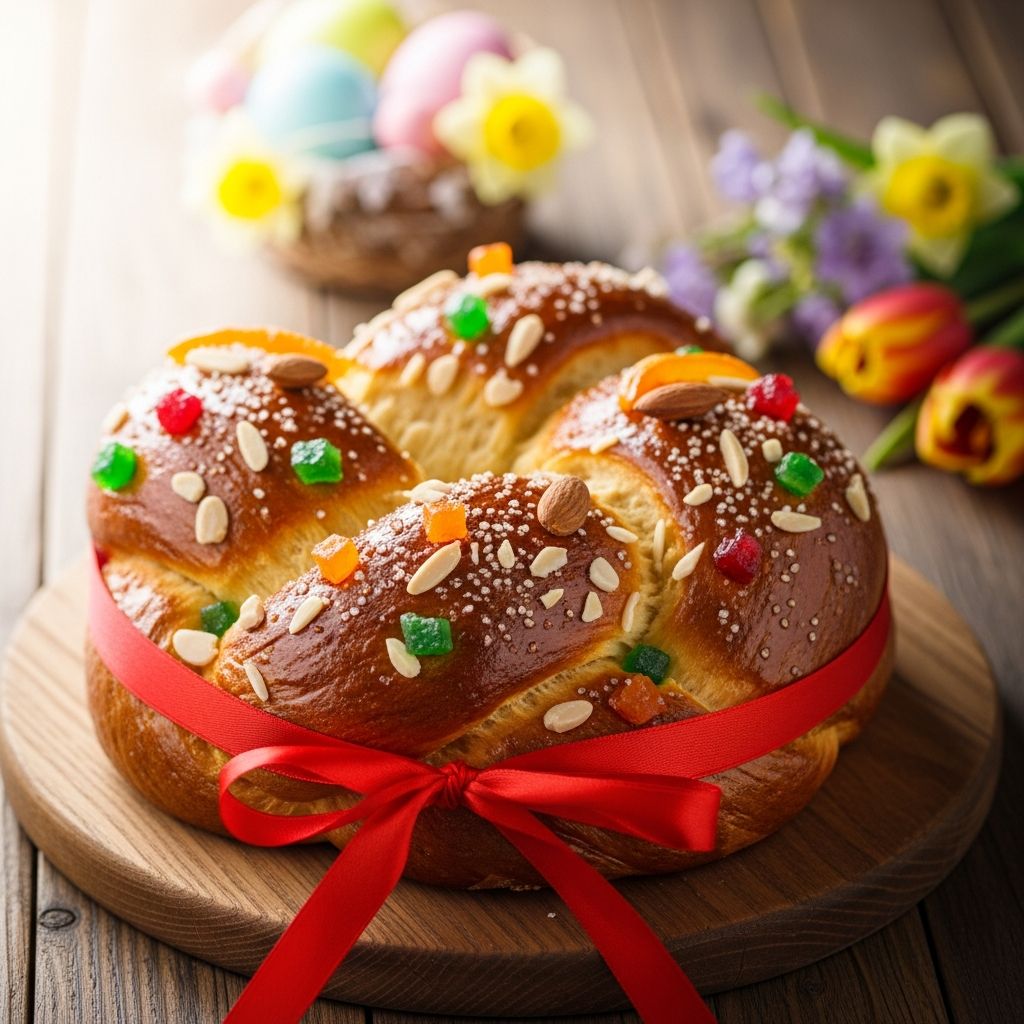
Traditional Easter bread stands as a cornerstone of holiday baking, combining soft, enriched dough with vibrant dyed eggs to create a visually stunning and delicious centerpiece. This bread, often shaped into wreaths or braids, symbolizes renewal and resurrection, making it a beloved tradition in many cultures, particularly Italian-American communities.
The Cultural Roots of Easter Bread
Easter bread traces its origins to ancient European customs where bread symbolized life’s cycle and new beginnings. In Italy, it’s known as Pane di Pasqua, typically formed into wreaths representing the crown of thorns or braided loaves evoking unity. Families pass down recipes through generations, baking it fresh for Easter feasts. The inclusion of raw, dyed eggs—placed in the dough before baking—adds both decoration and subtle flavor as they cook gently within the bread.
Historical accounts link these breads to medieval times when eggs were forbidden during Lent, making their Easter appearance a joyous ritual. Today, variations span regions: Sicilian versions might include almonds, while others incorporate anise or citrus zests for aromatic depth.
Essential Ingredients for Success
At its core, Easter bread relies on a brioche-like dough enriched with milk, butter, eggs, and sugar for tenderness and subtle sweetness. Key components include:
- Flour: Bread or all-purpose flour provides structure; aim for 4-5 cups to achieve elasticity.
- Yeast: Instant or active dry yeast (2-2.25 tsp) ensures reliable rise.
- Liquids: Warm milk (1-1.25 cups) activates yeast without scalding; half-and-half adds extra richness.
- Fats: Butter (1/3-1/2 cup) contributes to flaky layers and flavor.
- Sweeteners: Granulated sugar (1/2 cup) balances richness.
- Eggs: 2-3 in the dough for moisture; 4-6 raw dyed eggs for nesting.
- Add-ins: Lemon/orange zest, anise seeds, or sprinkles (nonpareils) for festive flair.
Room-temperature ingredients prevent dough shock, promoting even fermentation.
Step-by-Step Baking Guide
Creating Easter bread demands patience, with rising times totaling 3-4 hours. Here’s a comprehensive method yielding two wreaths.
Prepare the Dough
- Warm milk and melt butter over low heat until tepid (100-110°F). Stir in yeast, salt, beaten eggs, sugar, and half the flour using a stand mixer with dough hook.
- Gradually add remaining flour until dough pulls from bowl sides—about 4 cups total. Knead 5-10 minutes until smooth and elastic.
- Place in greased bowl, cover, and let rise 1-2 hours until doubled. For enhanced flavor, refrigerate overnight after initial rise.
Shape and Add Eggs
- Deflate dough, divide into 12 equal pieces. Roll each into 14-inch ropes.
- Twist two ropes together, form into wreath, pinching ends. Nestle one dyed raw egg in each wreath’s center.
- Place on parchment-lined sheets, cover, and rise 1 hour until puffy.
Bake to Perfection
Preheat oven to 350°F. Brush with egg wash (1 egg + 1 tsp water) and sprinkle nonpareils. Bake 25-30 minutes until golden, rotating sheets midway. Internal temp should reach 190°F. Cool on racks.
Recipe Variations to Try
Customize your Easter bread for diverse tastes:
| Variation | Key Changes | Flavor Profile |
|---|---|---|
| Cinnamon Swirl | Roll dough with butter, brown sugar, cinnamon filling before shaping | Warm, spiced interior |
| Citrus-Anise | Add orange zest and anise seeds to dough | Bright, aromatic |
| Almond-Topped | Top with sliced almonds and pearl sugar post-wash | Nutty crunch |
| Braided Loaf | Braid three ropes instead of wreaths | Classic pull-apart |
These tweaks maintain tradition while suiting preferences.
Troubleshooting Common Issues
Baking mishaps are fixable:
- Dough too sticky? Add flour 1 tbsp at a time during kneading.
- Eggs overcook? Use room-temp raw eggs; bake at lower temp if needed.
- Poor rise? Check yeast viability with warm liquid test.
- Pale crust? Apply multiple egg washes.
- Dry texture? Increase butter or milk slightly next time.
Humidity affects dough; adjust flour accordingly.
Pairing and Serving Ideas
Serve warm, sliced, with butter or jam. It complements Easter ham, cheeses, or fresh fruit. For breakfast, toast slices and top with cream cheese. Stores 2-3 days at room temp or freezes well.
Health-Conscious Adaptations
Reduce sugar by 25%, use whole wheat flour (half substitution), or dairy-free milk/butter alternatives. Eggs remain traditional, providing protein.
Preserving Family Traditions
Involve kids in dyeing eggs and shaping dough to build memories. Document tweaks for future generations.
Frequently Asked Questions
Can I bake the eggs separately?
No—raw eggs cook perfectly within the bread, absorbing flavors without scrambling.
How far ahead can I make it?
Bake day-of for best texture; dough can cold-proof overnight.
What if I lack a stand mixer?
Knead by hand 10-15 minutes until smooth.
Are nonpareils necessary?
Optional but traditional for sparkle; use pearl sugar for crunch.
How to dye eggs for bread?
Use food coloring in vinegar-water; dry thoroughly before nesting.
Expert Tips for Pro Results
- Fold dough every 30 minutes during first rise for strength.
- Weight ropes evenly for uniform baking.
- Cover rising dough loosely to avoid sticking.
- Experiment with natural dyes like beets or turmeric.
References
- Italian Easter Bread – Sprinkle Bakes — Sprinkle Bakes. 2014-04-01. https://www.sprinklebakes.com/2014/04/italian-easter-bread.html
- Traditional Italian Easter Bread Recipe — An Italian in my Kitchen. N/A. https://anitalianinmykitchen.com/easter-bread/
- Italian Easter Bread Recipe – Baking with Kids — Project Whim. N/A. https://www.projectwhim.com/italian-easter-bread-recipe/
- Best Easter Bread Recipe — Delish. N/A. https://www.delish.com/cooking/recipe-ideas/a26965839/easter-bread-recipe/
Similar Articles





Read full bio of Sneha Tete