Egyptian Dukkah-Crusted Roasted Beets with Sage
Elevate your vegetable game with this Middle Eastern-inspired dish
Creating Restaurant-Quality Roasted Beets with Sage and Dukkah at Home
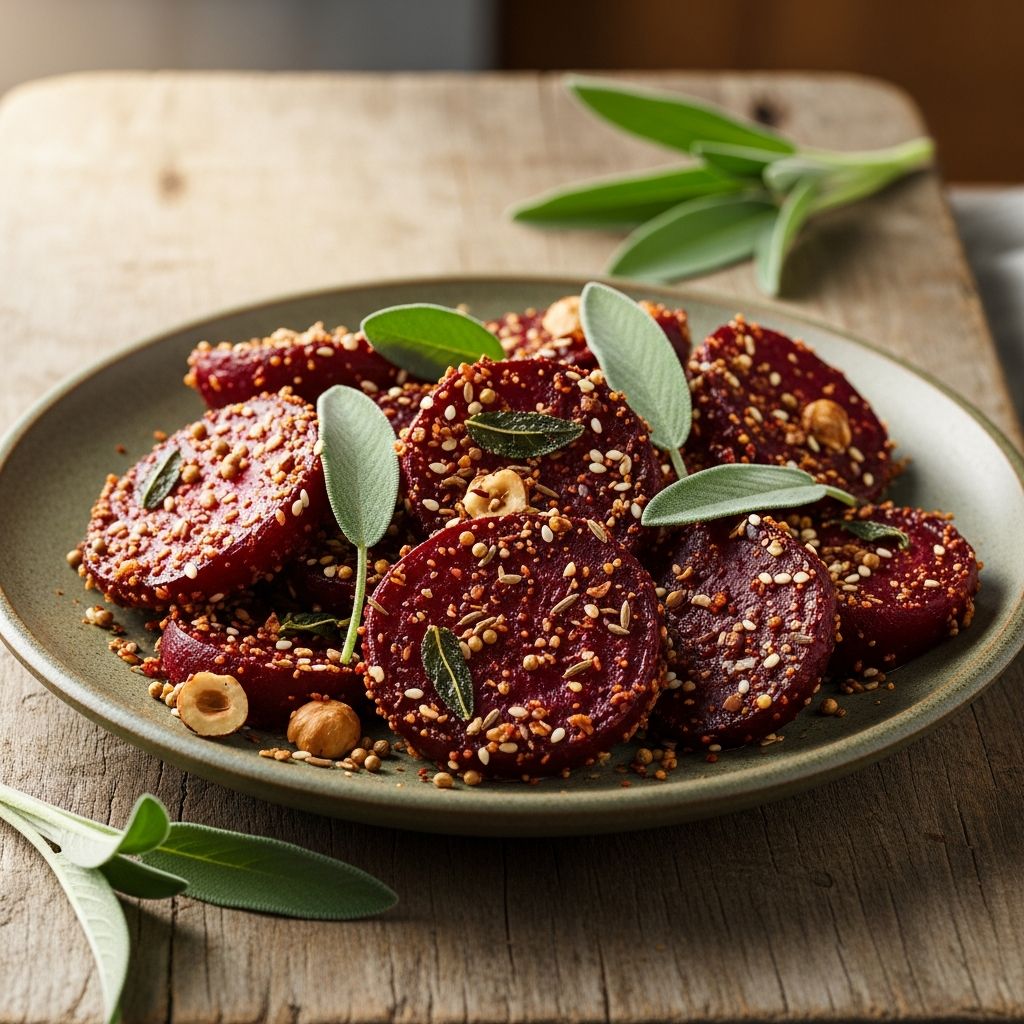
The combination of earthy roasted beets, fragrant sage, and the distinctive crunch of dukkah creates a dish that transcends the ordinary side vegetable. This Middle Eastern-inspired preparation transforms humble beets into an elegant centerpiece worthy of special occasions or elevated weeknight dinners. The beauty of this recipe lies not only in its sophisticated flavor profile but also in its approachable technique that allows home cooks to achieve restaurant-quality results in their own kitchens.
Understanding the Components: What Makes This Dish Special
Each element of this roasted beet preparation serves a distinct culinary purpose. The beets provide natural sweetness and a tender interior when properly roasted, while their earthy undertones complement the other ingredients beautifully. Sage, whether fresh or dried, introduces an herbal complexity that bridges the gap between the beets’ sweetness and the savory spice blend. The dukkah, an ancient Egyptian condiment consisting of nuts, seeds, and spices, adds textural contrast and aromatic depth that elevates the entire composition.
The interplay between these components creates a multi-sensory eating experience. The visual appeal of deep crimson beets contrasts striking against green sage leaves and the warm, tan-colored dukkah coating. The aroma released during cooking signals the development of complex flavors, while the varied textures—from tender beet flesh to crispy spice coating—engage the palate throughout each bite.
The Essential Ingredient: What Exactly is Dukkah?
Dukkah represents one of the world’s most versatile spice blends, originating from Egypt where it has been prepared for centuries. The name itself derives from the Arabic word “daqqa,” meaning to pound or crush, reflecting the traditional preparation method. This blend typically combines roasted nuts, seeds, and warm spices ground together into a textured mixture that ranges from coarse to medium consistency.
The foundational components of dukkah include hazelnuts or pistachios for richness, sesame seeds for nuttiness, and a variety of spices that may encompass coriander seeds, cumin seeds, fennel seeds, and black peppercorns. Some regional variations incorporate chickpeas for additional texture and protein. The beauty of dukkah lies in its versatility—while traditional recipes maintain certain constants, the specific ratios and ingredient selections allow for personalization based on availability and preference.
When applied to roasted beets, the dukkah coating not only enhances flavor but also provides a textural element that prevents the dish from becoming monotonous. The toasted nuts and seeds create a pleasant crunch against the soft beet interior, while the spices add warmth and complexity that deepens as the flavors develop on the palate.
Crafting Homemade Dukkah: Step-by-Step Guidance
Creating dukkah from scratch requires minimal equipment but considerable attention to the toasting process. The distinction between properly toasted and burned spices can make the difference between a vibrant, fragrant blend and a bitter, unpleasant condiment.
Selecting and Preparing Your Ingredients
Begin by gathering raw, unsalted nuts and seeds. Hazelnuts and pistachios both work excellently, though pistachios provide a slightly more distinctive flavor profile. Sesame seeds should be raw rather than pre-roasted, as the toasting process will be controlled during preparation. For spices, seek out whole seeds rather than pre-ground options, as they retain more volatile oils and aromatic compounds. Essential spice selections include coriander seeds, cumin seeds, fennel seeds, and black peppercorns, with optional additions of chili flakes for those preferring heat.
The Toasting Process
Toast the nuts separately from the seeds and spices, as they require different cooking times. Begin by roasting whole nuts at a moderate oven temperature for approximately 7-8 minutes until the skins loosen slightly. Once cooled, rub the nuts vigorously between your hands or within a kitchen towel to remove the papery outer layer. This step, while requiring patience, significantly improves the final texture and flavor by eliminating any astringent bitterness from the skins.
In a separate small skillet over medium heat, combine the seeds and spices, stirring constantly to prevent burning. This process typically requires 3-5 minutes, with success depending on your vigilance in observing color changes and aromatic development. Remove the mixture from heat as soon as the spices become fragrant and achieve a light golden hue. Over-toasting creates bitter flavors that cannot be salvaged.
Grinding and Storage
Once cooled, coarsely chop the nuts and combine them with the toasted seed mixture. Using a spice grinder, pestle and mortar, or even a clean coffee grinder reserved for spices, crush the ingredients to your preferred consistency. Some prefer a fine powder, while others maintain larger chunks for textural variety. Add coarse sea salt and black pepper to taste, mixing thoroughly before transferring to an airtight glass jar.
Properly stored in a cool, dark cupboard, homemade dukkah maintains its quality for up to two weeks, though the aromatic compounds gradually diminish over time. For this reason, creating small batches ensures optimal freshness when ready to use the blend.
Preparing and Roasting the Beets
The success of this dish begins with selecting appropriately sized beets and employing proper roasting techniques. Medium-sized beets, roughly 2-3 inches in diameter, roast evenly and cook within a reasonable timeframe, typically 40-50 minutes depending on oven variations and exact size.
Pre-Roasting Preparation
Begin by preheating your oven to 400 degrees Fahrenheit. Trim any long rootlets from the beets but avoid cutting into the main bulb, as this allows the flavorful juices to escape during roasting. Rinse the beets thoroughly under cool running water to remove any soil, then pat them dry completely. Moisture interferes with the development of caramelized exterior surfaces.
Place the dried beets on a large sheet of aluminum foil and pierce each one several times with a sharp knife. This allows steam to escape during cooking, preventing the beets from becoming waterlogged. Drizzle generously with olive oil, tossing gently to ensure all surfaces receive an even coating. Sprinkle with kosher salt, then wrap the foil package securely, creating a steam-cooking environment that accelerates the softening process while concentrating flavors.
Roasting and Testing for Doneness
Place the foil packet on a rimmed baking sheet to catch any potential drips, then roast in the preheated oven. Begin checking for doneness after 35 minutes by carefully unwrapping a corner of the foil and inserting a sharp knife into the largest beet. The knife should pierce the flesh with minimal resistance, similar to cutting through a cooked potato. If resistance remains significant, rewrap and continue roasting, checking at 10-minute intervals.
Cooking times vary based on beet size, oven calibration, and initial temperature variations. Patience during this stage ensures tender results rather than the unpleasant density of undercooked beets.
Incorporating Fresh Sage into the Preparation
Sage plays a critical but often underestimated role in this preparation. The herb’s peppery, slightly earthy character complements both the sweet beets and the complex spice profile of dukkah. Fresh sage leaves can be incorporated through several methods, each producing slightly different results.
One approach involves infusing the roasting oil with sage flavor by heating the olive oil gently with several fresh sage leaves before coating the beets. This method produces a subtle sage presence throughout the dish. Alternatively, fresh sage can be crisped separately in the oven during the final minutes of beet roasting, then crumbled over the finished dish for more pronounced herbal notes and increased textural contrast.
For those preferring a more integrated approach, whole sage leaves can be placed directly on top of the beets during roasting, allowing them to crisp slightly while flavoring the beets beneath them. Experimentation with these different techniques allows cooks to develop preferences aligned with their individual flavor sensibilities.
Assembly and Serving Techniques
Once the beets have cooled to room temperature, carefully unwrap the foil and remove the thin outer skin by rubbing gently under cool running water. This step prevents beet juice from staining your hands and work surfaces. Cut the beets into bite-sized pieces or wedges, depending on your preferred presentation style.
Arrange the beet pieces on a serving platter or individual plates. Drizzle lightly with additional extra-virgin olive oil if desired, and season with fine sea salt. The moment immediately before serving, generously sprinkle the dukkah coating over the beets, ensuring each piece receives an adequate amount of the spice mixture. This timing prevents the dukkah from absorbing moisture and losing its characteristic crunch.
For enhanced visual presentation, scatter fresh sage leaves around and atop the finished dish, creating layers of color and highlighting the herbal component of the preparation. A light squeeze of fresh lemon juice adds brightness and acidity that cuts through the richness of the oil and nuts.
Flavor Pairings and Complementary Components
While this preparation stands beautifully on its own, it benefits from thoughtful pairing with other elements. Creamy accompaniments such as whipped goat cheese, Greek yogurt, or tahini-based sauces provide textural contrast and cooling effects that balance the warmth of the spices. Acidic components like pomegranate molasses, aged balsamic vinegar, or fresh citrus juice enhance the overall complexity.
For composed plates, consider adding soft cheeses like feta or burrata, fresh greens providing peppery contrast, and toasted bread for those seeking additional textural variety. In grain bowls, this preparation shines when combined with nutty ancient grains such as farro, quinoa, or roasted buckwheat, creating a more substantial vegetarian main course.
Storage and Make-Ahead Strategies
Both components of this dish accommodate advance preparation. The dukkah can be prepared several days in advance and stored in an airtight container, maintaining its quality throughout that period. The beets can be roasted up to 24 hours ahead, then stored in the refrigerator and brought to room temperature before serving.
For optimal flavor and texture, however, apply the dukkah coating immediately before serving to prevent the spice mixture from absorbing moisture. If preparing the dish several hours ahead, store the dukkah separately and add it just as guests are about to begin eating.
Troubleshooting Common Preparation Challenges
Should your dukkah taste bitter, the nuts or spices were likely over-toasted. Prevent this by maintaining lower heat during the toasting process and removing ingredients from the heat source just as aromas become pronounced. If your beets remain tough after the suggested cooking time, your oven may run cool; consider increasing the temperature slightly or extending the roasting period.
Prevent beet juice stains by working with cool beets and wearing disposable gloves during the skin removal process. Should staining occur on light-colored cutting boards or countertops, applying white vinegar and allowing it to sit briefly often lightens the stains considerably.
Scaling the Recipe for Different Occasions
This preparation scales easily for dinner parties or large gatherings. A single batch of homemade dukkah, typically requiring 20-30 minutes of preparation time, produces enough coating for 3-4 pounds of beets, accommodating most entertaining scenarios. For substantial crowds, simply multiply the dukkah recipe proportionally, keeping in mind that the spice blend maintains quality best when prepared fresh or within 1-2 days of service.
Seasonal Variations and Ingredient Substitutions
While this recipe performs beautifully with traditional ingredients, thoughtful substitutions accommodate dietary restrictions or seasonal availability. Those with tree nut allergies might substitute sunflower seeds or additional sesame seeds for the nuts, adjusting quantities to maintain the 1:1 ratio of nuts to seed mixture. Alternative herbs such as thyme, rosemary, or oregano can replace sage, each contributing distinct aromatic profiles that vary the experience while maintaining the fundamental technique.
Understanding the Nutritional Profile
This preparation offers substantial nutritional benefits beyond its aesthetic appeal. Beets provide dietary fiber, folate, and manganese, while the nuts and seeds in dukkah contribute healthy fats, plant-based proteins, and important minerals including zinc and copper. The preparation method—roasting rather than boiling—preserves more of the beets’ nutritional content compared to other cooking techniques. The overall dish creates a nutrient-dense side that satisfies both from flavor and wellness perspectives.
Frequently Asked Questions
- Can I prepare dukkah in advance?
- Yes, homemade dukkah maintains quality for up to two weeks when stored in an airtight container in a cool, dark location. However, the aromatic compounds gradually diminish, so preparation within 3-5 days of use yields optimal flavor.
- What if I don’t have fresh sage available?
- Dried sage can substitute using roughly one-third the quantity of fresh, as drying concentrates flavors considerably. Alternatively, experiment with other herbs such as thyme or rosemary for different but equally delicious results.
- How do I prevent beet stains on my hands?
- Wearing disposable latex gloves during skin removal provides the most effective protection. If staining occurs, lemon juice or white vinegar applied directly to affected areas and allowed to sit briefly often fades the discoloration significantly.
- Can this dish be served cold?
- While room temperature presentation is traditional, this preparation can be enjoyed chilled, though the spice flavors may seem somewhat muted. For best results, allow refrigerated portions to come to room temperature for 15-20 minutes before serving, or refresh with a brief warming in the oven.
- Are there vegan-friendly accompaniments?
- The beets and dukkah are naturally plant-based, making this preparation inherently vegan. Pair with tahini-based sauces, hummus, or creamy cashew preparations for richness without animal products.
References
- Roast beetroot bowl with dukkah — Lazy Cat Kitchen. https://www.lazycatkitchen.com/roast-beetroot-bowl-dukkah/
- Roasted Beets With Pistachio Dukkah — Chandra Ram. https://www.chandraram.net/roasted-beets-pistachio-dukkah
- BEETS WITH SAGE AND DUKKAH SPICES — The Resistance. https://www.altmad.com/feed-the-resistance-beets-with-sage-and-dukkah-spices/
Similar Articles






Read full bio of medha deb