Transform Your Dishwashing Routine Into a Manageable Task
Discover practical strategies to streamline your kitchen cleanup and reduce daily stress
The accumulation of dirty dishes represents one of the most perpetual household challenges, yet it remains largely preventable through intentional planning and systematic approaches. Rather than viewing dishwashing as an inevitable burden, we can restructure our relationship with this daily task by implementing evidence-based strategies that reduce both time investment and mental strain. This comprehensive guide explores practical methods to streamline your kitchen cleanup process.
The Foundation: Minimalism and Strategic Planning
The most significant transformation begins not with technique but with intentional reduction. Maintaining an excessive quantity of dishware creates a false sense of abundance that enables procrastination. When households possess minimal dishware, they eliminate the ability to defer washing, which paradoxically creates more freedom and less anxiety. This approach forces consistency and efficiency by establishing clear boundaries around what can realistically accumulate.
Consider assessing your current dishware inventory. Most households require far fewer pieces than they currently own. By retaining only essential items—sufficient plates, bowls, glasses, and utensils for daily meals plus a modest buffer for entertaining—you create a system that naturally demands regular maintenance. This constraint transforms dishwashing from an optional task into an integrated part of your daily rhythm.
Establishing Sustainable Washing Patterns
Consistency ranks equally with reduction in importance. Unlike many household tasks that tolerate irregular completion, dishwashing benefits tremendously from predictable, frequent cycles. Rather than allowing dishes to accumulate until overflow forces action, adopting a pattern of immediate or near-immediate washing prevents the psychological burden of a mounting pile.
The distinction between small, frequent loads and infrequent large accumulations reflects broader principles found across numerous disciplines. Just as regular academic review prevents weekend cram sessions, regular dishwashing prevents the overwhelming task of processing several days’ worth of dishes simultaneously. This consistency also reduces the likelihood that food will dry and adhere to surfaces, simplifying the actual scrubbing process.
For households with multiple occupants, establishing shared expectations around timing creates mutual accountability. Rather than a single person bearing responsibility for perpetual cleanup, distributing the task based on cooking duties creates perceived fairness. Those who prepare meals need not also bear sole responsibility for cleanup, transforming the experience from chore into collaborative routine.
Timing Strategies: The Power of Proactive Action
One fundamental principle distinguishes efficient dishwashing from burdensome cleanup: intervening before food residue hardens. Rather than waiting until completion of meal preparation to address dishes, incorporating brief washing intervals during cooking prevents accumulation of difficult-to-remove debris.
Several practical approaches support this timing strategy:
- Soaking items immediately after use in warm soapy water prevents food from drying onto surfaces
- Rinsing utensils immediately after handling sticky substances eliminates stubborn adhesion
- Wiping work surfaces between cooking stages reduces clutter and cross-contamination concerns
- Processing small quantities of dishes between stirring or cooking intervals distributes the task throughout meal preparation rather than concentrating it afterward
This distributed approach maintains cognitive engagement with the cooking process while preventing the overwhelming feeling of a completely full sink upon meal completion. The psychological benefit often exceeds the minimal time investment.
Optimizing Physical Workspace and Equipment
The tools and arrangements surrounding dishwashing significantly influence both efficiency and comfort. A well-designed dishwashing station incorporates several elements that reduce friction and encourage consistent participation.
Drying Solutions
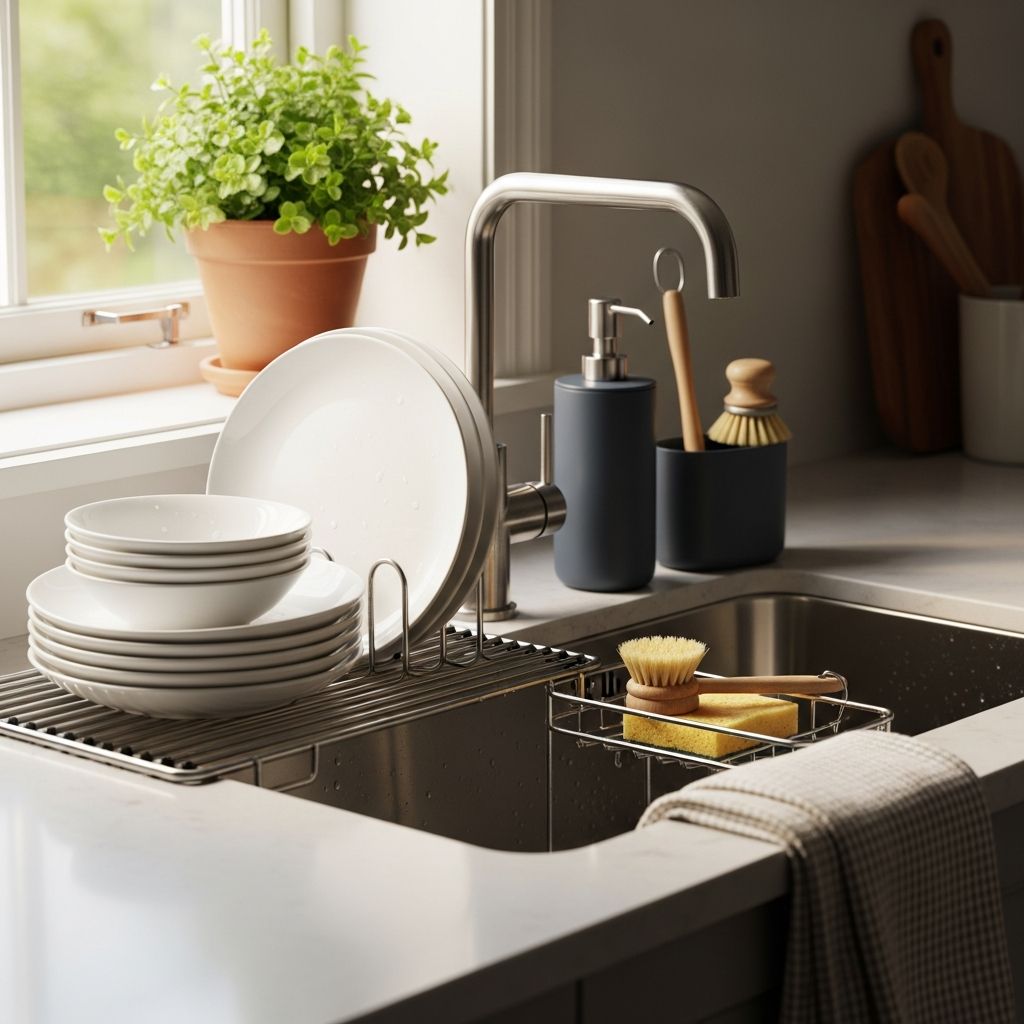
Traditional bulky drying racks consume valuable counter space and remain perpetually cluttered with previous loads. Alternatively, portable drying mats offer flexibility and space efficiency. These mats hang conveniently between use and wash regularly in home laundry systems, eliminating dedicated storage requirements. Air-drying represents both a more sanitary option and a time-saving approach that eliminates manual drying responsibilities.
Hand Protection
Extended exposure to hot water and cleaning agents causes dermatological complications including dryness, cracking, and irritation. Protecting hands through appropriate gloves represents a straightforward yet often overlooked intervention. The choice between latex, nitrile, or rubber options depends on individual sensitivity and preferences, but protection itself remains non-negotiable for long-term hand health.
Scraping and Cleaning Tools
Plastic scrapers designed specifically for kitchenware prevent fingernail damage and provide superior mechanical action compared to fingernails alone. By maintaining dedicated scrapers within easy reach, households reduce resistance to pre-soaking tough residues and eliminate the temptation to use damaging fingernail scraping techniques.
Strategic Sequencing: Order and Methodology
The sequence in which items are washed influences both efficiency and cleaning quality. Processing dishware from least to most soiled utilizes cleaning solution optimally before it becomes overly compromised by grease and debris.
The recommended washing progression follows this logic:
- Glasses and drinking vessels first, requiring minimal soap concentration
- Mugs and small bowls next, still relatively clean
- Silverware and eating utensils in the middle progression
- Plates and serving dishes following
- Cookware and baking equipment last, after solution saturation with grease
This ordering prevents the common mistake of insufficient cleaning on early items due to contaminated water, and maximizes utility of the cleaning solution throughout the entire process. While this methodology remains flexible based on individual preferences, understanding the reasoning enables informed decisions about personal workflow.
Sensory Enhancement and Psychological Framing
Dishwashing requires minimal cognitive engagement during execution, making it an ideal opportunity for simultaneous mental stimulation or entertainment. Rather than viewing this time as wasted, reframing it as opportunity creates substantial psychological benefit.
Engagement strategies that integrate successfully with dishwashing include:
- Listening to audiobook narratives or serialized fiction
- Consuming podcast content on topics of interest
- Watching video content or educational programming
- Enjoying music or audio entertainment
- Practicing language learning through audio instruction
For individuals motivated by olfactory sensations, selecting cleaning products with appealing scents creates positive associations with the task. Beyond simple preference, scent psychology can evoke memories of comfort, family connection, or meaningful experiences, transforming a neutral task into one carrying emotional resonance.
Household Coordination and Shared Responsibility
In households with multiple occupants, establishing clear systems for task distribution prevents resentment and creates sustainability. Rather than defaulting to a single person’s responsibility, various models can distribute burden equitably:
| Model | Mechanism | Best For |
|---|---|---|
| Paired Arrangement | One person cooks, another washes; roles alternate | Couples or regular two-person households |
| Rotating Schedule | Responsibility cycles through household members by day or week | Larger families or shared living situations |
| Immediate Protocol | Each person washes their own items immediately after use | Independent or flexible schedules |
| Collaborative Approach | Everyone participates in cleanup together, sharing tools and space | Teaching responsibility or building connection |
Water Temperature and Product Selection
Appropriate water temperature balances cleaning effectiveness with hand safety and energy efficiency. Hot water enhances grease dissolution and sanitization, yet excessive temperature accelerates skin damage and increases utility costs. Warm water represents an optimal compromise for most household dishwashing scenarios.
Dish soap selection influences both effectiveness and user satisfaction. Quality products cut through grease more efficiently, requiring less product and generating fewer frustrations with inadequate cleaning. Purchasing products specifically formulated for hand washing rather than machine washing ensures appropriate sudsing and hand safety.
Creating Sustainable Long-Term Habits
Transformation of dishwashing experience relies less on individual techniques and more on establishing sustainable patterns. Rather than attempting dramatic overhaul simultaneously, progressive implementation of strategies creates lasting change. Beginning with minimum viable changes—perhaps implementing the sequencing strategy or establishing a specific timing pattern—builds confidence and demonstrates efficacy before introducing additional modifications.
Recognizing that no perfect methodology exists eliminates perfectionism as a barrier. The goal remains clean dishes and functional kitchen space, not adherence to an idealized process. Flexibility in approach, combined with consistency in execution, creates the most sustainable long-term results.
Frequently Asked Questions
How can I reduce the time spent dishwashing daily?
Implementing a minimum-dishware approach combined with immediate washing dramatically reduces total time. Washing during meal preparation rather than after completion prevents food from drying, which would require additional scrubbing time. Establishing a consistent routine also builds efficiency through muscle memory and environmental familiarity.
What protective measures prevent hand damage from frequent dishwashing?
Wearing protective gloves represents the primary intervention. Additionally, using appropriate moisturizing products afterward helps restore skin barrier function. Avoiding excessively hot water and limiting duration of exposure also contributes to hand health maintenance.
Can I make dishwashing more enjoyable?
Yes. Engaging simultaneously in entertainment, selecting products with appealing scents, or reframing the task as meditative time can substantially improve the subjective experience. Sharing the task with household members also increases enjoyment through social connection.
What sequence works best for washing different dish types?
Progress from least to most soiled: glasses first, followed by mugs, silverware, plates, bowls, and finally cookware. This maximizes cleaning solution effectiveness throughout the process.
How does consistency in routine impact dishwashing burden?
Regular washing prevents accumulation and reduces individual load size. Consistency also eliminates decision fatigue about when to wash, creating automatic habits that require minimal willpower or mental energy.
References
- Hand Hygiene and Skin Care — Centers for Disease Control and Prevention. 2024. https://www.cdc.gov/hygiene/personal-hygiene/index.html
- Habit Formation: The Role of Routine in Behavioral Change — American Psychological Association. 2023. https://www.apa.org/science/about/psa/habit-formation
- Water Temperature and Dishwashing Effectiveness — U.S. Environmental Protection Agency. 2024. https://www.epa.gov/watersense/kitchen-tips
- Occupational Hand Dermatitis Prevention — National Institute for Occupational Safety and Health. 2023. https://www.cdc.gov/niosh/topics/skin/default.html
- Household Water Use and Conservation — U.S. Geological Survey. 2024. https://www.usgs.gov/water-resources
Similar Articles






Read full bio of Sneha Tete