The Complete Guide to Salt
Discover the science, history, types, and health impacts of salt to elevate your cooking and wellness choices.
Salt, primarily sodium chloride (NaCl), stands as one of the most vital minerals in human diet and industry, comprising about 40% sodium and 60% chloride. It enhances flavors, preserves foods, and supports essential bodily functions like nerve signaling and fluid balance.
Why Salt Matters to Your Body
The human body relies on salt for core physiological processes. Sodium from salt helps regulate blood volume, blood pressure, osmotic equilibrium, and pH levels, while also enabling proper muscle contractions and nerve transmissions. A minimum daily intake of around 500 mg of sodium is necessary for these functions, equivalent to a tiny fraction of typical consumption.
Without adequate salt, individuals might experience fatigue, muscle cramps, or impaired cognitive function due to disrupted electrolyte balance. Conversely, excessive intake links to health risks like hypertension, heart disease, and stroke, as it prompts water retention and strains cardiovascular systems.[10]
- Nerve impulses: Sodium ions facilitate electrical signals across cells.
- Muscle function: Essential for contraction and relaxation.
- Fluid balance: Maintains proper hydration and mineral distribution.
How Salt is Harvested Around the World
Salt extraction spans ancient seas, underground mines, and modern facilities. Seawater evaporation, either via solar methods or vacuum processes, yields sea salt rich in trace minerals. Rock salt, or halite, comes from mining ancient deposits left by evaporated prehistoric lakes and oceans.
Other sources include salt lakes like Utah’s Great Salt Lake, which produce lake salt free from certain contaminants, and even desert or volcanic regions where mineral beds form naturally. Refining often purifies these for table use, adding agents to prevent clumping.
| Method | Source | Characteristics |
|---|---|---|
| Sea Evaporation | Oceans, solar ponds | Moist, mineral-rich, varied flavors |
| Mining | Underground deposits | Coarse crystals, often refined |
| Lake Harvesting | Inland salt lakes | Cleaner, fewer heavy metals |
Exploring Salt Varieties for Every Kitchen
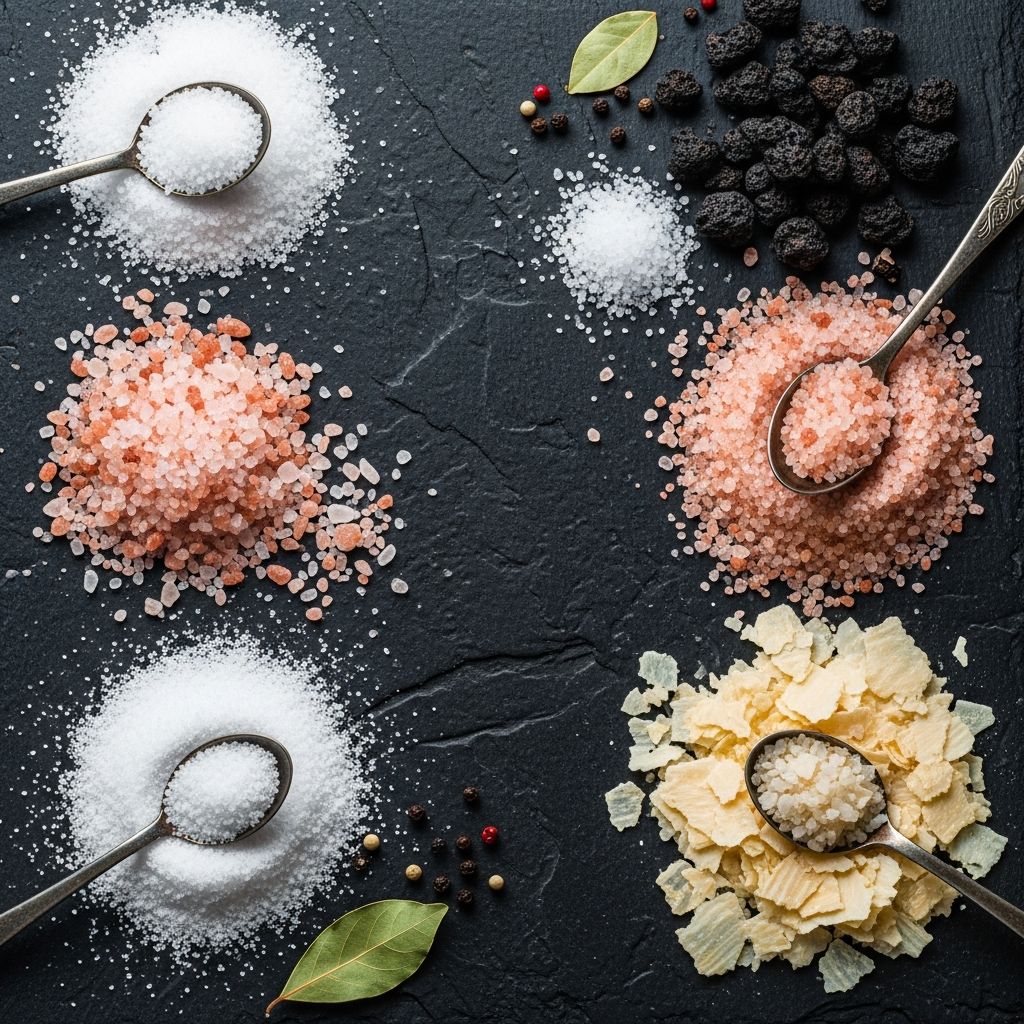
Dozens of salt types exist, each with unique textures, colors, and tastes influenced by origin and processing. Table salt, finely ground and often iodized, suits everyday seasoning with its uniform grains and anti-caking additives.
Sea salt retains natural moisture and minerals for a briny edge, ideal for finishing dishes. Himalayan pink salt, mined from Pakistan’s ancient deposits, offers a subtle sweetness from iron traces. Kosher salt’s flaky structure excels in brining meats.
- Fine table salt: Quick-dissolving for baking and cooking.
- Coarse sea salt: Crunchy texture for garnishes.
- Flaky Maldon: Light, pyramid crystals for salads.
- Black Hawaiian: Volcanic with activated charcoal for visual appeal.
Choosing depends on use: finer grains for doughs, coarser for roasting rubs.
The Science Behind Salt’s Flavor Magic
Salt amplifies taste by suppressing bitterness and enhancing sweetness, a phenomenon rooted in ion interactions with taste buds. It balances acidity in sauces and tenderizes proteins via denaturation.
In baking, salt strengthens gluten networks for better rise and crumb. For meats, it draws out moisture to form a dry brine, promoting crisp skins. Experimenting with finishing salts post-cooking preserves their delicate flavors without melting away.
Health Guidelines: Striking the Right Balance
While essential, most people exceed recommended sodium levels. U.S. Dietary Guidelines cap intake at under 2,300 mg daily (about 1 teaspoon salt), yet averages hit 3,400 mg, mostly from processed foods.[10]
The NHS advises no more than 6g salt (2,400 mg sodium) for adults. Children need less. Benefits of moderation include lower blood pressure and reduced stroke risk.
| Group | Daily Sodium Limit | Equivalent Salt |
|---|---|---|
| Adults | <2,300 mg | ~1 tsp |
| Children <14 | Lower, age-specific | <1 tsp |
| High-risk (hypertension) | <1,500 mg | ~2/3 tsp |
Sources of Sodium in Your Diet
Only 10-20% of sodium comes from the shaker; 75% hides in breads, cereals, meats, and restaurant meals. Reading labels reveals sodium in baking soda, MSG, and preservatives.
- Bread and rolls: Often 150+ mg per slice.
- Canned soups: Up to 800 mg per serving.
- Pizza: 1,000+ mg per slice.
- Processed cheeses: High in sodium binders.
Tips to Reduce Intake Without Sacrificing Taste
Flavor foods with herbs, spices, citrus, or vinegar instead of salt. Rinse canned goods to cut sodium by 40%. Opt for fresh produce and home-cooked meals.[10]
Use potassium-rich salts sparingly for hypertensive diets, but consult professionals. Track intake via apps for awareness.
Salt’s Surprising Industrial and Historical Roles
Beyond kitchens, salt produces chemicals like chlorine and soda ash, and features in plastics and de-icing. Historically, it preserved meats, fueled trade routes, and symbolized value—Roman soldiers received salaries in salt (origin of “salary”).
In modern wellness, electrolyte drinks leverage salt for hydration during exercise, as sweat depletes 2-3g per liter.
FAQs About Salt
Is sea salt healthier than table salt?
No significant nutritional edge; both provide sodium. Sea salt may have trace minerals, but amounts are negligible.
Can you live without added salt?
Possible via natural food sources, but challenging; minimal needs met by veggies like celery.
What’s the deal with iodized salt?
Added since the 1920s to prevent thyroid issues from iodine deficiency.
Does pink Himalayan salt have benefits?
Mostly aesthetic and flavor; mineral content too low for health claims.
How do you store salt properly?
In cool, dry places; moisture causes clumping in unrefined types.
References
- Salt – Wikipedia — Wikipedia. 2026 (continuously updated). https://en.wikipedia.org/wiki/Salt
- Everything You Need To Know About Salt — Tasting Table. 2023-10-01. https://www.tastingtable.com/1179418/everything-you-need-to-know-about-salt/
- Salt and Sodium — Harvard T.H. Chan School of Public Health. 2024 (updated). https://nutritionsource.hsph.harvard.edu/salt-and-sodium/
- Salt: Is It Healthy or Unhealthy? — Healthline. 2023-05-15. https://www.healthline.com/nutrition/salt-good-or-bad
- Everything You Need to Know About Sodium — Mountain Trek. 2022-08-10. https://mountaintrek.com/everything-you-need-to-know-about-salt-and-sodium/
- About Sodium and Health — Centers for Disease Control and Prevention (CDC). 2025-03-01. https://www.cdc.gov/salt/about/index.html
Similar Articles






Read full bio of Sneha Tete