City Chicken: Depression-Era Comfort Food Classic
Discover the fascinating history behind this beloved pork skewer dish that fooled diners for generations.
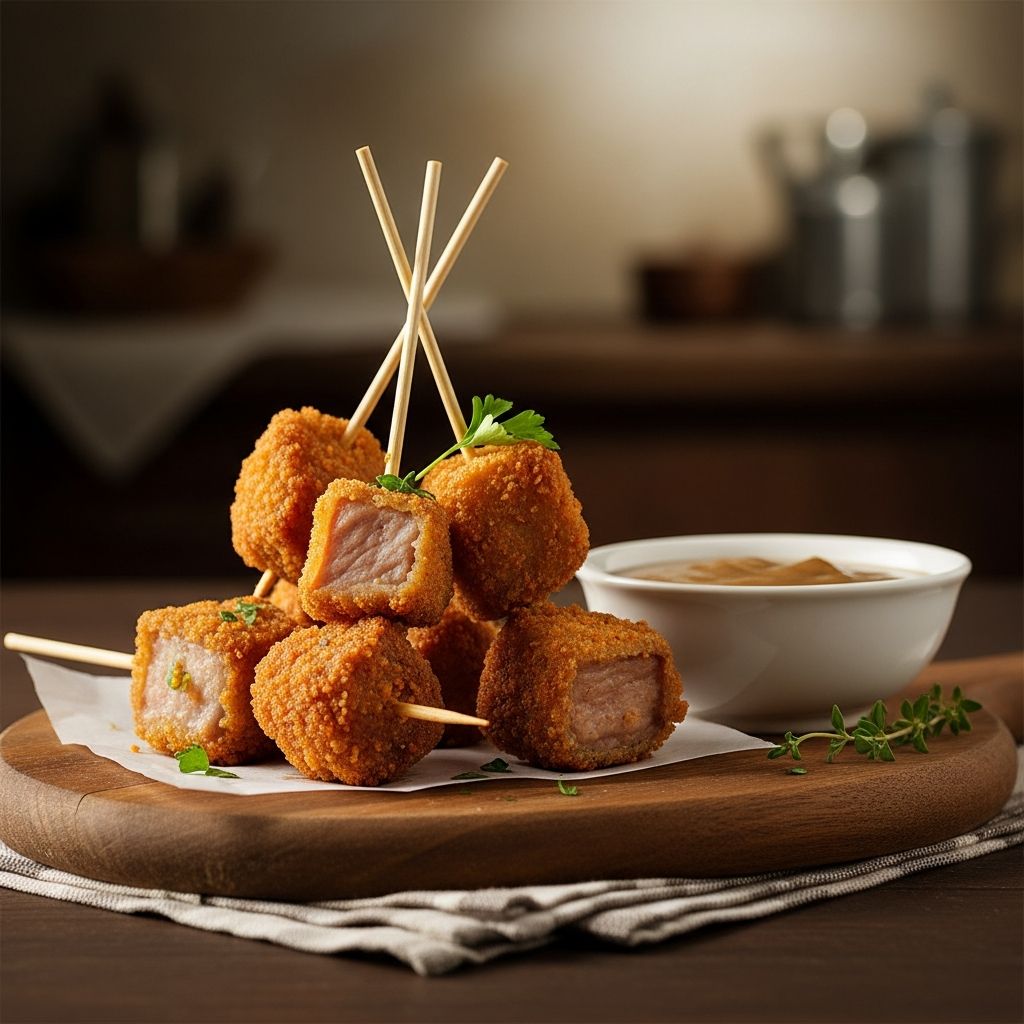
City chicken represents one of America’s most ingenious culinary creations—a dish born from economic necessity that transformed into a cherished comfort food tradition. Despite its misleading name, this beloved recipe contains no poultry whatsoever. Instead, it features tender cubes of pork or veal threaded onto skewers, breaded, and cooked until golden and crispy. What makes city chicken truly remarkable is not just its delicious flavor, but the remarkable story of resourcefulness and cultural heritage embedded in every bite.
The Origins: How Economic Hardship Created a Culinary Icon
Understanding city chicken requires stepping back to the turn of the twentieth century, a pivotal moment in American history when economic circumstances forced families to become creative in the kitchen. During the early 1900s and particularly throughout the Great Depression era, chicken was considered a luxury item—expensive to raise, slow to produce, and typically reserved for Sunday dinners or special occasions. For working-class families in industrial cities, purchasing fresh poultry regularly was simply not feasible.
Conversely, pork and veal were considerably more affordable and readily available in urban markets throughout the Midwest and Rust Belt regions. These areas had become industrial powerhouses with large populations of Eastern European immigrants, including Polish, Slovak, Ukrainian, and other communities who brought their culinary traditions and resourcefulness with them. Faced with the challenge of feeding their families while maintaining morale during difficult economic times, these immigrant families devised an ingenious solution.
The concept was elegantly simple yet brilliant: take inexpensive cuts of pork and veal, cut them into bite-sized cubes, thread them onto wooden skewers to resemble chicken drumsticks, coat them in breadcrumbs using the same breading technique as fried chicken, and cook them until they resembled the poultry they couldn’t afford. When viewed from a distance, these breaded skewers bore a loose but recognizable resemblance to chicken legs. This clever deception, born from determination rather than dishonesty, gave rise to the cheeky name “city chicken”—a nod to the urban populations who invented this culinary workaround.
Geographic Origins and Cultural Significance
While city chicken is often associated with Polish-American heritage, its story is more nuanced. The dish originated among Polish and Ukrainian immigrant communities, but it was not imported directly from those countries. Rather, it was created here in America as a response to local economic conditions and available resources. The recipe took particular root in Pittsburgh, Pennsylvania, and Cleveland, Ohio, where large concentrations of Eastern European immigrants had settled. From these initial strongholds, the popularity of city chicken spread rapidly to other Great Lakes cities including Detroit, Michigan, and Buffalo, New York.
City chicken became so integral to the regional food culture that it eventually appeared in grocery stores as pre-packaged meals, complete with wooden skewers included. This widespread commercialization demonstrated how thoroughly this Depression-era invention had become embedded in the everyday dining practices of Rust Belt families. For generations of families in these regions, city chicken represented not merely a meal, but a tangible connection to their heritage and family history.
Why the Name Persists: Understanding the Terminology
The nomenclature surrounding city chicken reflects its creative origins. The dish has been called by various names throughout its history, including “mock chicken” and “Polish city chicken”—all referencing the fact that the dish mimics chicken through appearance and preparation technique rather than through actual ingredients. The word “city” in the name relates to the urban populations where the dish was invented and popularized, distinguishing it from rural areas where families might have actually raised their own chickens for consumption.
Interestingly, while city chicken is sometimes thought of as authentically Polish, it does not have direct roots in Poland itself. Instead, it represents a uniquely American-immigrant creation—a dish that emerged when traditional culinary knowledge met new economic realities in a different country. This hybrid nature makes city chicken a fascinating example of how immigrant communities adapted their skills and techniques to create something entirely new.
Essential Ingredients for Authentic City Chicken
Creating authentic city chicken requires surprisingly few ingredients, which is part of its enduring appeal. The simplicity of this recipe made it accessible to families with limited budgets, and that same simplicity remains one of its greatest strengths today.
| Component | Ingredient | Purpose |
|---|---|---|
| Primary Protein | Pork cubes (shoulder or loin) or veal, cut into 1.5-inch pieces | Provides the main protein and texture; 2.5-3 pounds typically serves 4-6 people |
| Structure | Wooden or bamboo skewers (6 inches) | Holds meat pieces together in drumstick shape |
| Coating Base | All-purpose flour | First layer of breading; approximately 1 cup |
| Egg Wash | Beaten eggs mixed with milk or water | Binds flour and breadcrumbs together; typically 2-3 eggs with 2 tablespoons liquid |
| Final Coating | Breadcrumbs or crushed saltine crackers | Creates crispy exterior; 1.5-3 cups depending on preferences |
| Seasonings | Salt, black pepper, garlic powder, paprika, Italian seasoning | Enhances flavor throughout the dish |
| Cooking Fat | Vegetable oil for frying | Initial pan-frying step; approximately 1/3 cup |
| Braising Liquid | Chicken broth or water | Added during baking phase; approximately 1 cup |
The Preparation Process: From Raw to Golden
Preparing city chicken involves several distinct stages, each contributing to the final texture and flavor profile. The process begins with properly preparing the meat. Pork shoulder or loin should be cut into uniform 1.5-inch cubes, which ensures even cooking and creates the proper shape when threaded onto skewers.
Once the meat is prepared, the breading process begins. Season the pork cubes generously with salt, pepper, garlic powder, and paprika. Create three separate shallow bowls or plates: one containing all-purpose flour, another with beaten eggs mixed with milk or water, and a third with breadcrumbs or finely crushed saltine crackers. This three-step breading system creates multiple layers of flavor and texture.
Thread approximately 4-6 meat cubes onto each wooden skewer, arranging them to roughly resemble a drumstick shape. Then, dredge each skewer through the flour, coating all surfaces evenly. Next, dip the floured skewer into the egg wash, ensuring complete coverage. Finally, roll the skewer in the breadcrumb mixture, pressing gently to help the coating adhere properly.
The cooking methodology combines two techniques for optimal results. Heat vegetable oil in a large skillet over medium-high heat. Working in batches to avoid overcrowding, place the breaded skewers into the hot oil and pan-fry them until the exterior becomes golden brown, approximately 3-4 minutes per side. This initial frying step creates a flavorful crust.
After pan-frying all skewers, transfer them to a baking dish. Add approximately one cup of chicken broth or water to the bottom of the dish—this liquid prevents drying during the baking phase. Cover the baking dish and bake at 350°F for approximately one hour. This baking phase allows the interior to become tender while the exterior remains crispy. Some traditional recipes omit the gravy, while others may create a pan sauce from the braising liquid.
Why City Chicken Endures: The Psychology of Comfort Food
City chicken exemplifies why certain dishes achieve lasting popularity despite their humble origins. This recipe succeeds because it combines multiple desirable qualities: it tastes delicious with crispy exterior and tender interior, it utilizes affordable ingredients, it can be prepared relatively quickly, and it carries emotional resonance through family memories and cultural heritage. For many people, especially those with Rust Belt roots, preparing city chicken connects them to their grandparents and great-grandparents who created this ingenious dish during difficult times.
The nostalgia factor cannot be underestimated. City chicken represents a specific era in American history and a particular geographic region with its own distinct culture and identity. When families prepare this dish today, they are not simply cooking a meal—they are honoring their family’s history and participating in a culinary tradition that has survived and thrived for over a century.
Modern Variations and Adaptations
While traditional city chicken remains popular, modern cooks have developed various adaptations while maintaining the dish’s essential character. Some variations substitute beef for pork or veal, others experiment with different seasoning profiles, and some adapt cooking methods to suit contemporary kitchens. Crushed panko breadcrumbs have become increasingly popular as an alternative to traditional breadcrumbs, providing extra crunchiness. Some recipes incorporate Italian seasoning or other herb combinations to enhance the flavor profile.
Despite these variations, authentic city chicken maintains its core identity: cubed meat on skewers, breaded and cooked until golden. The fundamental appeal lies in this combination of simplicity, affordability, and delicious results.
Frequently Asked Questions About City Chicken
Is city chicken actually chicken?
No, city chicken contains no poultry whatsoever. It is made from pork, veal, or sometimes beef, cut into cubes and threaded onto skewers. The name refers to the resemblance to chicken drumsticks and the dish’s origin among city dwellers.
Where did city chicken originate?
City chicken was created by Polish and Ukrainian immigrant communities in industrial American cities, particularly Pittsburgh and Cleveland, during the early 1900s and Great Depression era. While often associated with Polish heritage, the dish itself is an American creation born from economic necessity.
What makes city chicken different from regular breaded pork?
The key distinction is the skewer presentation, which creates the distinctive drumstick appearance. This shape and the specific breading technique combine to create a dish that evokes fried chicken despite using completely different meat.
Can I make city chicken without using a grill or oven?
Yes, while traditional recipes combine pan-frying with baking, some variations rely solely on pan-frying, though this may result in a less tender interior. The combination of frying and baking is preferred because it creates contrasting textures.
How should I store leftover city chicken?
Leftover city chicken can be refrigerated for up to four days in an airtight container. Reheat gently in a 350°F oven to restore crispness. The dish also freezes well for up to three months.
Bringing History to Your Table
City chicken represents far more than a simple recipe. It embodies the resilience, creativity, and resourcefulness of immigrant families who transformed economic hardship into culinary innovation. Every time someone prepares this dish today, they participate in a tradition spanning over a century, connecting modern kitchens to Depression-era dinner tables and immigrant family histories.
Whether you have personal family connections to this dish or are discovering it for the first time, city chicken offers an accessible entry point into understanding American food history, immigrant contributions to American cuisine, and the ways that necessity truly does breed innovation. The combination of tender meat, crispy coating, and the satisfying knowledge that you’re eating something with genuine historical significance makes city chicken a worthwhile addition to your regular cooking repertoire.
References
- My Dad’s Ultimate Pittsburgh City Chicken — The Kitchen Whisperer. 2023-11-17. https://www.thekitchenwhisperer.net/2023/11/17/my-dads-ultimate-pittsburgh-city-chicken/
- City Chicken (Polish American Traditional Dish) — Eating European. https://eatingeuropean.com/city-chicken-recipe/
- Nonna’s City Chicken — 4 Sons ‘R’ Us. https://4sonrus.com/nonnas-city-chicken/
- City Chicken | All Things Mamma — All Things Mamma. https://www.allthingsmamma.com/city-chicken/
- City Chicken a Polish-American Recipe — Polish Housewife. https://polishhousewife.com/city-chicken-a-polish-american-recipe/
- Old-Fashioned City Chicken — Steph’s Real Life. https://www.stephreallife.com/old-fashioned-city-chicken/
Similar Articles








Read full bio of medha deb