Chickpeas and Dumplings: A Global Comfort Dish
Master the art of creating hearty, flavorful chickpea stews with tender dumplings from around the world.
Understanding the Foundation of Chickpea and Dumpling Cuisine
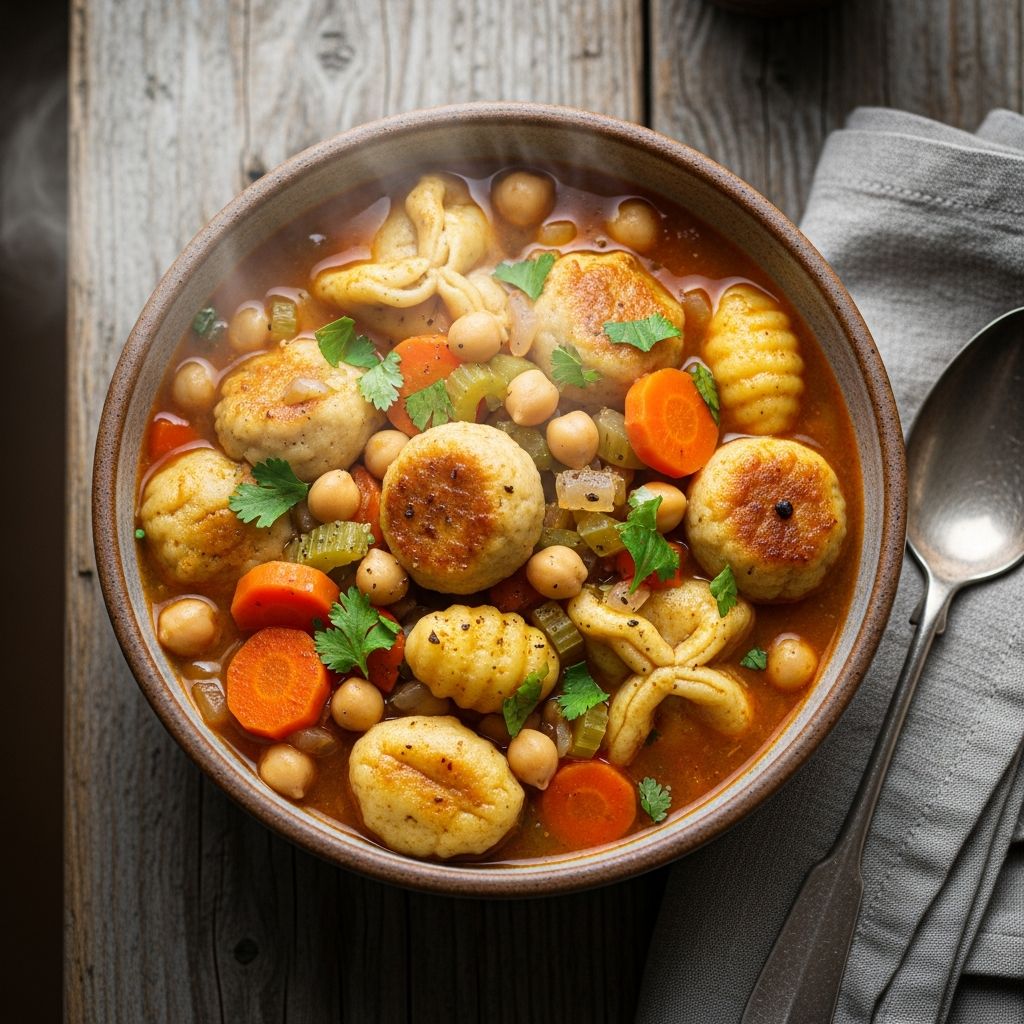
Chickpeas and dumplings represent one of the most satisfying and adaptable comfort food combinations across world cuisines. This pairing brings together legume-based broths with carbohydrate-rich dumplings to create meals that are both nourishing and deeply flavorful. The beauty of this dish lies in its flexibility—it can be prepared with meat or remain completely plant-based, making it accessible to various dietary preferences.
The fundamental appeal of chickpea and dumpling dishes stems from their ability to transform simple pantry staples into elaborate, restaurant-quality meals. Whether you are exploring North African traditions or Mediterranean variations, the core ingredients remain consistent: chickpeas as the protein base, aromatic vegetables for depth, and dumplings as the crowning element that elevates the entire dish.
The Essential Building Blocks: Chickpeas and Broths
The journey toward a successful chickpea and dumpling dish begins with properly prepared chickpeas. For optimal results, dried chickpeas should be soaked overnight to reduce cooking time and improve digestibility. After soaking, drain and rinse the chickpeas thoroughly before cooking them in fresh water for approximately one and a half hours until they reach a tender consistency.
The cooking liquid from the chickpeas becomes invaluable—this nutrient-rich broth serves as the foundation for your sauce. Reserving this liquid ensures you maintain the chickpeas’ minerals and starches, creating a more complex flavor profile than using water alone.
Building Aromatic Foundation
The broth construction begins with creating an aromatic base through gentle sautéing of onions in quality olive oil over medium-low heat. This low-temperature approach allows the onions to become translucent and develop natural sweetness without browning, typically requiring eight to ten minutes. Adding minced garlic extends this aromatic foundation, though care must be taken to cook garlic only briefly—approximately one minute—to eliminate its raw bite without allowing it to burn.
Tomato paste becomes the next layer, introducing umami depth and slight acidity that balances the earthiness of chickpeas. Warming spices through dry-cooking them briefly in the hot oil releases their essential oils, maximizing their flavor contribution to the final dish.
The Art of Dumpling Craftsmanship
Dumplings transform chickpea stew from a simple soup into a textured, satisfying meal. Different dumpling traditions employ varying techniques and ingredients, each producing distinct results.
Semolina Dumplings: The North African Approach
Coarse semolina from durum wheat provides the base for traditional North African dumplings, creating a hearty, substantial texture. These dumplings are constructed by combining semolina with reserved onion and garlic, blended tomatoes, fresh herbs, spices, salt, olive oil, and broth in a ratio that produces a sticky dough. The mixture requires gentle kneading for approximately one minute to achieve proper consistency.
Shaping semolina dumplings involves dividing the dough into twelve equal portions, each approximately sixty grams, and forming them into thick, oval shapes. These substantial dumplings are designed to absorb the surrounding broth while maintaining their distinct texture—they should sink initially before becoming tender through twenty minutes of simmering.
Biscuit-Style Dumplings: The Contemporary Method
Modern approaches often employ biscuit-style dumplings created from whole wheat flour, baking powder, and salt whisked together to incorporate air. Wet ingredients—typically milk and Greek yogurt—bind the dry components into a cohesive dough. This method produces lighter, fluffier dumplings that cook more rapidly than semolina versions, requiring only fifteen minutes of covered simmering.
The Greek yogurt addition serves multiple purposes: it provides moisture while introducing tang that brightens the overall flavor profile and contributes to a tender crumb structure in the finished dumpling.
Vegetable Integration and Seasonal Adaptation
The vegetable component of chickpea and dumpling dishes should reflect seasonal availability while providing textural variety and nutritional balance. Root vegetables like carrots and courgettes (zucchini) are standard choices, cut into uniform seven-centimeter lengths and quartered lengthwise to ensure even cooking and consistent presentation.
Sweet potatoes offer a modern variation that adds natural sweetness and creamy texture when tender. Leafy greens such as kale, incorporated toward the end of cooking, contribute minerals and a pleasant textural contrast without becoming overcooked.
Flavor Development Through Spice Selection
The spice profile for chickpea and dumpling dishes varies dramatically by tradition. Mediterranean versions typically incorporate oregano and rosemary, often combined with lemon zest for brightness. North African preparations embrace warming spices that create a more complex aromatic experience.
Paprika, thyme, sage, and allspice collectively build layers of flavor that complement both chickpeas and vegetables. The selection and quantity of spices should reflect personal preference and ingredient quality—freshly grounded spices deliver substantially more potency than pre-ground varieties stored for extended periods.
Complete Recipe Framework
Ingredient Preparation Phase
- Measure dried chickpeas and soak overnight, or use canned equivalents (approximately 570 grams for one jar or three 400-gram cans)
- Peel and finely chop one large onion, dividing it in half for separate cooking stages
- Peel and crush four large garlic cloves, similarly dividing in half
- Prepare courgettes and carrots by cutting into seven-centimeter pieces and quartering lengthwise
- Gather fresh herbs—coriander, dill, and parsley—and chop finely for both dumpling dough and garnish
- Measure spices and combine if desired for streamlined cooking
Cooking Sequence
Chickpea Preparation: If using dried chickpeas, drain and rinse after overnight soaking. Add to a large pan with one liter of fresh water, bring to a boil, skim foam, then reduce heat and simmer with a partially-covered lid for one and a half hours until chickpeas achieve tender consistency. Alternatively, use a pressure cooker for approximately fifteen minutes. Drain chickpeas while reserving the cooking liquid.
Broth Construction: Heat three tablespoons of extra virgin olive oil in a large casserole over medium-low heat. Add the first half of chopped onion and sauté for eight to ten minutes until translucent. Add the first half of crushed garlic and cook for one minute until the raw scent dissipates. Stir in tomato paste and cook briefly, then add spices and one tablespoon of salt, heating through for approximately one minute.
Measure the reserved chickpea cooking liquid and add sufficient water to reach one point four liters. Add this liquid to the casserole, bring to a boil, then reduce heat, cover, and allow to simmer.
Dumpling Assembly: In a large bowl, combine coarse semolina with the reserved onion and garlic portions, blended tomatoes, chopped fresh herbs, spices, salt, and three tablespoons of olive oil. Add approximately fifty milliliters of broth from the casserole and knead for one minute to create a sticky dough. Divide into twelve equal portions and shape into thick ovals.
Final Simmering: Add chickpeas, courgettes, and carrots to the simmering broth and return to a boil. Carefully add dumplings, moving vegetables aside with a spoon to ensure dumplings are covered in broth. Return to a boil, reduce heat, cover, and simmer for twenty minutes until dumplings are tender and have absorbed broth flavors.
Contemporary Variations and Adaptations
Modern cooking allows for creative interpretations of traditional chickpea and dumpling dishes. Grain-free dumpling mixes provide alternatives for those managing gluten sensitivity, while maintaining the essential structure and flavor contribution dumplings provide. The addition of miso paste introduces umami depth without requiring anchovies or meat products, appealing to vegetarian and vegan practitioners.
Finishing touches significantly impact the final experience. A generous drizzle of quality extra virgin olive oil adds richness and silken texture, while fresh herb garnishes provide aromatic brightness. Lemon juice or wedges offer acidity that cuts through the richness of the broth and dumplings, creating balance on the palate.
Nutritional Considerations and Health Benefits
Chickpea and dumpling dishes offer substantial nutritional value through their combination of legume-based protein, complex carbohydrates, and vegetable-derived vitamins and minerals. Chickpeas provide plant-based protein and dietary fiber, supporting satiety and digestive health. The variety of vegetables incorporated contributes micronutrients while adding volume without excessive calories.
Olive oil, a primary fat source in these preparations, provides monounsaturated fatty acids associated with cardiovascular health. The combination of ingredients creates a complete meal requiring no additional accompaniment, simplifying meal planning and execution.
Serving Suggestions and Pairings
Chickpea and dumpling dishes present beautifully in shallow bowls, allowing the broth to distribute evenly while showcasing the dumplings and vegetable components. Serving temperature should be hot but not scorching, allowing flavors to register fully on the palate.
Accompaniments should remain minimal to avoid overwhelming the dish’s carefully developed flavors. Fresh bread provides an option for soaking remaining broth, while a simple green salad with acidic vinaigrette offers textural contrast. Wine pairings might include crisp white wines or light reds, depending on the spice profile and regional tradition being honored.
Storage and Make-Ahead Strategies
Chickpea and dumpling dishes improve with time as flavors meld and develop greater complexity. Prepared dishes maintain quality in refrigerated storage for four to five days, while freezing extends shelf life to three months. To preserve dumpling texture during storage, consider preparing components separately and combining immediately before serving.
Frequently Asked Questions
Can I prepare chickpeas in advance?
Yes, chickpeas can be cooked several days ahead and stored in their cooking liquid. This approach actually enhances convenience while maintaining nutritional benefits and flavor development.
What if my dumplings become too dense?
Dense dumplings typically result from overworking the dough. Limit mixing to the minimum required for ingredient incorporation. Additionally, ensure your leavening agent (baking powder) is fresh and active.
Are these dishes inherently vegetarian?
The base recipes are plant-based friendly, though some regional variations incorporate meat. Vegetable broth, as opposed to meat-based stock, maintains the vegan-friendly nature of these dishes.
How do I prevent dumplings from falling apart?
Ensure sufficient liquid in your broth—dumplings require submersion during cooking. Additionally, avoid excessive stirring once dumplings are added, as this can break them apart prematurely.
Mastering Your Technique Through Practice
Creating exceptional chickpea and dumpling dishes requires attention to timing, temperature, and ingredient quality. Begin with straightforward recipes using easily accessible ingredients, then gradually incorporate variations reflecting personal preference and seasonal availability. The fundamentals remain constant: properly prepared chickpeas, well-constructed broth, and thoughtfully crafted dumplings combine to create deeply satisfying meals worthy of regular preparation and enthusiastic consumption.
References
- Tikourbabine (Dumpling & Chickpea Stew) — Baking Hermann. Accessed April 8, 2026. https://bakinghermann.com/tikourbabine-recipe/
- Chickpeas and Dumplings — For the Love of Gourmet. Accessed April 8, 2026. https://fortheloveofgourmet.com/chickpeas-and-dumplings/
- Greek-style Chickpea Stew with Dumplings (Revithosoupa) — Olive and Mango. Accessed April 8, 2026. https://www.oliveandmango.com/greekstyle-chickpea-stew-with-dumplings-revithosoupa/
Similar Articles



Read full bio of Sneha Tete