Canola vs Olive Oil: Health Truths
Uncover the nutritional showdown between canola and olive oil to make informed choices for heart health, cooking, and daily wellness.
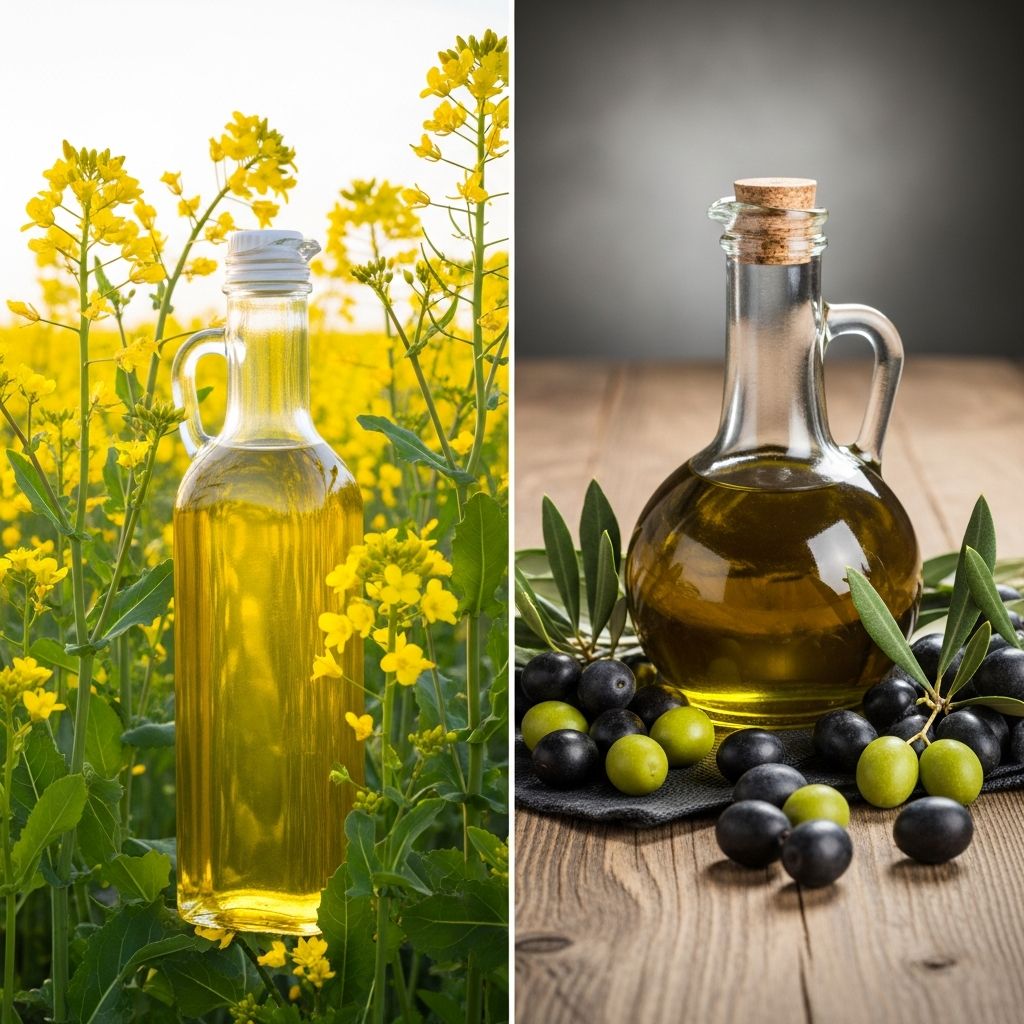
Canola oil and olive oil stand out as popular choices for cooking and dressings, each offering unique nutritional profiles that influence health outcomes like heart disease risk and inflammation. While both are low in saturated fats, their differences in processing, fatty acid composition, and bioactive compounds determine their superiority in specific contexts.
Understanding the Basics of These Oils
Canola oil, derived from rapeseed plants bred for low erucic acid content, undergoes extensive refining to achieve a neutral flavor and high smoke point. This process makes it versatile for frying and baking. Olive oil, pressed from olives, varies by grade—extra virgin retains the most natural compounds, while refined versions are milder.
Both oils provide about 120-126 calories and 14 grams of fat per tablespoon, but their fat breakdowns differ significantly. Canola oil features 63-64% monounsaturated fats, 28% polyunsaturated fats (including omega-3s), and just 7% saturated fats. Olive oil, particularly extra virgin, boasts 73% monounsaturated fats (mainly oleic acid), 11% polyunsaturated, and 14% saturated fats.
Fatty Acid Profiles: A Detailed Breakdown
The monounsaturated fats in both oils support heart health by potentially lowering LDL cholesterol. However, olive oil’s higher percentage may enhance metabolic benefits, such as improved fat oxidation during weight management.
| Fat Type | Canola Oil | Extra Virgin Olive Oil |
|---|---|---|
| Monounsaturated Fats | 63-64% | 73% |
| Polyunsaturated Fats | 28% | 11% |
| Saturated Fats | 7% | 14% |
Canola’s edge in polyunsaturated fats includes alpha-linolenic acid (ALA), an omega-3 that may reduce inflammation, though its high omega-6 content could promote imbalance if overconsumed without omega-3 sources. Olive oil’s profile favors stability and antioxidant synergy.
Antioxidants and Bioactive Compounds
Extra virgin olive oil shines with polyphenols like oleuropein, hydroxytyrosol, and oleocanthal, which combat oxidative stress, reduce inflammation, and link to lower risks of heart disease and type 2 diabetes. Studies show regular olive oil users have 16% reduced diabetes risk and better blood sugar control.
Canola oil, heavily processed, loses most antioxidants and vitamins during refining, retaining modest vitamin E (16% RDI per tablespoon) compared to olive oil’s 13%. This minimal nutrient retention limits its protective effects against chronic diseases.
Impact on Cholesterol and Heart Health
Research presents mixed results. A meta-analysis found canola oil superior for lowering LDL cholesterol (-6.13 mg/dL), total cholesterol (-8.92 mg/dL), and LDL/HDL ratio compared to olive oil, suggesting cardioprotective potential.
Conversely, olive oil consumers show reduced heart disease risk factors, including lower LDL, triglycerides, and stroke incidence, attributed to its unrefined antioxidants. Canola’s refinement may diminish these benefits, with animal studies linking it to inflammation and memory issues.
- Canola advantages: Better LDL reduction in some trials.
- Olive advantages: Broader heart protection via anti-inflammatory compounds.
Smoke Points and Culinary Applications
Canola oil’s smoke point (around 400°F/204°C) suits high-heat methods like stir-frying and deep-frying without breaking down into harmful compounds. Olive oil’s extra virgin grade smokes at 375-410°F, refined at higher temps, but its flavor intensifies with heat.
| Oil Type | Smoke Point (°F) | Best Uses |
|---|---|---|
| Canola | 400 | Frying, baking, neutral flavor |
| Extra Virgin Olive | 375-410 | Dressings, sautéing, dipping |
| Refined Olive | 465 | High-heat cooking |
For everyday cooking, match the oil to the task: canola for neutrality and heat, olive for flavor enhancement in low-medium heat dishes.
Weight Management and Metabolic Effects
Olive oil’s monounsaturated fats and polyphenols promote satiety, stabilize blood sugar, and boost metabolism, aiding weight loss. Its lower glycemic response curbs cravings compared to canola.
Canola supports fat oxidation but lacks olive oil’s appetite control and anti-inflammatory edge. Clinical trials note both improve fatty liver and insulin sensitivity, with canola sometimes outperforming on triglycerides.
Processing and Quality Considerations
Canola’s chemical extraction and deodorization strip beneficial compounds, potentially introducing trace trans fats. Opt for expeller-pressed versions for purity.
Extra virgin olive oil, cold-pressed without chemicals, preserves nutrients but check for authenticity to avoid adulterated products. Refined olive oil undergoes less processing than canola but sacrifices some benefits.
Potential Drawbacks and Safety
High omega-6 in canola may fuel inflammation if diet lacks omega-3 balance. Rodent studies raise concerns about memory and antioxidants, though human data is limited.
Olive oil’s higher saturated fat (still low overall) suits most diets, but calorie density requires moderation. No major safety issues for either when used appropriately.
Environmental and Economic Factors
Canola, a Canadian crop (“Can-ola”), yields high and grows in cooler climates, making it affordable and sustainable. Olives thrive in Mediterranean regions, with extra virgin commanding premium prices due to labor-intensive harvesting.
Choosing local or regeneratively farmed options minimizes environmental impact for both.
Practical Tips for Daily Use
- Drizzle extra virgin olive oil on salads for maximum antioxidants.
- Use canola for oven fries or stir-fries needing neutral taste.
- Blend oils: 50/50 for versatile dressings or marinades.
- Store in cool, dark places to prevent rancidity.
- Aim for 1-2 tablespoons daily within a balanced diet.
FAQs
Is canola oil healthier than olive oil?
It depends on priorities. Canola may lower LDL better in some studies, but olive oil offers superior antioxidants and inflammation protection.
Can I use olive oil for frying?
Yes, refined or light olive oil handles high heat well; extra virgin for medium heat to preserve flavor.
Which is better for weight loss?
Olive oil edges out due to satiety and metabolic support, though both aid when calories are controlled.
Does processing affect health benefits?
Yes, canola’s heavy refining reduces nutrients; choose minimally processed olive oil.
Are there GMOs in canola oil?
Most canola is GMO for herbicide resistance; non-GMO options exist.
Final Thoughts on Choosing Wisely
No single oil wins universally—canola excels in affordability, heat stability, and certain lipid metrics, while olive oil dominates in flavor, antioxidants, and holistic health benefits. Incorporate both strategically for optimal nutrition, prioritizing extra virgin olive oil for cold uses and quality canola for hot applications. Consult dietary needs and recent research for personalization.
References
- 5 Reasons Olive Oil Supports Weight Loss Better Than Canola — Bhooc. 2023. https://bhooc.com/blogs/articles/5-reasons-olive-oil-supports-weight-loss-better-than-canola
- Canola Oil vs. Olive Oil: What’s the Difference? — Healthline. 2023-10-12. https://www.healthline.com/nutrition/canola-vs-olive-oil
- Comparison of canola oil and olive oil consumption on the serum lipid profile — PubMed (Nutr Metab Cardiovasc Dis). 2022-07. https://pubmed.ncbi.nlm.nih.gov/35866510/
- Olive Oil vs. Canola Oil: What Is the Difference? — Brightland. 2023. https://brightland.co/blogs/field-notes/olive-oil-vs-canola-oil
- Olive Oil vs Canola Oil: Your Questions Answered — Graza. 2023. https://www.graza.co/blogs/education/olive-oil-vs-canola-oil-your-questions-answered
- Which is healthier: olive oil or canola/rapeseed oil? — Healthy Food Guide. 2023. https://www.healthyfood.com/healthy-shopping/which-is-healthier-olive-oil-or-canola-rapeseed-oil/
- Olive Oil vs Canola Oil, which is healthier?? — YouTube (NutritionFacts.org). 2023. https://www.youtube.com/watch?v=qSYwwuYLyUE
Similar Articles







Read full bio of medha deb