Butter Storage Guide: Fridge or Counter?
Discover safe ways to store butter at room temperature, in the fridge, or freezer while preventing spoilage and maintaining freshness.
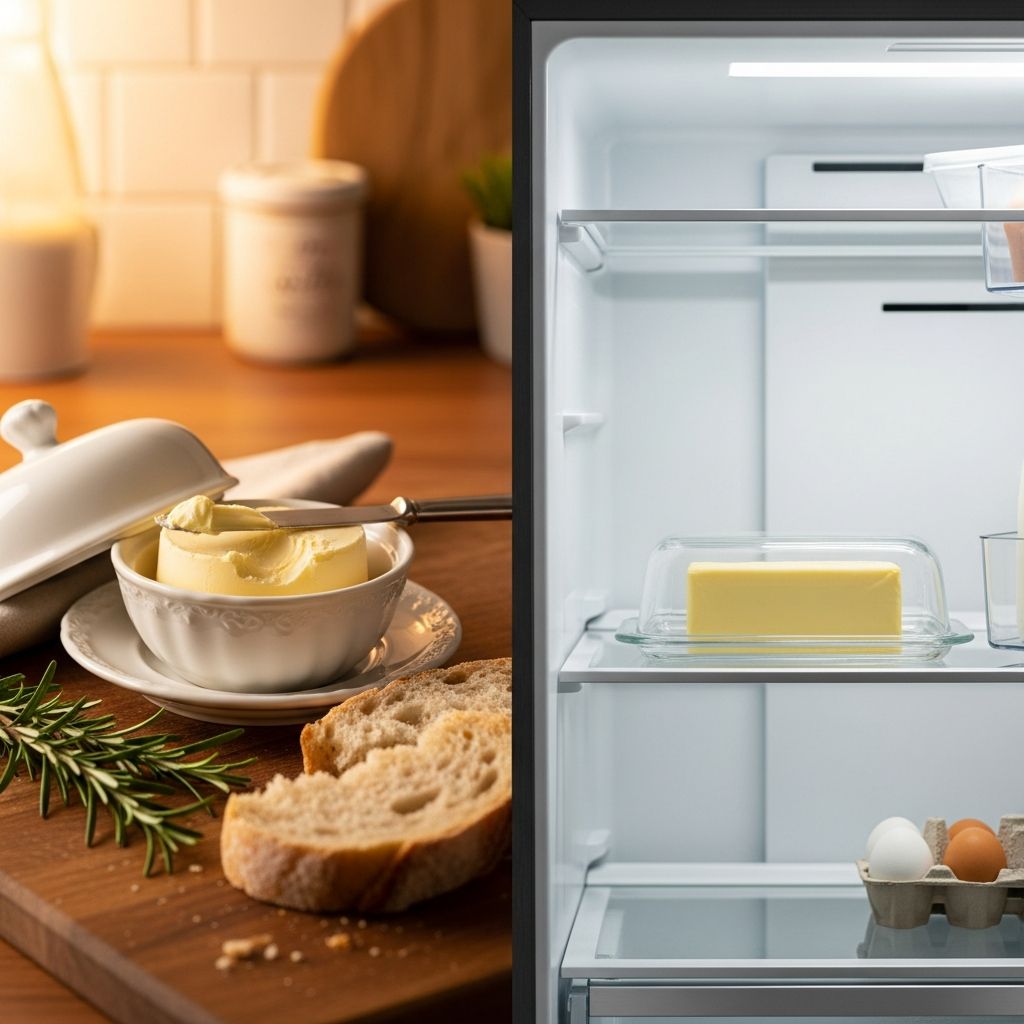
Butter storage practices vary based on type, environmental conditions, and intended use. While refrigeration extends shelf life significantly, certain conditions allow for short-term counter storage, particularly for salted varieties.
Understanding Butter’s Composition and Stability
Butter primarily consists of milk fat derived from pasteurized cream, along with small amounts of water and nonfat milk solids. This high-fat content (typically 80% or more) makes it relatively stable at room temperature compared to other dairy products, as bacteria struggle to thrive in such a low-water, high-fat environment.
However, the presence of water and milk solids introduces vulnerability to microbial growth and oxidation if left exposed. Salted butter benefits from added salt acting as a natural preservative, inhibiting bacterial proliferation more effectively than unsalted versions. Environmental factors like kitchen temperature play a critical role; above 70°F (21°C), spoilage risks increase for all types.
Room Temperature Storage: When It’s Safe
For everyday use, leaving butter on the counter can provide convenient spreadability, but strict limits apply. Industry guidelines recommend no more than 2 days for salted butter at cool room temperatures, and even less in warmer conditions. Unsalted butter should not be left out at all due to its higher susceptibility.
- Salted Butter: Can tolerate counter storage for 1-2 days if temperatures stay below 70°F. Higher salt content (varying by brand) enhances preservation.
- Unsalted Butter: Requires immediate refrigeration to prevent rapid rancidity and mold growth.
- Whipped Butter: Similar to unsalted; refrigerate promptly due to added air increasing surface exposure.
Land O’Lakes advises limiting unrefrigerated time to 4 hours maximum, after which quality degradation—such as color darkening and off-flavors—begins. Always cover butter in an airtight dish to minimize air exposure and contamination.
Optimal Refrigeration Practices
The standard recommendation across dairy experts is refrigeration at or below 40°F (4°C) to preserve quality and safety. Most butter packaging explicitly states “Keep Refrigerated,” aligning with use-by dates for peak freshness.
Once opened, transfer butter to a covered dish or keep in its protective wrapper. For softening before use, remove portions 30-60 minutes ahead, but return unused amounts to the fridge immediately. Specialized products like butter blended with canola or olive oil offer spreadable texture straight from the cold.
| Butter Type | Fridge Shelf Life (Unopened) | Fridge Shelf Life (Opened) |
|---|---|---|
| Salted | Up to use-by date | 1-3 months |
| Unsalted | Up to use-by date | 1 month |
| Whipped | Up to use-by date | 2 weeks |
This table summarizes general fridge durations; always check for off odors, discoloration, or mold as indicators of spoilage.
Freezer Storage for Long-Term Preservation
For bulk purchases or seasonal stockpiling, the freezer is ideal. Butter maintains quality frozen for up to 4 months if stored properly before the use-by date.
- Keep in original carton or wrap tightly in foil and a freezer bag to prevent flavor absorption and freezer burn.
- Thaw in the fridge, using within 30 days post-thawing.
- Portion into smaller sticks for quicker softening later.
Frozen butter retains texture for baking and cooking, though slight flavor nuances may emerge upon extended storage.
Signs of Spoilage and Safety Checks
Even with proper storage, inspect butter regularly. Discard if you notice:
- Mold spots (white, blue, or black growths).
- Rancid or sour smells deviating from creamy norms.
- Yellowing or darkening beyond natural color variation.
- Separation of liquids or unusual texture changes.
High-fat content slows bacterial growth, but pathogens like Listeria can still pose risks in contaminated conditions. When in doubt, refrigerate or discard.
Practical Tips for Daily Butter Use
To balance convenience and safety:
- Counter Butter Bell: Use a traditional butter crock with water seal for 1-week counter life in cool kitchens (below 68°F).
- Portion Control: Keep a small dish out for daily use, refilling from refrigerated stock.
- Baking Precision: For recipes, cold butter ensures flakiness; soften only as needed.
- Travel Safety: In warm climates, use coolers for transport.
Experiment with salted varieties from reputable brands for better room-temp tolerance, but prioritize food safety over spreadability.
Global and Historical Perspectives on Butter Storage
Before widespread refrigeration, cultures stored butter in cool cellars, crocks, or salted heavily for preservation. Modern pasteurization and packaging have shifted norms toward chilling, but traditional methods inform current practices like butter bells originating from France.
In hotter climates, refrigeration remains non-negotiable. U.S. Dairy emphasizes adapting to local temperatures: fridge for anything above 70°F.
Health and Nutrition Considerations
Proper storage prevents lipid oxidation, preserving butter’s vitamins A and E. Rancid butter may develop harmful compounds, though cooking often mitigates minor issues. Opt for grass-fed for enhanced nutrients, storing identically.
FAQs
Can I leave butter out overnight?
Overnight (8+ hours) exceeds safe limits unless in a cool spot under 70°F with salted butter covered. Refrigerate for safety.
Does salted butter last longer on the counter?
Yes, salt acts as a preservative, allowing 1-2 days vs. hours for unsalted.
How do I soften butter quickly?
Cut into pats, microwave 5-10 seconds, or use grated pieces for faster room-temp softening (under 4 hours total).
Is frozen butter as good as fresh?
Quality holds for 4 months; ideal for cooking/baking with minimal flavor loss.
What if my kitchen is always warm?
Refrigerate all butter; consider a small dish counter fridge for convenience.
Comparing Storage Methods
| Method | Duration | Best For | Risks |
|---|---|---|---|
| Counter (Salted) | 1-2 days | Spreading | Spoilage if >70°F |
| Fridge | Weeks to months | General storage | Hard texture |
| Freezer | 4 months | Long-term | Freezer burn if unwrapped |
This comparison highlights trade-offs for informed choices.
References
- Does Butter Need To Be Refrigerated? — U.S. Dairy. 2023. https://www.usdairy.com/news-articles/does-butter-need-to-be-refrigerated
- How Long Does Butter Last? — Land O’Lakes. 2024. https://www.landolakes.com/expert-advice/how-long-does-butter-last/
Similar Articles




Read full bio of medha deb