Bakewell Tart: British Classic Almond Dessert
Master the art of creating this iconic English almond tart with layers of jam and frangipane
Bakewell Tart: A Journey Into Britain’s Most Beloved Almond Dessert
The Bakewell tart stands as one of England’s most cherished baked goods, representing centuries of culinary tradition and refinement. This delightful confection hails from the quaint market town of Bakewell in Derbyshire, where it has earned its place as both a breakfast accompaniment and an elegant dessert suitable for afternoon tea service. What makes this tart particularly special is its sophisticated layering of textures and flavors—each component contributing its own character to create a harmonious and memorable eating experience.
Understanding the Foundation: What Defines a Bakewell Tart
At its core, a Bakewell tart is far more than a simple pastry. It represents a carefully orchestrated combination of four distinct layers, each serving a specific purpose in the overall composition. The beauty of this dessert lies not in its complexity of preparation, but in the way these seemingly simple components work together to create something extraordinary.
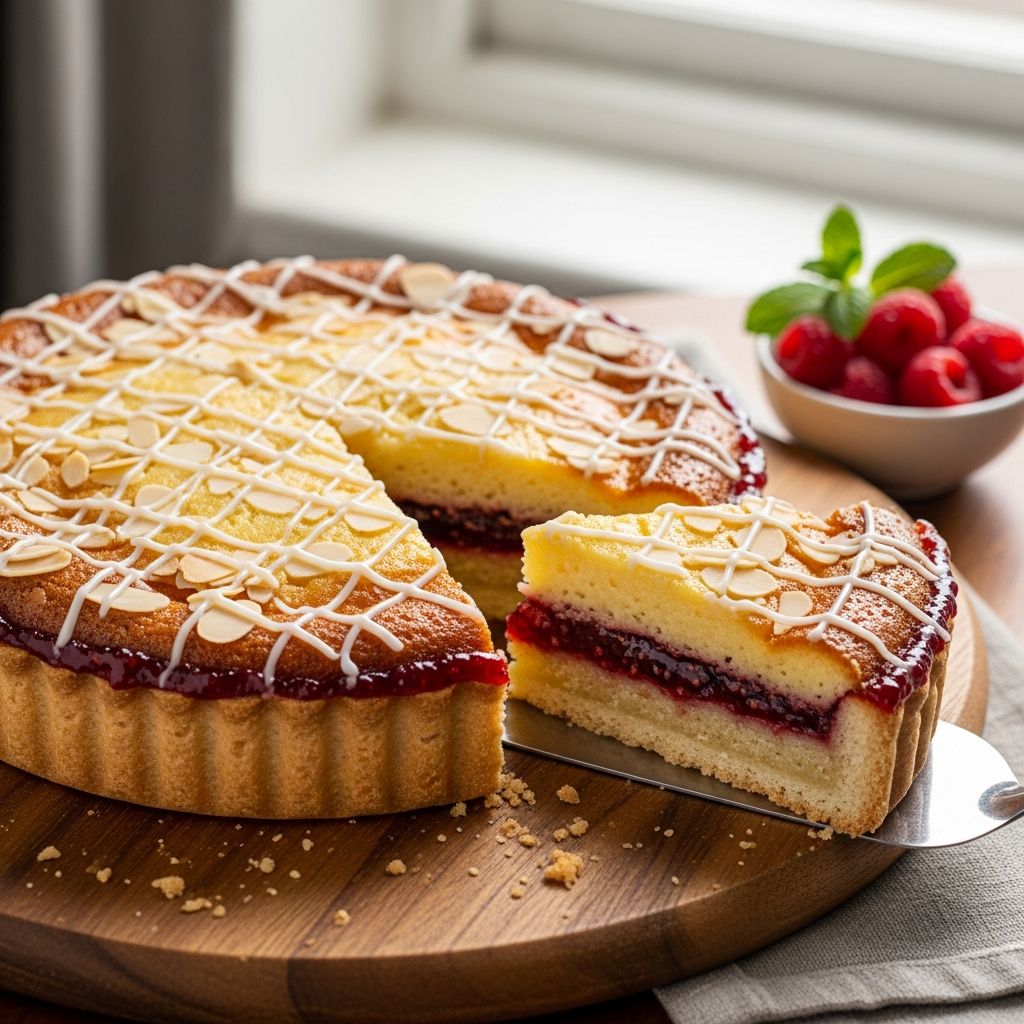
The structure of an authentic Bakewell tart begins with a foundation of buttery shortcrust pastry, followed by a layer of fruit jam—traditionally raspberry, though variations abound. Atop this foundation sits the star ingredient: frangipane, a delicate almond-based sponge that rises during baking to create an airy, moist texture. Finally, the tart is crowned with flaked almonds that provide a subtle crunch and visual appeal. This four-part architecture creates multiple textural contrasts that distinguish the Bakewell from more pedestrian pastries.
The Art of Pastry: Crafting the Perfect Shortcrust Base
Creating an exceptional Bakewell tart begins with mastering the shortcrust pastry. This component serves as the structural anchor for the entire dessert, and its quality directly impacts the final result. The pastry must achieve a delicate balance—crisp enough to provide structural integrity without being so brittle that it shatters, yet tender enough that it practically dissolves on the tongue.
The traditional approach to making shortcrust pastry involves combining flour, cold butter, sugar, and a binding agent. The critical technique lies in keeping the butter cold throughout the process, then rubbing it into the flour until the mixture resembles fine breadcrumbs. This method creates pockets of butter throughout the dough, which expand during baking to produce the characteristic flaky texture. Cold water is added sparingly to bring the dough together, with the goal of creating a cohesive mass without overworking the gluten, which would result in toughness rather than tenderness.
After shaping the dough into the tart pan, refrigeration plays a crucial role in preventing shrinkage during baking. A minimum of thirty minutes in the refrigerator allows the gluten to relax and the butter to firm up, ensuring the pastry maintains its shape. Some bakers prefer to dock the pastry base—piercing it with a fork before adding filling—to prevent the dough from puffing unevenly during the initial bake.
The Frangipane: Where Elegance Meets Simplicity
Frangipane represents the alchemical heart of the Bakewell tart. This almond-based preparation, which originated in Renaissance Italy, has become inseparable from the British baking tradition. The frangipane filling combines ground almonds, butter, sugar, eggs, and flour into a mixture that transforms during baking into something altogether different from its raw state.
Preparing frangipane requires beating softened butter and caster sugar together until the mixture becomes light and fluffy. This creaming process incorporates air into the mixture, which helps create the characteristic spongy texture when baked. Eggs are added individually, ensuring each egg is fully incorporated before introducing the next, which prevents curdling and maintains emulsion. Ground almonds and flour are then gently folded in along with a touch of almond extract—though this ingredient is optional and not essential to achieving authentic flavor.
The resulting frangipane mixture has a distinctive consistency—thick enough to spread evenly over the jam without sinking through, yet soft enough to be manipulated with a spatula. When baked, this mixture rises and sets into a tender crumb with a subtle nutty fragrance that permeates the entire tart. The frangipane should be spread in an even layer over the jam to ensure consistent texture throughout.
Selecting and Preparing Your Fruit Jam
The jam layer serves both functional and flavor-focused roles in the Bakewell tart. Functionally, it prevents the pastry from becoming soggy by creating a moisture barrier between the pastry and the wetter frangipane filling. Flavor-wise, the jam provides essential tartness that balances the richness of the almonds and butter.
Raspberry jam represents the traditional choice for an authentic Bakewell tart. The tartness of raspberry fruit cuts through the sweet almond mixture beautifully, preventing the overall dessert from becoming cloying. However, variations have emerged over time, with some recipes incorporating strawberry, cherry, or even apricot jam. The key consideration when selecting jam is ensuring it has enough character to stand up against the other components without becoming lost in the mix.
The jam should be spread in an even, not-too-thick layer across the pastry base before adding the frangipane. Too much jam can prevent the tart from setting properly, while too little means missed opportunities for flavor. Some traditional preparations incorporate fresh fruit directly into the jam layer—fresh raspberries, for instance, add brightness and prevent the tart from being overwhelmingly sugary.
The Finishing Touch: Flaked Almonds and Baking
The final component—flaked almonds scattered across the top—transforms the Bakewell tart from a mere pastry into something visually striking. Beyond aesthetics, these almonds provide textural contrast and a subtle crunch that complements the tender crumb of the baked frangipane filling. Toasted flaked almonds add even greater depth of flavor.
The timing of when to add the almond topping affects the final result. Some recipes call for adding almonds before baking, while others suggest sprinkling them halfway through the baking process to prevent excessive browning. This second approach helps ensure the almonds remain tender and light rather than becoming overly dark and hard.
Baking typically occurs at a moderate temperature—around 200 degrees Celsius (approximately 400 Fahrenheit)—until the frangipane sets and develops a golden color. The baking time generally ranges from thirty to forty-five minutes depending on the tart’s size. The frangipane should be set and spring back slightly when lightly touched but should still retain some moisture for that characteristic tender crumb.
Ingredient Variations and Personal Preferences
While the classic Bakewell tart follows a well-established formula, bakers have long customized recipes based on ingredient availability and personal taste. The fundamental ratio involves equal parts butter, sugar, and ground almonds for the frangipane, though some variations adjust these proportions slightly.
One notable variation is the Cherry Bakewell, which replaces the traditional flaked almond topping with a thick fondant-like almond frosting and a glacé cherry. This variation maintains the essential character of the original while offering a distinctly different presentation and textural experience.
Modern interpretations have explored different jam varieties and even experimented with adding different extracts or flavorings. However, the essential structure remains remarkably consistent across variations, testament to the fundamental soundness of the original design.
Storage and Serving Suggestions
A properly made Bakewell tart keeps well for several days when stored in an airtight container at room temperature. The pastry maintains its crispness while the frangipane remains tender and moist. Many enthusiasts claim the tart actually improves after a day or two as the flavors meld together.
Serving options range from enjoying the tart plain to dusting the top with icing sugar for a more refined presentation. The tart is equally suitable for morning tea or as a light dessert after dinner. A slice pairs beautifully with strong black tea or coffee, making it perfect for the traditional afternoon tea service that remains popular throughout Britain.
Common Challenges and Solutions
Bakers often encounter specific challenges when preparing Bakewell tarts. The pastry may shrink during baking if it wasn’t properly chilled before entering the oven. A soggy bottom crust typically results from insufficient baking time before adding the wet frangipane filling. The frangipane may fail to set properly if too much jam was used underneath, preventing heat from reaching the filling effectively.
These challenges can generally be avoided through careful attention to technique: ensure adequate refrigeration time for the pastry, don’t over-fill with jam, and verify that your oven temperature is accurate using an oven thermometer. If the top is browning too quickly while the center remains underset, covering the tart loosely with foil partway through baking prevents excessive browning while allowing the filling to continue cooking.
The Evolution of a Timeless Dessert
The Bakewell tart has maintained its popularity for generations, remaining largely unchanged while the broader landscape of British baking has evolved dramatically. Its longevity speaks to the fundamental appeal of its construction—the way each component contributes to a cohesive whole without any single element overwhelming the others.
From its origins in the small Derbyshire town that gave it its name, the Bakewell tart has become a nationwide treasure and an ambassador for British baking traditions. Its presence in bakeries, tea rooms, and home kitchens across the English-speaking world demonstrates its universal appeal while maintaining distinctly British character.
Frequently Asked Questions
- Can Bakewell tarts be made in advance?
- Yes, the pastry can be prepared and refrigerated the day before. The assembled but unbaked tart can also sit in the refrigerator for several hours, though this may require adding a few extra minutes to the baking time. The fully baked tart stores well for up to four days in an airtight container.
- What’s the difference between a Bakewell tart and Bakewell pudding?
- These are two distinct preparations. A Bakewell pudding features a different construction with a thicker, custard-like filling, while a Bakewell tart features the distinct layers of pastry, jam, and frangipane described here. Confusingly, some recipes and sources use these terms interchangeably, though they are technically different desserts.
- Can gluten-free flour be used?
- Yes, though results may vary. Gluten-free all-purpose flour blends designed for pastry work are recommended. The texture may be slightly different from traditional versions, but the basic technique remains the same. Allow extra refrigeration time for gluten-free dough, as it benefits from this resting period.
- Is almond extract necessary?
- Almond extract is optional. Ground almonds provide sufficient almond flavor on their own. Some bakers include almond extract for extra depth, while purists prefer to omit it. Either approach yields a delicious result.
- What size tart pan is best?
- A 23-centimeter (9-inch) round tart pan or a 36 by 12-centimeter rectangular pan works well for a standard Bakewell tart. Individual tart pans are also popular for creating smaller, single-serving versions.
References
- Bakewell Tart Recipe with Store Cupboard Ingredients — Bird’s Party. 2020. https://www.blog.birdsparty.com/2020/11/bakewell-tart-recipe.html
- Best Bakewell Tart Recipe — Delish. https://www.delish.com/cooking/recipe-ideas/a42319470/best-bakewell-tart-recipe/
- Bakewell Tart — Jane’s Patisserie. 2022-04-29. https://www.janespatisserie.com/2022/04/29/bakewell-tart-2/
- Traditional Bakewell Tart — Bunsen Burner Bakery. https://www.bunsenburnerbakery.com/bakewell-tart/
- Bakewell Tart — Paul Hollywood Official. https://www.paulhollywood.com/post/bakewell-tart
- Bakewell Tart Recipe — YouTube. https://www.youtube.com/watch?v=NzYLoWvJP7Q
- Bakewell Tarts (with Video) — Sugar, Spice and Glitter. https://sugarspiceandglitter.com/bakewell-tarts/
Similar Articles




Read full bio of Sneha Tete