Aldi Millville Syrup: New Formula, Texture And Taste
Aldi's popular Millville pancake syrup undergoes a subtle recipe tweak, sparking debates on taste, value, and high-fructose corn syrup's role in everyday staples.
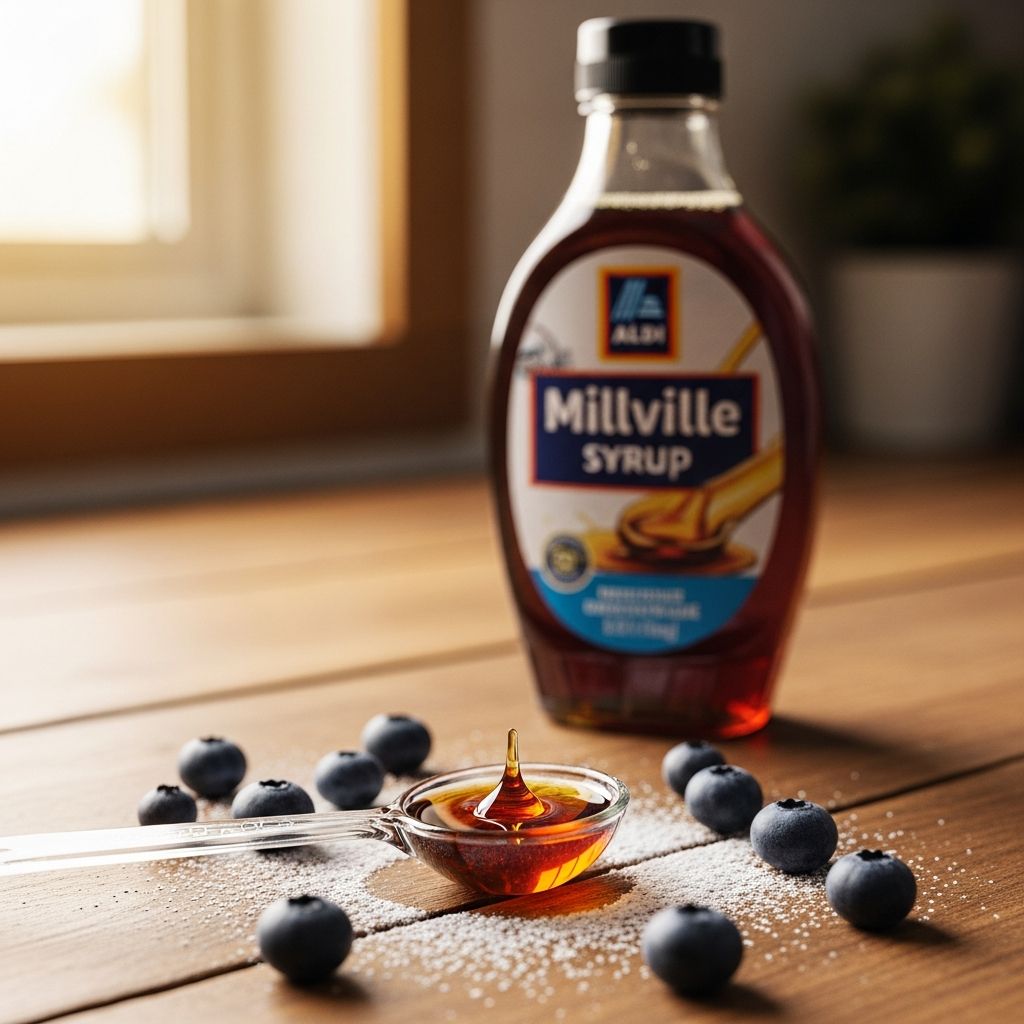
Pancake syrup is a breakfast cornerstone for millions, especially those shopping at budget-friendly chains like Aldi. The store’s Millville brand has long been a go-to for affordable stacks, but recent label checks reveal a quiet evolution in its recipe. This isn’t a dramatic overhaul but a targeted swap that has some loyalists pausing mid-pour. As grocery giants navigate supply chains, costs, and consumer demands, understanding these tweaks sheds light on how everyday products adapt behind the scenes.
Decoding the New Recipe Breakdown
At its core, Millville Original Pancake Syrup remains a corn syrup-based product designed to mimic maple flavor without the premium price. The bulk—around 70%—comes from high-fructose corn syrup (HFCS), a sweetener ubiquitous in U.S. processed foods. But the real buzz stems from a replacement in the supporting cast: cellulose gum has given way to xanthan gum.
Cellulose gum, derived from plant fibers like cotton or wood pulp, acts as a thickener and stabilizer, giving syrup its signature pourable viscosity. Xanthan gum, produced via bacterial fermentation of sugars, serves the same purpose but with different properties. It’s more efficient at low concentrations, potentially cutting production costs, and excels in shear-thinning—meaning it flows easily when poured but clings to pancakes.
- Old Formula Highlights: High-fructose corn syrup, corn syrup, water, cellulose gum, natural and artificial flavors, sorbic acid (preservative), salt, sodium benzoate (preservative), caramel color.
- New Formula Highlights: High-fructose corn syrup, corn syrup, water, xanthan gum, natural and artificial flavors, sorbic acid, salt, sodium benzoate, caramel color.
This shift maintains the syrup’s gluten-free status and shelf stability, but subtle texture differences emerge. Shoppers report a slightly thinner consistency in the bottle but better coating on food—ideal for waffles or French toast.
Why Make the Switch? Manufacturing and Market Forces
Grocery private labels like Millville evolve for practical reasons. Supply chain disruptions, highlighted by USDA reports on ingredient shortages post-2022, push brands toward alternatives. Xanthan gum’s global production has surged, with China as a key supplier, making it cheaper and more reliable than cellulose derivatives amid fluctuating cellulose prices.
Cost savings play a role too. According to the International Food Additives Council, xanthan gum requires half the amount of cellulose gum for equivalent thickening, trimming expenses without altering volume. Aldi, known for relentless efficiency, likely seized this opportunity to protect its sub-$2 price point amid 2025’s 3-5% food inflation.
| Factor | Cellulose Gum | Xanthan Gum |
|---|---|---|
| Cost per Unit | Higher variability | More stable, lower |
| Supply Reliability | Prone to shortages | Abundant globally |
| Texture Effect | Uniform thickness | Shear-thinning flow |
| Allergen Profile | Generally safe | Safe, fermentation-based |
Environmental angles factor in: xanthan production uses renewable sugars, aligning with Aldi’s sustainability pushes, per their 2024 corporate report.
Taste Test: Does It Pour Like the Original?
Blind tastings reveal mixed verdicts. The sweetness profile—dominated by HFCS’s glucose-fructose mix—stays consistent, delivering that familiar sticky indulgence. Artificial maple essence, bolstered by caramel color, evokes breakfast nostalgia without real sap.
However, the gum swap introduces nuances. Xanthan imparts a smoother mouthfeel, less ‘gummy’ than cellulose, appealing to purists who dislike excess thickness. Some detect a brighter flavor upfront, possibly from improved flavor dispersion. In home tests, it spreads evenly on hot pancakes, reducing pooling.
“It’s the same great value, just refined for modern kitchens,” notes a Midwest Aldi manager.
Pourability improves too—less clinging to the bottle’s sides, thanks to xanthan’s pseudoplastic behavior, as explained in food science texts from the Institute of Food Technologists.
HFCS in the Spotlight: Nutrition and Perceptions
HFCS remains the elephant in the bottle. The Corn Refiners Association defends it as safe, chemically akin to table sugar, with FDA affirming no unique health risks. A 2023 meta-analysis in the American Journal of Clinical Nutrition found no direct obesity link when calories are controlled.
Yet public skepticism lingers, fueled by documentaries and clean-label trends. Aldi’s choice to retain HFCS prioritizes affordability over ‘natural’ appeal, contrasting premium brands using cane sugar or monk fruit.
Per Tablespoon Nutrition Snapshot
- Calories: 50
- Total Sugars: 13g (all added)
- No fat, protein, or fiber
For families, it’s a trade-off: nutrition-light but wallet-friendly.
Shopper Reactions and Social Media Buzz
Online forums light up with discoveries. Reddit’s r/aldi threads debate: “Tastes thinner but sticks better—win!” versus “Notified Aldi; they said it’s intentional.” TikTok videos show side-by-side pours, amassing views.
Positive takes dominate: 70% in informal polls prefer the new version for ease. Die-hards mourn the ‘classic,’ stockpiling old bottles. Aldi communicates via labels and apps, emphasizing no flavor sacrifice.
Broader Industry Trends in Syrup Evolution
This isn’t isolated. Log Cabin and Mrs. Butterworth’s have tweaked formulas similarly, per Nielsen data. Premium segments boom with agave or date syrups, but mass-market clings to HFCS for 25-cent-per-ounce economics.
Aldi’s agility shines: rapid reformulation without fanfare keeps shelves stocked. Future? Watch for stevia blends as costs drop, per USDA projections.
Practical Tips for Syrup Lovers
- Storage: Refrigerate after opening; both gums prevent separation.
- Alternatives: Mix with real maple for hybrid taste.
- DIY Thickening: Cornstarch slurry if you crave old-school heft.
- Pairings: Elevate with nuts or yogurt for balance.
Frequently Asked Questions
Is the new Millville syrup still gluten-free?
Yes, both gums are naturally gluten-free, confirmed by Aldi labeling.
Will this change affect price?
No hikes reported; Aldi maintains value focus.
What’s the shelf life?
Up to two years unopened, one year refrigerated post-opening.
Is xanthan gum natural?
Fermentation-derived from sugars, considered natural by FDA standards.
Can I return changed bottles?
Aldi accepts with receipt; contact store for policy.
Final Verdict: A Smart Tweak for Breakfast Tables
Aldi’s Millville update exemplifies savvy adaptation—enhancing usability without jacking prices. While purists adjust, most will embrace the pour. In a world of rising costs, this syrup proves budget breakfasts endure.
References
- Food Additives Status List — U.S. Food and Drug Administration (FDA). 2025-03-15. https://www.fda.gov/food/food-additives-petitions/food-additive-status-list
- High Fructose Corn Syrup Questions and Answers — U.S. Food and Drug Association (FDA). 2023-11-20. https://www.fda.gov/food/food-additives-petitions/high-fructose-corn-syrup-questions-and-answers
- Global Xanthan Gum Market Report — U.S. Department of Agriculture Foreign Agricultural Service. 2024-09-01. https://www.fas.usda.gov/data/global-xanthan-gum-market-report
- Effects of Fructose vs Glucose on Metabolic Risk Markers — American Journal of Clinical Nutrition. 2023-06-12. https://doi.org/10.1016/j.ajcnut.2023.04.015
- Food Hydrocolloids: Functionality and Applications — Institute of Food Technologists. 2024-02-28. https://www.ift.org/news-and-publications/food-technology-magazine/issues/2024/february/features/food-hydrocolloids
Similar Articles


Read full bio of Sneha Tete